Advertisements
Advertisements
प्रश्न
Notice these expressions in the text. Infer their meaning from the context.
-
honing our seafaring skills
-
ominous silence
-
Mayday calls
-
pinpricks in the vast ocean
-
a tousled head
Advertisements
उत्तर
-
honing our seafaring skills: this refers to the efforts made by the author and his wife, to perfect or sharpen their seafaring skills.
-
ominous silence: the silence here refers to impending danger.
-
Mayday calls: Mayday calls are radio-telephonic words which signal aircraft or ships stuck in a disastrous situation.
-
pinpricks in the vast ocean: this phrase expresses the search for two small islands in the vast ocean.
-
a tousled head: this refers to hair in disarray or the disarranged hair of the author’s son, Jonathan
संबंधित प्रश्न
Attempt a character sketch of Mr Gilman as a teacher.
Read the following passage carefully and do the given activities:
A.1) True or False:
Write the statements and state whether they are true or false:
(i) Those who choose to live well must help others.
(ii) If neighbors grow inferior corn, cross-pollination will steadily improve the quality.
(iii) The farmer grew award-winning corn.
(iv) The reporter discovered that the farmer didn’t share his seed corn with his neighbors.
There once was a farmer who grew award-winning corn. Each year he entered his corn in the state fair where it won a blue ribbon. One year a newspaper reporter interviewed him and learned something interesting about how he grew it. The reporter discovered that the farmer shared his sweet corn with his neighbors. “How can you afford to share your best seed corn with your neighbors when they are entering corn in competition with yours each year?” the reporter asked.
“Why sir”, said the farmer, “didn’t you know? The wind picks up pollen from the ripening corn and swirls it from field to field. If my neighbors grow inferior corn, cross-pollination will steadily degrade the quality of my corn. If I am to grow good corn, I must help my neighbors grow good corn.” He is very much aware of the connectedness of life. His corn cannot improve unless his neighbor's corn also improves. So it is with our lives. Those who choose to live in peace must help their neighbors to live in peace. Those who choose to live well must help others to live well, for the value of a life is measured by the lives it touches.
The lesson for each of us is this: if we are to grow good corn, we must help our neighbors grow good corn.
A.2) Consequences:
Write the consequences:
(i) The farmer shares the corn.
(ii) The farmer doesn’t share the corn.
A.3) Antonyms:
Find out the words opposite in meaning from the passage:
(i) superior x _______
(ii) lost x _______
(iii) improve x _______
(iv) inconstantly x _______
A.4) Language study:
(i) We must help our neighbors. (Replace the modal auxiliary showing advice).
(ii) The wind picks up pollen from ripening corn and swirls it field to field. (Use “not only…….. but also” and rewrite)
A.5) Personal Response:
What do you learn from the story? Suggest a suitable title.
The three stanzas depict three different phases. What are they?
Notice these expression in the text. Infer their meaning from the context.
ducking back
Tick the statement that is true.
The story hinges on a particular historical event.
Tick the item that is closest in meaning to the following phrase.
to be wound up
What do you think are the reasons for the references made to the English people and the British monarchy?
Read the following statement and mark those that apply to you.
Someone has extended a hand of friendship towards me and I have not accepted it.
Write words from the poem that describe the following.
- sky ____________
- heart ____________
- hand ____________
- beginning ____________
- surprises ____________
What decision taken by Dick changed his fortune?
Little creatures in nature can also be your teachers. Think and write what we can learn from the following.
Bees:
Rearrange the following in the proper order and insert them into a flow chart as per the poem.
- The plate turned to lead when it was gifted to false-hearted claimants.
- Many claimants donated their wealth to receive the plate of gold.
- For almost two years, no claimants received the plate of gold.
- A plate of gold fell in a temple from Heaven.
- The peasant offered comfort and courage to a blind miserable beggar, whom all had ignored.
- The priests announced that the one who loved God most of all would receive the gift from Heaven.
- When the priest gave the plate of gold to that peasant, it shone with thrice its luster.
- A simple peasant, who had nothing to offer, came to that temple.
Using points from the lesson, give the details of the following in a short paragraph.
The kite Bazar of Ahmedabad.
Read the story and choose the appropriate meaning.
Wielded the brush ____________.
Make pair of sentences to show the difference between the meaning of the following Homograph from the story.
interest
Go through the poem and state whether the following statement is true or false.
Planners deliberately find drawbacks in the old city planning.
Who gives medicine/treatment to sick animals and birds?
Discuss in your class.
Are robots truly useful to human beings? Why? Why not?
Write 3 to 4 lines about the following in your own words.
First Cardiac Surgery
Read the following sentence carefully and choose the correct meaning.
The Peacock had a gorgeous tail like no other bird.
Read the following sentence carefully and choose the correct meaning.
Fine feathers don’t make fine birds.
Read aloud the account of how Flying Officer Nirmal Jit Singh Sekhon sacrificed his life to defend our country.
Find sentences from the play related to the given points.
Loyalty in Irish Nationalism:
- Maybe Sergeant you’ll be on the side of the country yet.
- ____________________________
- ____________________________
- ____________________________
Explain the following statement with reference to the context.
From now on The Herald shall be my artillery.
Who was Sushruta?
Find four words ending with ‘-ous’ from the story.
Can you add three more words ending with ‘-ous’ to this list?
Name the white and bright things mentioned in the poem.
There were no old cities left on the earth.
Answer the following question and write in short, why the parody sounds funny.
What does the crocodile stand for?
Find from the Internet and write down.
Which character from the play sings this song?
Form a group of four to six. As a group activity, write a conversation in which a person/a group of person thanks to someone.
What plans did the wife make?
Form groups. Discuss how one can be a 'good reader'. Use the points in the above passage in your discussion. Write down the points that show what makes a 'good reader'.
List and say whether the following statement agrees with the passage or not.
You should always speak softly but clearly.
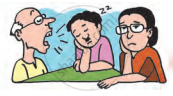
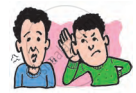
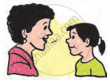
Look at the speaker in each picture. Say whether each one is a good speaker. Give reasons for your answer.
 |
 |
 |
 |
 |
Name a few other things that people often count. (At least 5.)
When do the parents feel sorry and become unhappy?
What are the three rules given by the bird?
Use this passage to play the game. You can collect information on other famous personalities and play too.
Charlie Chaplin was born on April 16, 1889, in London England. His birth name was Charles Spencer Chaplin, though he had many nicknames growing up such as Charlie, Charlot, and The Little Tramp. His father, Charles Chaplin, and his mother, Hannah Chaplin, were inducted into the music hall of fame, leading the way to his exposure even as a young boy. His first onstage moment was when he was 5 years old; he sang a song that was intended to be sung by his own mother; she had become ill at the time of the performance, so little Charlie Chaplin stood instead and performed for his mother.
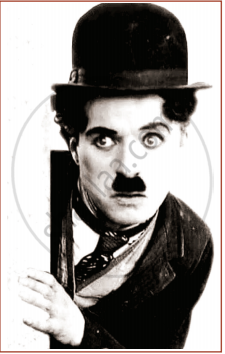
Charlie Chaplin came to the United States in 1910, at the age of 21. He was brought to New York, which was known to be a great place to start out for anyone trying to become a professional actor. Two years later, in 1913, Chaplin signed his very first contract at Keystone and it was no time before he headed to Hollywood. His first movie premiered in 1914, “Making a Living,” and went on to make over 35 movies total in that year alone. Charlie Chaplin grew to become one of the most popular and successful actors of all time. The moment that really kicked off his long career was in 1921 when he starred in, and produced, his first full-length film called “The Kid.” From then on, most people all over the world knew Charlie Chaplin and loved his movies. He had a great career and life, dying on December 25, 1977, in Vevey, Switzerland. He had apparently died of natural causes in his sleep from old age.
Few articles are missing in the given passage. Edit the passage given below by adding suitable articles where ever necessary.
My neighbourhood is very interesting place. My house is located in apartment building downtown near many stores and offices. There is small supermarket across street, where my family likes to go shopping. There is also post office and bank near our home. In our neighbourhood there is small, Green Park where my friends and I like to play on weekends and holidays. There is small pond near park and there are many ducks in park. We always have great time. In addition there is elementary school close to our home where my little brother studies in third grade. There are so many things to see and do in my neighbourhood that’s why I like it. It’s really great place.
What should we learn from our teachers?
What makes us happy and free, according to the poet?
Match the following.
| 1. | A man of ease | Emanuel |
| 2. | John’s trainer | Lalli and Lolly |
| 3. | Mathew’s secretary | John Mathew |
| 4. | John’s chef | Louise |
| 5. | Mathew’s friends | Basky |
Read these lines and answer the questions given below.
And welcomes little fishes in
With gently smiling jaws!
- Who welcomes the fish? Why?
- Which line tells you that the crocodile is hungry?
Read the lines and answer the question given below.
Here is a child who clambers and scrambles,
All by himself and gathering brambles;
- Where do you think the child is?
- What does ‘gathering brambles’ mean?
The pit was comfortable for the wild boar to sleep in.
A day in Mars is called ______.
How do we work?
Match the actions with the picture.
| mixes for community food service | 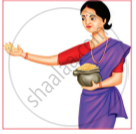 |
| sows the grain |  |
| feeds the birds |  |
Jaswantgarh is named after the Indian soldier ______.
Match their hobbies.
 |
swimming |
 |
cycling |
 |
gardening |
How did the old man disguise himself?
Some words sound the same but their spelling and meaning are different. Such words are called homophones. There are many homophones.
Meena was transferred to a______.
What are things that we can save? Why should we save them?
Write a paragraph on the topic ‘Park’.
Write the word with same meaning.

eraser- ______.
Write the correct word.
| rooster, king, hen, tiger, queen, tigress. |
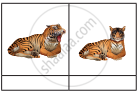
Who are already awake?
How did the tree help the boy earn money?
