Advertisements
Advertisements
प्रश्न
What do you understand of the three voices in response to the question 'What does a novel do' ?
Advertisements
उत्तर
The three voices stand for three different types of readers of novels. The first voice represents a good tempered person who is engaged in some other activity but is aware of the merits of literature. He does not have time and attitude to analyse the novel. He only vaguely knows that a novel deals with a story. The second voice represents the attitude of another type of readers of novel. This type of readers are aggressive and brisk. These type of readers treat novels very casually. They do not have time to analyse novels. They just want a story to read and pass time. The third voice is that of novelists like the author himself to whom story is the soul of a novel. All the three voices are unanimous that a novel ultimately tells a story.
APPEARS IN
संबंधित प्रश्न
Read the following extract carefully and complete the activities given below :
A1 Complete the following :
(i) Books were found on the _____________ and ____________.
(ii) The tales are described as ______________ and __________.
|
Have you forgotten? Don't you know?
We'll say it very loud and slow:
THEY ... USED ... TO ... READ! They'd READ and READ,
AND READ and READ, and then proceed
To READ some more. Great Scott! Gadzooks!
One-half of their lives was reading books!
The nursery shelves held books galore!
Books cluttered up the nursery floor!
And in the bedroom, by the bed,
More books were waiting to be read!
Such wondrous, fine, fantastic tales
Of dragons, gypsies, queens, and whales
And treasure isles, and distant shores
Where smugglers rowed with muffled oars,
And pirates wearing purple pants,
And sailing ships and elephants,
And cannibals crouching 'round the pot,
Stirring away at something hot.
(It smells so good, what can it be?
Good gracious, it's Penelope.)
|
Describe the mental condition of the voyagers on 4 and 5 January.
Discuss the following statement in groups of two pairs, each pair in a group taking opposite points of view.
The methods of inquiry of history, science, and philosophy are similar.
The power of poetry lies in suggestion and understatement. Discuss this with reference to the poem.
Why does the poet prefer to be a primitive Pagan rather than a member of civilised society?
Discuss the importance of time in the narration of a story.
Study the Note to Aspects of the Novel given at the end. Discuss the features that mark the piece as a talk as distinguished from a critical essay.
The best punishment is ‘forgiveness’. Discuss the sentence in light of the text you have read. You can make use of the following points.
(a) Forgiveness provides an opportunity to change the behaviour.
(b) Forgiveness leads to repentance.
(c) A person may commit a mistake/crime impulsively or under the force of strong emotions.
(d) ________________________
(e) ________________________
Have you heard of birds that fly from one part of the world to another in small or large flocks?
They are called Migratory birds.
Discuss and write down two reasons why they migrate and return.
The last leaf fell off during the rain.
Expand the idea inherent in the following proverb :
If winter comes, can spring be far behind? - Shelley
Find at least five other Akbar and Birbal stories and share them with your friends. Make a list of the stories collected by the entire class. Put your list in alphabetical order.
Choose any one of the objects we use daily and find out how it is made. Present the information in the form of a chart.
Prove with the theme of the play/extract that the deeper human emotion which profoundly interested Shakespeare was jealousy.
Choose any one of the seven States. Find more information about it and prepare a leaflet or brochure to invite people to visit it.
Name the white and bright things mentioned in the poem.
Visit a library:
Read stories about Gautama Buddha. Relate one story in the class.
Read the passage aloud playing the roles of the different characters.
Make a time table of your daily routine
- On a school day
- On a holiday, and
- During examinations.
Start at the time you normally get up and list your activities
hourly: 7 am to 8 am, and so on.
In the novel, the Lethargarians give a whole day’s time table of their activities. Can you guess what it would be like?
Use your own ideas and prepare their time table.
If you were to draw a landscape on the basis of this poem, what elements will you show in it? What colours will you use?
Correct the following sentence using facts from the passage.
Achilles was killed by an arrow that pierced his heart.
Find three lines, that contain images of nature in the autumn season.
During daytime
- _______________________
- _______________________
- _______________________
Answer in your own words.
What did the ancestor from 1910 wish to do instead of making his bed?
Answer in your own words.
How is the boy from the 1500s dressed?
Choose the appropriate phrase to insert in the gap, to make the sentence meaningful. Use the appropriate form of the verb.
Sorrowful times are ______ darkness.
Write the symbol that is used in the poem to represent the following idea.
I made a rare choice.
Rohan and Muk entered the garden at midnight ______.
Write in your own words.
How does the poet glorify his home in the first stanza?
Read the word. Write the words that combine to make it.
gentle-hearted
Show the major events in the story of Pheidippides on a ‘time-line’.
Ask your parents or other grown-ups to show you some used notes. Observe them carefully. Have they been used properly? Write your observations.
Would you like to be a netizen?
How did Helen overcome her handicaps?
Use this passage to play the game. You can collect information on other famous personalities and play too.
Charlie Chaplin was born on April 16, 1889, in London England. His birth name was Charles Spencer Chaplin, though he had many nicknames growing up such as Charlie, Charlot, and The Little Tramp. His father, Charles Chaplin, and his mother, Hannah Chaplin, were inducted into the music hall of fame, leading the way to his exposure even as a young boy. His first onstage moment was when he was 5 years old; he sang a song that was intended to be sung by his own mother; she had become ill at the time of the performance, so little Charlie Chaplin stood instead and performed for his mother.
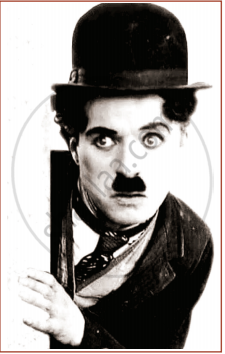
Charlie Chaplin came to the United States in 1910, at the age of 21. He was brought to New York, which was known to be a great place to start out for anyone trying to become a professional actor. Two years later, in 1913, Chaplin signed his very first contract at Keystone and it was no time before he headed to Hollywood. His first movie premiered in 1914, “Making a Living,” and went on to make over 35 movies total in that year alone. Charlie Chaplin grew to become one of the most popular and successful actors of all time. The moment that really kicked off his long career was in 1921 when he starred in, and produced, his first full-length film called “The Kid.” From then on, most people all over the world knew Charlie Chaplin and loved his movies. He had a great career and life, dying on December 25, 1977, in Vevey, Switzerland. He had apparently died of natural causes in his sleep from old age.
‘My tongs are like a tiger among toys.’ It means ______
How did Hamid’s friends enjoy the games in the fair?
At dawn, the______ began to sing.
Look at the number pattern. Fill the blank in the middle of the series or end of the series.
QPO, NML, KJI, ______, EDC
Why did the train stop in the middle of the forest?
Women should not be compared with men in cricket, says Mithali.
Identify the speaker/character.
"Don't let us down now, Gulliver; we need your help."
Name the tools the farmer brought out. What did he do with them?
The boar slept until the fading sun told him it was time to get up. What does the phrase until the fading sun mean?
Be humble like a _____.
Find the rhyming word from the poem.
Country - ______.
Rearrange the story in order.
- Jaswant stayed back in his post.
- He killed 300 chinese soldiers in the battle.
- He fired weapons from separate points.
- Sela and Nura helped him in the battle.
- Jaswant shot himself to death.
- Chinese soldiers caught the man who supplied food.
- He was awarded the Mahavir Chakra.
Arrange the pictures by using numbers.

______is a Do It Yourself kid.
Identify the character or the speaker.
“I was cruel and selfish.”
Akilan’s passion is to learn ______.
Match the rhyming words.
| 1. share | dare |
| 2. bread | rest |
| 3. care | needs |
| 4. deeds | ahead |
| 5. zest | bear |
Do you like this kind of world?
Why should we close the tap after using it?
Did the seeds given to Ani sprout? why?
Does the brush bend to her will?
Are these sentence TRUE or FALSE
The poet tells the child to be afraid when it is dark.
Choose the right word.
The tamarind tree grows over Tansen’s ______.
Read the following information given in the table below and answer the questions.
| A nice choice from Chennai to the National capital | |||
| RAJADHANI EXPRESS TIMETABLE | |||
| Shortest Route between Chennai and Hazrat Nizamuddin 8 Halts & 324 intermediate stations in between | |||
| Station Name | Departs | Day | Speed |
| Chennai Central | 06.05 | 1 | 75 |
| Vijayawada | 11.55 | 1 | 76 |
| Warangal | 14.40 | 1 | 77 |
| Balharshah | 18.00 | 1 | 78 |
| Nagpur | 20.45 | 1 | 74 |
| Bhopal | 02.10 | 2 | 89 |
| Jhansi | 05.31 | 2 | 99 |
| Gwalior | 06.32 | 2 | 85 |
| Agra Cantt | 07.57 | 2 | 76 |
| Hazrat Nizamudin | 10.25 | 2 | - |
a) The number of stations between Chennai Central and Hazrat Nizamudin is______.
- five
- ten
- eight
- eleven
b) The train is expected to reach ______ around 8.45 PM
- Warangal
- Vijayawada
- Bhopal
- Nagpur
c) Between ______ the train runs at its maximum speed.
- Bhopal and Gwalior
- Bhopal and Jhansi
- Bhopal and Hazarat Nizamudin
- Bhopal and Agra
d) Almost ______ the train reaches Vijayawada.
- the day after
- around early morning
- late night
- around noon
e) People prefer the Rajadhani Express to travel from Chennai to reach the capital because ______.
- it reaches the destination on the same day
- the charge is reasonable.
- the train halts at ten stations.
- it is the shortest route from Chennai to New Delhi.
f) The destination of Rajadhani express is______.
- Hazarat Nizamudin.
- New Delhi junction.
- Old Delhi.
- Rajkot.
What should parents do to ensure cyber safety for their wards? (Any three points)
