Advertisements
Advertisements
प्रश्न
Read the following passage and answer the questions that follow:
The Stationmaster’s Supreme Sacrifice by Sanchari Pal (Adapted)
- Thirty-three years ago, on the night of December 2, 1984, Bhopal was hit by a catastrophe that had no parallel in the world’s industrial history. An accident at the Union Carbide pesticide plant in Bhopal had released almost 30 tons of a highly toxic gas called methyl isocyanate, turning the city into a vast gas chamber. The result was a nightmare; more than 600,000 people were exposed to the deadly gas cloud that left thousands dead and many more breathless, blind and in agonizing pain. Few people know that during the Bhopal gas tragedy a heroic stationmaster risked his own life to save others.
- On the evening of December 3, 1984, Ghulam Dastagir was settling down in his office to complete some pending paperwork. This work kept him in his office till 1am in the night, when he emerged to check the arrival of the Gorakhpur Mumbai Express. As he stepped on to the platform, the deputy stationmaster felt his eyes burn and a queer itching sensation in his throat. He did not know that poisonous fumes leaking from Union Carbide’s pesticide factory were stealthily enveloping the railway station.
- Beginning to choke, Dastagir did not know then that twenty-three of his railway colleagues, including his boss, station superintendent Harish Dhurve, had already died. It was later reported that Dhurve had heard about the deadly gas and had immediately tried stopping the movement of trains passing through Bhopal before collapsing in his office chamber. His suddenly worsening health and years of experience told Dastagir that something was very wrong. Though he did not fully comprehend what was happening, he decided to act immediately when he did not get any response from the station master. He alerted the senior staff at nearby stations, like Vidisha and Itarsi, to suspend all train traffic to Bhopal.
- However, the jam-packed GorakhpurKanpur Express was already standing at the platform and its departure time was 20 minutes away. Listening to his gut instinct, Dastagir summoned his staff and told them to immediately clear the train for departure. When they asked if they should wait until the order to do so came from the head office, Dastagir replied that he would take complete responsibility for the train’s early departure. He wanted to ensure that the train left immediately, without any delay. His colleagues later recalled that Dastagir could barely stand and breathe as he spoke to them. Breaking all rules and without taking permission from anyone, he and his brave staff personally flagged off the train.
- But Dastagir’s work was not done. The railway station was filling up with people, desperate to flee the fumes. Some were gasping, others were vomiting, and most were weeping. Dastagir chose to remain on duty, running from one platform to another, attending, helping and consoling victims. He also sent an SOS to all the nearby railway offices, asking for immediate medical help. As a result, four ambulances with paramedics and railway doctors arrived at the station. It was winter and the gas was staying low to the ground, a thick haze poisoning everything in its path. Besieged by hordes of suffering people, the station soon resembled the emergency room of a large hospital. Dastagir stayed at the station, steadfastly doing his duty, knowing that his family was out there in the ill-fated city. That day all he had for his protection was a wet handkerchief on his mouth.
- Ghulam Dastagir’s devotion to duty saved the lives of hundreds of people. However, the catastrophe didn’t leave him unscathed. One of his sons died on the night of the tragedy and another developed a lifelong skin infection. Dastagir himself spent his last 19 years shuttling in and out of hospitals; he developed a painful growth in the throat due to prolonged exposure to toxic fumes. When he passed away in 2003, his death certificate mentioned that he was suffering from diseases caused as a direct result of exposure to MIC (Methyl Isocyanate) gas. A memorial has been built at platform No.1 to pay tribute to those who sacrificed their lives in the line of duty on the fateful night of December 3, 1984. However, Ghulam Dastagir, who died later, is not one of them. A forgotten hero whose sense of duty and commitment saved countless lives, Dastagir’s story deserves to be recognized and remembered by our fellow countrymen.
- Why was the accident at Union Carbide unparalleled in the world’s industrial history?
- How was Dastagir affected by the poisonous gas?
- What was the action taken by the station superintendent?
- How did Dastagir and his staff break rules?
- What was the cause of Dastagir’s death?
- Find words from the passage which mean the opposite of the following.
- safeguard (para 1)
- common or familiar (para 2)
- prompt (para 4)
- cause (para 6)
Advertisements
उत्तर
- The union carbide pesticide plant in Bhopal had released almost 30 tons of a highly toxic gas called methyl isocyanate. It had turned the city into a gas chamber. It left thousands dead. Six lakh persons suffered due to exposure to toxic gas. So, the Bhopal tragedy was unparalleled in the world’s industrial history.
- One of his sons died. Another developed a lifelong infection. Ghulam Dastagir himself spent his last 19 years in and out of hospitals. He developed a painful growth in his throat. He was suffering from diseases caused by direct exposure to toxic fumes.
- Dastagir alerted senior staff members at the nearby railways' station like vidhisha and Itarsi to suspend all train traffic to Bhopal. Against rule, he alerted his staff to clear the train immediately for departure. He got medical help. Four ambulances with paramedics arrived to attend to the suffering people at the station.
- A train can’t be flagged off before its stipulated time without getting permission from top-level officers. Dastagir gives orders to release the train
immediately after it reached the station. They flagged off the train even before it stopped. Traffic to Bhopal from other stations was blocked by his timely orders. Thus Dastagir and his staff broke the rules. - Dastagir died after 19 years of suffering from diseases caused by a direct result of exposure to MIC (methyl ISO cyanate) gas.
- words from the passage which mean the opposite of the following.
- safeguard x risk
- common x queer
- prompt x delay
- cause x result
APPEARS IN
संबंधित प्रश्न
Read the passage given below :
(ii) he added a lot of grandeur to Mewar.
(iii) of his valour, sacrifice and patriotism.
(iv) both (ii) and (iii)
(b) Difficulties in the way of Mewar were :
(ii) ancient traditions of the kingdom.
(iii) its small area and small population.
(iv) the poverty of the subjects.
(ii) the flag of Mewar was hoisted high.
(iii) the people of Mewar showed gallantry.
(iv) most of the rulers heaved a sigh of relief.
(d) Mewar was lucky because :
(ii) most of its people were competent.
(iii) most of its rulers were competent.
(iv) only a few of its people were incompetent.
Answer the following questions briefly:
(h) How could art and literature flourish in Mewar?
(i) How did the rulers show that they cared for their subjects?
(j) What does the erection of Vijaya Stambha and Kirti Stambha in the same fort signify?
(k) Find words from the passage which mean the same as each of the following:
(ii) evidence (para 4)
Read the following extract carefully and complete the activities given below :
A1 Complete the following :
(i) Books were found on the _____________ and ____________.
(ii) The tales are described as ______________ and __________.
|
Have you forgotten? Don't you know?
We'll say it very loud and slow:
THEY ... USED ... TO ... READ! They'd READ and READ,
AND READ and READ, and then proceed
To READ some more. Great Scott! Gadzooks!
One-half of their lives was reading books!
The nursery shelves held books galore!
Books cluttered up the nursery floor!
And in the bedroom, by the bed,
More books were waiting to be read!
Such wondrous, fine, fantastic tales
Of dragons, gypsies, queens, and whales
And treasure isles, and distant shores
Where smugglers rowed with muffled oars,
And pirates wearing purple pants,
And sailing ships and elephants,
And cannibals crouching 'round the pot,
Stirring away at something hot.
(It smells so good, what can it be?
Good gracious, it's Penelope.)
|
Notice these expression in the text. Infer their meaning from the context.
ducking back
Do you think that the ruled always adopts the language of the ruler?
You know what ‘hide-and-seek’ is. What would ‘hide-and-speak’ mean?
Bring out the parallel suggested between the predatory instincts of the bird and human behaviour.
Read the following statement and mark those that apply to you.
I have a small group of close friends and have no wish to interact with anyone else.
What message does this story bring out for youngsters?
Say why the speaker of the poem wishes to be a-
hawker
There are different types of short stories. Use a dictionary/internet and find out what each of the following types refers to.
- fable:
- anecdote:
- fairy tale:
- parable:
- tragedy:
- humorous story:
- detective story:
- myth:
‘Never mind faded forests, Austin’. The word ‘faded’ means to become dim or faint. The word describes the forests that have become faint or dim in appearance. Now go through the poem again and complete the table.
| Describing word | Object | Explanation |
| 1. faded | forests | The forests have become faint or dim in appearance. |
| 2. silent | ||
| 3. unfading | ||
| 4. bright |
In the following sentence, point out the Main Clause and Subordinate Clause. Encircle the Subordinator.
Old Behrman was a painter, who lived on the ground floor.
Enact the ad by playing the roles of Didi and her relatives. One more child acts as the salesman of ‘Hemagauri’ and presents the text given in white letters in pink bubbles.
Now, talk to your friends or elders; refer to books and read about all the objects on which wheels are used. List them. (How many did you miss out on in your first list? Why?)
What do the following events/actions tell us about the characters? Discuss.
Sir Ector asked Sir Kay to show him whether he could draw the sword out of the stone.
Complete the following diagram.
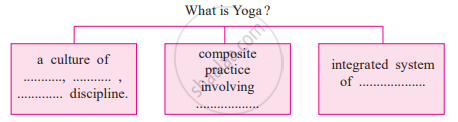
Write slogans for the cleanliness drive in your area.
WWW is a short form of World Wide Web.
Find ten other short forms related to ICT (Information and Communication Technology).
Take a stanza from the poem. Write it in the blanks and find the rhyme scheme.
| Lines from the poem | Rhyme scheme (a/b/c/d) |
drenched – thoroughly wet
He is drenched to the skin. ______
The little bird broadened the hole with her______.
We get water by burning _______.
Look at the picture and Choose the correct word.

What was his master’s advice?
Three waves hit the village.
The king shouted at Ani.
Match the rhyming words.
| 1. | say | fall |
| 2. | go | day |
| 3. | all | grow |
Nithin's mom said that Bala's father is a ______ magician.
What does she paint?
Replace the bold word/words with a word from the quiver and re-write the sentence –
The teacher said something about his good handwriting. He felt very happy.
