Advertisements
Advertisements
प्रश्न
Discuss the following with your partner and complete the following sentence.
Food adulteration means _________________.
Advertisements
उत्तर
Food adulteration means the addition of other substances that degrade the quality of food.
APPEARS IN
संबंधित प्रश्न
Imagine that you are Santosh Yadav, or Maria Sharapova. You have been invited to speak at an All India Girls’ Athletic Meet, as chief guest. Prepare a short speech to motivate the girls to think and dream big and make an effort to fulfil their dreams, not allowing difficulties or defeat to discourage them. The following words and phrases may help you.
• self confident/confidence/sure of yourself
• self assured/assurance/belief in yourself
• morale/boost morale/raise morale
• giving somebody a boost/fillip/lift
• demoralising/unsure of yourself/insecure/lack confidence
What social and ecological benefits of planting a tree does the poet refer to?
What was the great victory? Who had won the victory?
Why is the poet so much against watching television? Give two reasons.
In what mood is the speaker now? Where is he?
The air broke into a mist with bells,
The old walls rocked with the crowd and cries.
Had I said, "Good folk, mere noise repels....
But give me your sun from yonder skies!"
They had answered "And afterward, what else?"
Read the above lines and answer the question that follow.
Explain“And afterward, what else?”
What does Hemingway want to convey about the affects of war through the story?
What are examples of simile, metaphor, and personification in “All Summer in a Day”?
Fill in the blank with an appropriate word:
There is no use crying __________ spilt milk
She laid the table after she had finished the cooking. (Begin: When…)
Your class wants to visit a well-known historical monument in a nearby town. Write a letter to your Principal seeking permission and say why you would benefit from the visit.
Referring closely to the essay On Going on a Journey, give Hazlitt's views about the manner in which a change of place brings about a.change in ideas, opinions, and feelings.
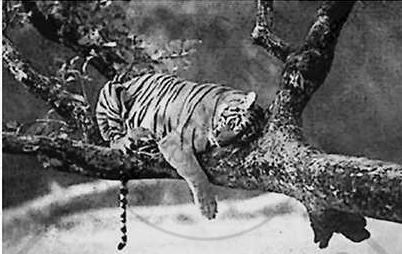
Study the picture given below. Write a short story, description, or account of what the picture suggests to you. Your composition may be about the subject of the picture, or you may take suggestions from it; however, your composition must have a clear connection with the picture.
You are to be awarded a Special Prize at the Annual Prize Day ceremony of your school. Write a letter to a lady relative, giving her the news. Be sure to include details of the prize that you are to receive, and tell her why you have been chosen for this honour.
Mrs. Kumar has been a teacher for thirty years. She will now retire.
Here are the terms of different kinds of vessels: yacht, boat, canoe, ship, steamer, schooner. Think of similar terms in your language.
The following three compound words end in-ship. What does each of them mean?
| airship | flagship | lightship |
To what is the bird’s movement compared? What is the basis for the comparison?
Look for some other poem on a bird or a tree in English or any other language.
(i) What do you understand by the terms `outsider art’ and `art brut’ or `raw art’?
(ii) Who was the “untutored genius who created a paradise” and what is the nature of his contribution to art?
Discuss in groups of four.
The problems of over population that directly affect our everyday life.
‘Don’t expect an English cup of tea’—how does this phrase bring out the contrast between English and American attitudes?
The author is a humorist
a. How does the story reflect his sense of humour?
b. What makes his lady friend remark - 'You are quite a humorist'?
c. Give instances of the author's ability to laugh at himself.
Surf the net and obtain more information about the conservation work done by Shaaz. Prepare posters to inspire others and display them on your college noticeboard.
The story of Kalpana Chawla has become an inspiration for millions of young Indians. How? What message did she send from the space shuttle to students of her college?
Look at the sentences given below. Find out which one is correct. If the sentence is wrong give reasons.
List the reactions of the agricultural officer to the author’s inquiry about Kasbai rice seeds. One is done for you.
(a) He had not heard of Kasbai.
(b) ___________________________
(c) ___________________________
The cherry tree is a narrative poem. Features that make it a narrative poem are given below. Justify them with proper examples.
Characters are referred to.
Write an appreciation of the poem considering the following points:
- About the poem, poet, and title.
- Theme/summary/gist of the poem.
- Poetic style/language, poetic devices used in the poem.
- Special features/novelties/focusing elements.
- Message/values/morals in the poem.
- Your opinion about the poem.
There are a number of challenges a farmer in India faces. Discuss with your friend, how it is possible to improve the condition of farmers.
| Sr. No. | Challenges | Solutions |
| 1. | Water Scarcity | Rain Water Harvesting |
| 2. | Credit and In-debtedness | |
| 3. | Land Issues | |
| 4. | Climatic changes | |
| 5. | Social Groups | |
| 6. | Lack of advanced technology | |
| 7. | Diversification | |
| 8. | Market Risks |
Write an appreciation of the sonnet. Refer to the points to be covered for appreciation.
- About the poem/poet/title
- Theme
- Poetic devices, language, style
- Special features/novelties/focusing elements
- Values, message
- Your opinion about the poem
Discuss with your partner and match the following expressions given in column A with their interpretations in column 'B'.
| Sr.No. | A | B |
| 1. | While Chief Baron Ear sat to balance the laws. | (a) Eyes are refrained from using spectacles. |
| 2. | They are made with the straddle as wide as the ridge of the Nose is. | (b) The responsibility of giving a verdict rested on the shoulders of the hearing organ. |
| 3. | That whenever the Nose put his Spectacles on, by daylight or candlelight Eyes should be shut! | (c) Spectacles are meant for none other than the nose. |
| 4. | So his lordship decreed with a grave solemn tone, decisive and clear, without one if or but. | (d) The judge delivered a firm verdict without any doubt. |
- Read the first three paragraphs on Page 92. (From......... ‘One morning .............. up to ............ a discussion after hall)
- Re-read the same noting down only important points.
- Rewrite the important points in your own simple language, in your notebook.
- Make certain that your summary is less than half the length of the original passage.
Consult the thesaurus and note down synonyms for 'ordinary'.
- One synonym of the ordinary is banal.
Eg. He finds English poetry very banal. - Similarly, find the meaning and make use of the words trite, routine, cliched, and regular in your own sentences.
Read the following note from a school girl’s diary:
|
Miss Fernandes is our new class teacher. She is slim and fit even at the age of 50. With her grey hair, spectacles, and plain formal clothes, she looks so strict! But we discovered that her classes can be great fun. We begin each class with a simple two-minute game or activity. Today we had to write as many words beginning with 'a' as we could, within 60 seconds. I wrote 50! I got a pot on my back for making 'the best effort'! I feel on top of the world. |
Write diary entries for the interesting or important events that take place in your school. Write at least 3 entries.
Imagine that you are a compere of a ‘Prize Distribution Ceremony’ of your college. Write a script for the same.
You can take the help of the following points.
- Introduction – A brief introduction of the programme / function / show
- Welcome speech – Welcome to all guests. Felicitation – felicitation of the guests (the principal, vice-principal, etc.).
- Lighting the lamp
- Welcome song
- Main events
- Vote of thanks
Write in your own words, how the Robinson family made each of their homes.
In the play, two devices that make use of wheels are given. The devices are:
- _______________
- _______________
From the internet or other sources, trace the history of the use of the wheel. Write ‘An Autobiography of a Wheel’.
Answer the following question :
What are the advantages of an imaginary argument with a person having a different bias?
Hold a story-telling competition in which each one narrates a folk-tale or fairy-tale.
Go through the following steps and discuss in pairs about the facts mentioned in it. Write a paragraph using the points. Give another interesting title.
| Living A Better Life |
| ↓ |
| Get rid of one bad habit at a time. |
| ↓ |
| Avoid negative thoughts. Be positive. |
| ↓ |
| Trust yourself. Love what you do. |
| ↓ |
| Try to enrich your mind by becoming a life long learner. |
| ↓ |
| Sharing and Caring makes life enjoyable. |
| ↓ |
| Be humble. Respect and welcome/accept each day with a smile. |
Prepare attractive advertisement using the hints given below.
Home appliances – Aadi Sale – 20-50% - Special Combo Offers – Muthusamy & Co., Raja Street, Gingee.
Your friend is coming to your city/town to spend a week with you. He/she wants to visit some tourist places and enjoy the special food items of the place. Prepare a two-day itinerary for the visit.
| Day | Timing | Stopover | Stopover | Mode of Transport |
| Day 1 Sunday | 8.00 am | Market | Go shopping for | Auto |
| clothes/curios | ||||
| Day 2 Monday | ||||
Develop the following hints.
A wood cutter - cutting wood - dropped his axe in the pond - started weeping - an angel appeared - asked what the matter was - brought a golden axe - from the pond - wood cutter did not accept - brought a silver axe - not accepted - brought an iron axe - accepted - pleased with the honesty - offered all the axes to him.
Use the option to fill in the blank.
The market ______ closed.
Look at the words given below and put them under the things that they are made of –

In a short paragraph write how you can be a good friend.
Do you know that there are seven wonders in the world? Can you tell the name of the one which is in India? Find out and write the names of all the seven wonders and the countries they are located in.
| Wonders of the world | Countries | |
| (i) | The Taj Mahal | |
| (ii) | The Great Wall of China | |
| (iii) | ||
| (iv) | ||
| v) | ||
| (vi) | ||
| vii) |
Here is a short story.
Once a lion lay fast asleep in the Ranathambore forest of Rajasthan. Some mice were playing hide and seek near him. One mouse got trapped under the lion’s paw. The lion woke up, laughed loudly, and let the mouse go!
After some days the mouse heard the lion’s roar. He saw that the lion lay in great pain as he was tied with many ropes. The mouse used his sharp teeth and cut the rope. ‘‘You are a true friend,’’ said the lion.
From Aesop’s Fables
A friend in need is a friend indeed
What does this mean?
- We must be there for friends in trouble
- Only a good friend will be with us when we are in trouble.
What are the occasions when photographs are taken?
| e.g. birthday parties | |

Expand EMI -
Answer the following question as briefly as possible and with close reference to the relevant text.
Referring closely to the conversation between Prospero and Ferdinand at the beginning of Act IV of The Tempest, bring out Prospero’s concerns as a father.
Answer the following question as briefly as possible and with close reference to the relevant text.
How does Prospero prove, “the rarer action is in/virtue than in vengeance” in the final act of The Tempest?
Write the contraction for the following phrase.
are not - ______.
On returning home, Tishani Doshi writes her thoughts reflecting on how her decision to enrol for the Students on Ice programme has been the single most important decision of her life that has completely transformed her.
Imagine yourself to be Tishani and express these thoughts.
You may begin like this:
I can’t thank my stars enough for having cashed in on the opportunity of........
"We'll keep her a day or two longer; she is so weak and helpless." Who said these words? To whom?
Think of different types of people who have to face great difficulties. Write what you can do to help at least one of them.
These two passages are examples of a short introduction to works of art - a short review. They cover the following points:
- The name of the creator
- The theme or subject matter
- Type of art
- Individual style
- Presentation techniques
- Its effect on viewers
- Message or interpretation
Choose a book/film and review it in short using the points you have listed.
