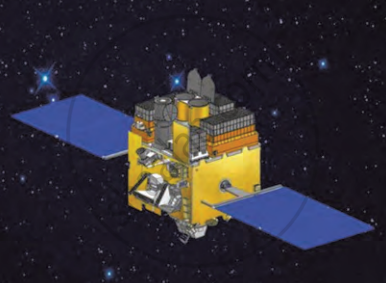
Maharashtra State Board: Class 9
Introduction:
Maharashtra State Board: Class 9
Purpose and Research Goals:
Astrosat is designed to study various aspects of the Universe, including
- Star Formation and Evolution: By observing ultraviolet light, it studies the birth and lifecycle of stars.
- X-ray Astronomy: Its X-ray telescopes detect high-energy radiation from black holes, neutron stars, and supernova remnants.
- Galaxies and Cosmic Phenomena: Astrosat examines the structure and behaviour of galaxies, including interactions between stars and interstellar matter.
- Time-Resolved Observations: It monitors dynamic events in space, like the variability of pulsars and binary star systems.
Maharashtra State Board: Class 9
Instruments on Board:
Astrosat is equipped with
- UVIT (Ultraviolet Imaging Telescope): Studies ultraviolet light from distant objects.
- Large Area X-ray Proportional Counter (LAXPC): Detects low-energy X-rays for studying compact objects like black holes and neutron stars.
- Soft X-ray Telescope (SXT): Focuses on high-resolution imaging of X-ray sources.
- Cadmium Zinc Telluride Imager (CZTI): Captures high-energy X-rays and studies gamma-ray bursts.
- Scanning Sky Monitor (SSM): Surveys the sky for transient X-ray sources.
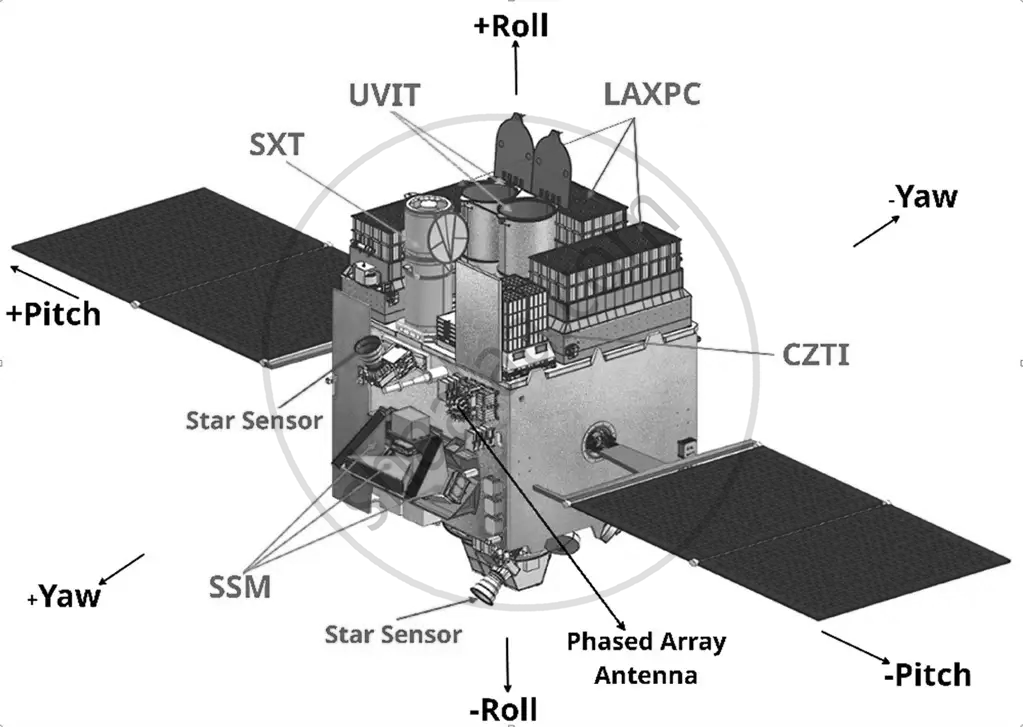
Astrosat
Maharashtra State Board: Class 9
Achievements and Impact:
- Astrosat has provided valuable data on stellar evolution, galaxy clusters, and black holes.
- Scientists from India and around the world use its data for research, enhancing international collaboration in space science.
- As India’s first observatory-class satellite, Astrosat demonstrates the country’s capabilities in advanced space research.