Topics
Heredity and Evolution
- Heredity
- Transcription
- Translation
- Translocation
- Mutations
- Evolution
- Evidences of Evolution > Morphological Evidences
- Evidences of Evolution > Anatomical Evidences
- Evidences of Evolution > Vestigial Organs
- Evidences of Evolution > Palaeontological Evidences
- Evidences of Evolution > Connecting Links
- Evidences of Evolution > Embryological Evidences
- Darwin’s Theory of Natural Selection (Darwinism)
- Lamarck’s Theory of Evolution (Lamarckism)
- Speciation
- Human Evolution
- Human Ancestors
- Homo Sapiens Sapiens (Modern Man)
Life Processes in Living Organisms Part -1
- Life Processes in Living Organisms
- Living Organisms and Energy Production
- Glycolysis
- Tricarboxylic Acid Cycle (Citric Acid Cycle or Kreb’s Cycle)
- Phases of Respiration: Electron Transport Chain (Electron Transfer System)
- Production of ATP
- Cellular Respiration
- Energy From Different Food Components
- Cell Division: an Essential Life Process
- Mitosis > Karyokinesis (Division of Nucleus)
- Mitosis > Cytokinesis (Division of Cytoplasm)
- Significance of Mitosis
- Meiosis: Reduction Division
- Stages of Meiosis: Meiosis I
- Stages of Meiosis: Meiosis II
- Significance of Meiosis
- Mitosis Vs Meiosis
Life Processes in Living Organisms Part - 2
- Reproduction
- Asexual Reproduction
- Asexual Reproduction in Unicellular Organisms > Binary Fission
- Binary Fission > Simple Binary Fission
- Binary Fission > Transverse Binary Fission
- Binary Fission > Longitudinal Binary Fission
- Asexual Reproduction in Unicellular Organisms > Multiple Fission
- Asexual Reproduction in Unicellular Organisms > Budding
- Asexual Reproduction in Multicellular Organisms > Fragmentation
- Asexual Reproduction in Multicellular Organisms > Regeneration
- Asexual Reproduction in Multicellular Organisms > Budding
- Vegetative Reproduction or Vegetative Propagation
- Asexual Reproduction in Multicellular Organisms > Spore Formation
- Sexual Reproduction
- Sexual Reproduction in Plants
- Double Fertilization and Triple Fusion
- Pollination
- Seed Germination
- Human Reproduction
- The Male Reproductive System
- The Female Reproductive System
- Gametogenesis
- Fertilization in Humans
- Implantation in Human
- Pregnancy and Embryonic Development
- Parturition (Birth) in Human
- Lactation in Human
- Sex Determination in Humans
- Menstrual Cycle (Ovarian Cycle)
- Major Events of Menstrual Cycle
- In Vitro Fertilization (IVF)
- Surrogacy
- Sperm Bank/ Semen Bank
- The Twins
- Concept of Reproductive Health
- Population Explosion in India
Environmental Management
Towards Green Energy
- Energy and Use of Energy
- Generation of Electrical Energy
- Power Plant Based on Thermal Energy
- Power Plants Based on Nuclear Energy
- Power Plants Based on Natural Gas
- Electric Energy Generation and Environment
- Electricity Generation using Hydroelectric Energy
- Electricity Generation using Wind Energy
- Electricity Generation using Solar Energy
- Solar Photovoltaic Cell
- Solar Thermal Power Plant
Animal Classification
- Classification of Living Organisms
- History of Animal Classification
- Traditional Method of Animal Classification
- Conventional System of Animal Classification
- Criteria for New System of Classification > Grades of Organization
- Criteria for New System of Classification > Body Symmetry
- Criteria for New System of Classification > Germ Layers
- Criteria for New System of Classification > Body Cavity (Coelom)
- Criteria for New System of Classification > Body Segmentation
- Phylum: Porifera
- Phylum: Cnidaria/Coelenterata
- Phylum: Platyhelminthes
- Phylum: Aschelminthes
- Phylum: Annelida
- Phylum: Arthropoda
- Phylum: Mollusca
- Phylum: Echinodermata
- Phylum: Hemichordata
- Phylum: Chordata
- Subphylum: Urochordata
- Subphylum: Cephalochordata
- Subphylum: Vertebrata/Craniata
- Subphylum: Vertebrata/Craniata > Class: Cyclostomata
- Subphylum: Vertebrata/Craniata > Class: Pisces
- Subphylum: Vertebrata/Craniata > Class: Amphibia
- Subphylum: Vertebrata/Craniata > Class: Reptilia
- Subphylum: Vertebrata/Craniata > Class: Aves
- Subphylum: Vertebrata/Craniata > Class: Mammalia
Introduction to Microbiology
- Applied and Industrial Microbiology
- Microbial Role in Dairy Products
- Probiotics
- Yeast and Microbes in Bread Making
- Vinegar Production
- Microbial Enzymes
- Antibiotics
- Microbes and Fuels
- Bio-fuel
- Microbial Pollution Control
- Sewage Management
- Clean Technology
- Microbes and Farming
Cell Biology and Biotechnology
- Cell Biology (Cytology)
- Stem Cells
- Stem Cell Research
- Organ Transplantation
- Organ and Body Donation
- Concept of Biotechnology
- Crop Biotechnology > Hybrid Seeds
- Crop Biotechnology > Genetically Modified Organisms (GMOs)
- Crop Biotechnology > Biofertilizers
- Animal Husbandry (Livestock)
- Human Health
- Vaccination and Immunization
- Edible Vaccines
- Treatment
- Interferons
- Gene Therapy
- Cloning
- Industrial Products/White Biotechnology
- Environment and Biotechnology
- Food Biotechnology
- DNA Fingerprinting
- Green Revolution
- White Revolution
- Blue Revolution
- Fertilizers
- Insecticides
- Types of Farming in India > Organic Farming
- Animal Husbandry (Livestock) > Apiculture (Bee Farming)
- Cultivation of Medicinal Plants
- Processing and Preservation of Fruits
Social Health
Disaster Management
Life's Internal Secrets
- Autotrophic Plants
- Heterotrophic Plants
- Human Digestive System
- Nutrition in Plants
- Transport
The Regulators of Life
The Life Cycle
Mapping Our Genes
Understanding Metals and Non-Metals
Striving for Better Environment 2
- Use of Efficient and Eco-friendly Technology
- Sustainable Use of Resources
- Enforcement of Acts, Laws and Policies
Amazing World of Carbon Compounds
Definition: First Aid
The immediate and temporary care given to an injured or ill person before proper medical treatment is called first aid.
Basic Principles of First Aid
Life and Resuscitation: ABC
1. Airway
If the victim has difficulty breathing, ensure their airway is clear. Gently tilt the head backward and lift the chin upward to open the respiratory passage. This position prevents the tongue from blocking the airway, allowing smooth airflow.
2. Breathing
If the victim has stopped breathing, provide mouth-to-mouth resuscitation. Pinch the victim's nose shut, take a deep breath, and seal your mouth over the victim's mouth. Blow air into the lungs until the chest rises, then allow the chest to fall naturally. Repeat this process every 4–5 seconds until normal breathing resumes or professional help arrives.
3. Circulation
If the victim is unconscious and has no pulse, perform cardiopulmonary resuscitation (CPR). Start by giving two mouth-to-mouth breaths. Place both palms one over the other in the centre of the chest (just above the sternum). Press down firmly and quickly, compressing the chest about 2 inches deep. Repeat chest compressions about 15 times at a steady rhythm (around 100-120 compressions per minute). Alternate between 2 breaths and 15 chest compressions until help arrives or the person shows signs of recovery.
Simple Steps for Providing First Aid in Different Situations:
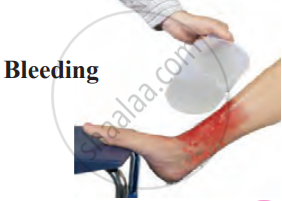
1. External Bleeding: If a person is bleeding, the first step is to help them sit or lie down comfortably. Keep the bleeding part of the body elevated (above the heart level) to reduce blood flow. Clean the wound with clean water and apply pressure with a clean cloth to stop the bleeding.
2. Burns and Scalds
Minor Burns:
- Wash the burn with cool water or hold it under running water to reduce the heat.
- Give the person water to drink to keep them hydrated.
- Clean the burn with a cotton swab soaked in an antiseptic solution.
- Do not apply oily ointments like ghee or butter to the burn. Cover the burn with a clean, dry cloth or dressing.
Serious Burns:
- Give the person emotional support to keep them calm. Cover the burn with a sterilised cloth or clean fabric.
- Remove jewellery or shoes if it can be done easily without hurting the burn.
- Do not burst blisters or touch the burnt skin. Do not apply oily ointments or try to remove any cloth stuck to the burn.
- If the person is conscious, give them water to drink, but avoid tea or coffee.
- Get medical help immediately.
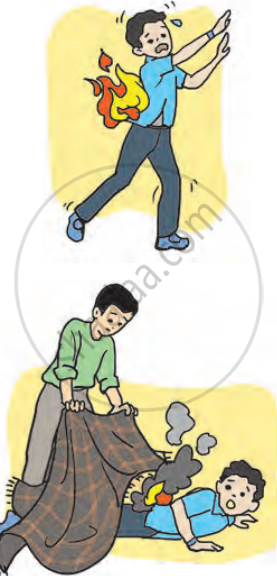
Immediate steps for burns
3. Sunstroke: Sunstroke occurs when someone has been in the sun for too long and their body loses water and minerals.
Remedial Measures:
- Take the person to a cool place or the shade.
- Sponge their body with cold water to cool them down.
- Put a cold cloth on their neck to reduce their body temperature.
- Give them plenty of water or liquids like sherbet to drink.
- If the person feels like vomiting, make them lie on their stomach with their head turned to one side.
- Get medical help or take the person to a hospital.
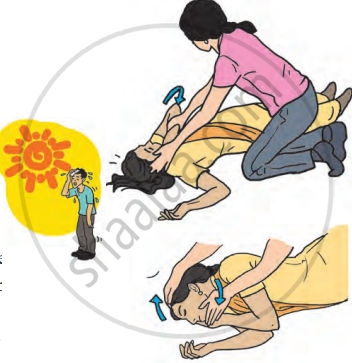
First aid for sunstroke
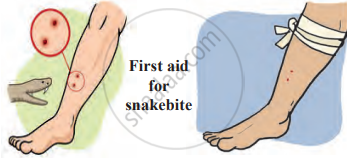
4. Snakebite: There are about 2000 species of snakes, but only a few, like cobras, kraits, vipers, and sea snakes, are poisonous. Not all snakebites are deadly, but the fear of the bite can cause a lot of stress.
Remedial Measures:
- Wash the wound with clean water.
- Give the person emotional support to calm them down.
- Tie a cloth tightly above the bite to slow the spread of venom.
- Get immediate medical help for treatment.
5. Dog Bite: A dog bite can cause infection, so it’s important to give first aid and seek medical help.
Remedial Measures:
- Wash the wound with an antiseptic solution like potassium permanganate.
- Cover the wound with a clean, dry cloth.
- Get medical help immediately and make sure the person receives an anti-rabies vaccine to prevent infection.
Key Points: First Aid and Emergency Action
| Term | Meaning | Purpose | Example / Use |
|---|---|---|---|
| First Aid | Immediate care given before medical help | To save life and prevent condition from worsening | Treating cuts, burns, snake bite |
| Emergency Action | Quick steps taken during accidents or disasters | To reduce loss of life and property | Rescue, evacuation, calling help |
| Safety Signs | Warning symbols indicating danger | To prevent accidents | Electric shock sign, fire sign |
| First Aid Kit | Box of essential first aid materials | To provide quick medical help | Bandages, antiseptic, scissors |
