Advertisements
Advertisements
प्रश्न
What were the voices that Paul heard? Did they lead him to success in the real sense?
Advertisements
उत्तर
Although the house Paul and his family lived in was a pleasant one, the money they had was not enough to maintain the social position they had to keep up. The mother realised that her father had no luck making enough money so she decided to do something on her own. It was then that the house started whispering from every corner that “there must be more money The sounds started haunting the place and made Paul very uncomfortable and distressed and disturbed him. Though there were expensive gifts coming on Christmas, Paul could hear behind the shining rocking horse that “there must be more money It is plausible that Paul was schizophrenic and imagined the voices on being stressed due to their misery. As it is written in the text that nobody said it aloud and there is no mention of anyone else hearing such voices, it is clear that Paul imagined his fears giving them a voice. Paul's fear transferred into him through his mother constantly haunted him and became his driving force. The boy was oedipal and unknowingly wished to replace his father from his mother's life. So, the autistic boy drove his shinning horse ferociously until he “got there and would be sure of the horse that would win the next race. There were times when he was not sure, so he would be careful. The gardener Bassett was his partner throughout. Later even uncle Oscar joined as such was the conviction with which Paul used to declare the winning horse's name, and the horse used to win in actual. Call it clairvoyance or sheer luck, which he aspired to have to prove to be worthy of his mother's luck, Paul made money by betting on horses and finally left 80,000 pounds for his family by losing himself.
APPEARS IN
संबंधित प्रश्न
A1. Order
Arrange the following sentences in the chronological order as they appear in the passage:
(i) On celebrations, parents can invest Rs. 200 and plant a sapling of a tree representing the child’s birth star.
(ii) He wants to create Brihat Panchvati.
(iii) He has been able to increase the areas of the Pavitra VanaVana.
(iv) Plans are afoot to create a Saptaswara forest.
Today, Reddy is one of the most well - known environment specialists in India. With his influence, he has been able to increase the areas of the Pavitra Vana and has plans to bring about awareness of Puranic trees and flowers for the knowledge of the Indian citizen.
He wants to create near the Pavitra Vana, a Brihat Panchavati so that parents can show their children the forest where Shakuntala lived or Sita spent her final days. There will also be a hillock where people can meditate. Plans are also afoot create a Saptaswara forest, pertaining to different ragas in music. Scientists have found that certain plants react in a particular way to different ragas. So in such a forest, when a musician performs certain ragas, the plants will reach in such a manner that it will benefit the audience, the musician and the whole environment. The other idea is an ecopark for children. On celebrations, like birthdays, parents can invest Rs. 200 and plant a sapling of a tree representing the child's birth star. The plant will also carry the child's name. The Pavitra Vana also houses a garden of Prophet Mohammed, which has some plants mentioned in the Holy Quran. There is the date plant - sacred to Islam - and the Mimosops elengi, the latter a highly fragrant variety. There is also the garden of Eden for housing plants sacred to Christianity, but the Pavitra Vana authorities have to procure most of them in the new sections.
A2. Find specialities
Write down the specialities of the following:
(i) Brihat Panchavati: ........................ ..... . .
(ii) Saptaswara Forest: ..................... ..... .............. . .
(iii) Eco-park: ..................................... . .
(iv) A garden of Prophet Mohammed:
A3. Antonyms Find antonyms for the following words from the passage:
(i) same
(ii) decrease
(iii) destroy
(iv) lost
A4. Language study
(i) He wants to create near the Pavitra Vana, a Brihat Panchavati. [Pick out an infinitive from the given line and use it in your own sentence]
(ii) Reddy is one of the most well-known environment specialists in India. [Begin with: Very few ………]
A5. Personal Response
Do you think one person alone can create an awareness towards environment conservation ? Support, your answer with appropriate reasons.
Read the following passage carefully and complete the activities given below:
B.1) Order :
Rearrange the following sentences in proper order:
(i) Hanmant joined engineering.
(ii) Hanmant got his Diploma and secured a job in Philips.
(iii) Hanmant migrated to Pune when he was in class VI.
(iv) Hanmant took up a painting job to earn.
Hanmant Gaikwad was born in Koregaon in Satara district.
“My native place is Rahimatpur, around 10 km from Koregaon. My father was a clerk in the court and we lived in a small, rented house.”
Hanmant was a brilliant student especially good in mathematics. When he was in class six, the family shifted to Pune. They lived in Phugewadi near Dapodi in a tiny one-room house-10 by 10 feet. At this point, Hanmant realized the difference between himself and those who had money.
Hanmant was then studying at Modern High School. He needed one rupee to buy a bus ticket to and from the everyday. Even that was hard to come by.
Despite the hardships, Hanmant secured 88% in class 10. Hanmant completed his diploma and joined Philips as a trainee. But he wasn’t happy with the work he got there.
The natural choice for a diploma engineer is to go for a B.Tech. But engineering colleges charge hefty fees. At the time, the family’s only source of income was a teacher’s salary of Rs. 2,300 a month……….
And then I decided to also do some earning. “Khud Ka Kamana Chalu Kiya”.
Hanmant took up painting jobs and quickly discovered it was excellent business.
The young engineering student paid his own fees from the third year onwards. But his lifestyle remained frugal.
Life was getting better, but Hanmant had his sights set higher. In the final year of engineering, he was attracted to the writings of Swami Vivekananda.
“I felt Ki Kuch Alag Karna hai. What should I do, I did not know but in 1993 I formed an organization-Bharat Vikas Pratisthan.”
B.2) Complete :
|
Hardships faced by Hanmant Gaikwad |
B.3) Rewrite the following sentence choosing the appropriate word/s for the underlined word/s :
(i) His lifestyle remained frugal:
(a) simple
(b) meager
(c) extravagant
(ii) Despite hardships, Hanmant secured 88% in class X:
(a) In spite of
(b) Regarding
(c) Affected
(iii) Hanmant took up painting jobs:
(a) assumed
(b) to continue
(c) accepted
(iv) Hanmant had his sights set higher:
(a) looked ahead
(b) lofty ambitions
(c) looked above
B.4) Do as Directed
(i) Hanmant secured 88% in class X. ( Begin the sentence as-88%....................)
(ii) In the final year of engineering, he was attracted towards the writings of Swami Vivekananda. (Frame a ‘Wh-question’ to get the underlined part as the answer.)
B.5) “Today’s hardships lead to tomorrow’s success”-Justify.
Answer the following question in 150-200 words:
Why did Anne like her father more than she liked her mother?
Mention three reasons why the author’s grandmother was disturbed when he started going to the city school.
Have you known someone like the author’s grandmother? Do you feel the same sense of loss with regard to someone whom you have loved and lost?
If you were to write about these issues today what are some of the incidents, examples and problems that you would think of as relevant?
Do you know of any incident when someone has been brought back to life from the brink of death through medical help. Discuss medical procedures such as organ transplant and organ regeneration that are used to save human life.
‘The Tale of Melon City’ has been narrated in a verse form. This is a unique style which lends extra charm to an ancient tale. Find similar examples in your language. Share them in the class.
Which are the lines in the poem that impressed you the most and why?
Read the following statement and mark those that apply to you.
Someone has extended a hand of friendship towards me and I have not accepted it.
Read the following statement and mark those that apply to you.
I have a large group of friends but no best buddy.
Find evidence from the lesson and write in your own words.
It is time to see ourselves as a developed nation.
Given below are some words from legal terminology used in court affairs. Discuss and complete the table accordingly.
| Sr. No | Legal Terminology | Description |
| 1. | Affidavit | A written statement confirmed by oath or affirmation for use as evidence in court. |
| 2. | Argument | |
| 3. | Consent | |
| 4. | Counsel | |
| 5. | Judgement | |
| 6. | Trial | |
| 7. | Verdict | |
| 8. | Contempt of Court | |
| 9. | Notice | |
| 10. | Stay order |
Complete the phrase using a word from the poem.
______ march
Read the text and enlist the achievements and honours of Ramanujan, received in England.
Write a short autobiography of any bird or animal of your choice.
Read the following conversation and complete the activities given below:
| Minnie: | Exams are over. I feel so relaxed! Let us plan something interesting. |
| Ritu: | How about a movie? |
| Paddy: | Great! Let’s go for “Aladdin”! |
| Minnie: | Oh, no! I have seen it. It has only a ‘one star’ rating. |
| Ritu: | How about that new release ummm... yes, “Harry Potter? |
| Della: | It is boring. I have read the review this morning. I don’t want to waste my time. |
| Paddy: | Wait, friends. I will check. Let’s decide later. |
(i) Choose the correct alternative from the following-
From one star given to the movie we conclude that-
- The movie is very short.
- The movie is not worth watching.
- The movie is serious.
- The movie is in black and white.
(ii) Discuss with your teacher how/why are ‘stars’ given to a movie.
(iii) The word ‘Review’ is different from summarizing and appeal writing. Choose the correct statements of the following.
- A film review is an expression of your personal views towards a particular film, documentary or movie.
- A film review gives you an opportunity to express opinions about the movie, including its characters, plot and background.
- A film review gives appealing sentences that make your reader curious or anxious about the film.
- A review means explanation of each and every event of the film.
Define drama.
Read aloud/Enact the play.
Find two examples of the word made by using the following suffix.
-ness
Make a chart to show the important points to remember while making a graphic presentation.
Using your imagination, and information from other sources, describe anyone stalls in detail.
Using your imagination, write more sentences in the same pattern:
- But the more the lion had, the more he wanted.
- Whenever he took a walk, they followed him.
- To be king is good. But to be kind is better.
Prepare a ‘PowerPoint’ presentation, using one slide for each of the above points. Present your review in a PPT format in the classroom.
Prepare a table to show 'Caesar’s Pranks' at home and outside.
Write your own impressions about the news items given in (a), (b), (c), and (d) in the table below.
| News item | Good news Bad news | Reliable Unreliable | Interesting Uninteresting Boring | Others |
| (a) | ||||
| (b) | ||||
| (c) | ||||
| (d) |
Rohan desperately wished for ______.
Form groups of five. Discuss how you can complete the rest of the story without referring to Part II of the story.
Put the following events in proper order.
- Holmes and others go to the bank.
- Clay digs a tunnel.
- Ross closes the office of the 'Red-headed League'.
- Holmes catches the criminal Clay.
- Clay and Ross enter the cellar to steal the gold.
- The bank received a lot of gold from the Bank of France.
- Holmes visits the area around Mr. Wilson’s shop.
Make a list of your favourite fruits and vegetables and note down the time of the year when they are available in plenty.
Find the meaning of the following word.
adorning
Read the word. Write the words that combine to make it.
stepmother
Discuss what you can do to help other animals in your surroundings. Write down any three ideas you like from the discussion.
What are search engines?
Why did Herman and the author slam the doors?
Who baked the homemade cookies?
Write the name of the toys against each picture.

What did Suresh ask Usha? Why?
Read the lines and answer the questions.
There are many legends based on their heroic exploits
a legacy of tales which have been told with much adroit
- What does ‘heroic exploits’ mean?
- What are legends?
Vasantha could not see the rescue operation because ______
Fill in the blanks to complete the summary.
Ever since their introduction, ______, and their unique rhythms have ______ poets. In this poem the poet shares his experience ______ with us. He presents natural scenes seen from ______ a railway carriage. The ______ is regular and steady but ______ from the window of the train is constantly changing. The poem’s rhythm and phrases bring ______ of a railway journey. The poet looks out of the window at the ______ images outside. Every line we see here is a quick account of something seen for ______. The line that best sums up is the final one: "Each a glimpse and gone forever!"
Identify the speaker/character.
He felt something moving along his body almost up to his chin.
When did the battle of Nauranang start? How long did it continue?
What does Megalai do with elders?
The hen-pigeon returned home when it started to _______.
Why was the fish floating on top?
Who disguised himself as an old man?
What is the name of the girl?
Try your own.
How does a friend support us?
What was the reason behind Nandhini’s dullness?
Did the seeds given to Ani sprout? why?
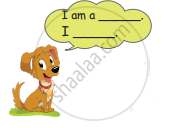
Name the animal and sound it makes.
______ was helpful for his father to drive out the wild animals.
Is there something that you will struggle for? why?
Why should a fisher wait?
Choose the right word.
The tamarind tree grows over Tansen’s ______.
Why did the dogs feel scared when they saw the jackal?
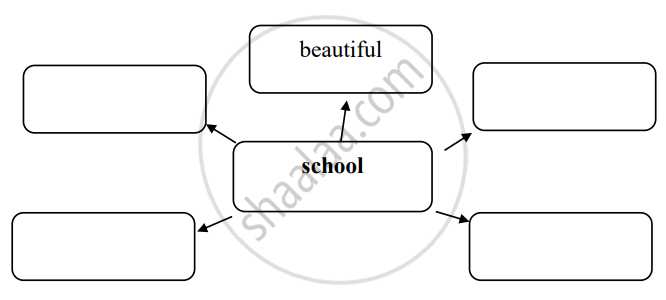
Write the related words as shown in the example:
Arrange a ‘Jokes’ session in the classroom where each student tells a joke. The jokes must be told in English.
