Advertisements
Advertisements
प्रश्न
Study the Note to Aspects of the Novel given at the end. Discuss the features that mark the piece as a talk as distinguished from a critical essay.
Advertisements
उत्तर
The piece can be distinguished as talk through the repetitive usage of words like ‘I’, ‘You, ‘so to speak’, ‘only to imagine’ etc. which displease a reader. But these words, although informal talkative, provide effective pauses and improves expression in the sentences.
APPEARS IN
संबंधित प्रश्न
Answer any four of the following in 30−40 words each:
(a) What did garbage mean to the children of Seemapuri and to their parents?
(b) How did Rajkumar Shukla establish that he was resolute?
(c) 'Life is what it is all about;...' How is keeping quiet related to life?
(d) Mention any four things of beauty that add joy to our life.
(e) The manner of his (the Tiger King's) death is a matter of extraordinary interest. Comment.
(f) In what condition did Dr. Sadao find the American soldier at the seashore?
Answer the following question in 150-200 words:
How did Miss Sullivan help Helen Keller when she was studying at Cambridge School?
Answer the following question in 150-200 words:
Why did Anne like her father more than she liked her mother?
Discuss in groups of four.
The accounts of exotic places in legends and the reality.
The story begins with a description of the setting. How does this serve as a fitting prelude to the events described in the story?
Discuss in small groups.
‘On reading Shelley’s A Defence of Poetry, the question insistently occurs why there is no similar A Defence of Science written by a scientist of equal endowment.’
The text is an excerpt from Sesame and Lilies which consists of two essays, primarily, written for delivery as public lectures in 1864. Identify the features that fit the speech mode. Notice the sentence patterns.
Read the following statement and mark those that apply to you.
I have a small group of close friends and have no wish to interact with anyone else.
Read the extract and state whether the following statement is true or false. Correct the false statement.
The author wanted to grow the desi variety of rice.
Pick out words from the poem to fill in the web diagram. They should be related to the theme in the web.
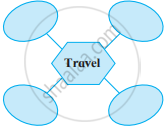
Make a list of the preparations made for an assault on Tiger Hill.
After confirming the multidirectional assault as the best strategy the commanding officer ________________.
Answer the given question in your own words.
Why did the Swallow finally decide not to leave the Prince?
Pick out a word from the poem to complete the sentence meaningfully.
Everyone stood ______ (horrified) when the terrible accident took place.
Pick out a word from the poem to complete the sentence meaningfully.
Handicapped people should never be ______. (ignored and avoided)
How do we realize that animals are not feeling well?
Proverbs associated with the word season: for eg: Make hay while the sun shines.
- _________________________
- _________________________
Expand the idea inherent in the following proverb :
One should eat to live, not live to eat - Franklin.
Complete the phrase using a word from the poem.
______ march
Apart from the children, no other human beings are mentioned in the poem. However, many natural elements are shown to act like persons. Name them and also write what they do.
Fill in the gap, choosing a word from the bracket to make an appropriate comparison.
(tall / quiet / humble / merry / busy / slippery / fast / sly / slow / big)
as ______ as an elephant
Suggest what you would do in the following situation:
You realise that you no longer want to pursue your studies in the stream you have selected.
Comment on the versatility and the aptness of the stage settings, as per the requirement of the play “A Midsummer-Night’s Dream!”
What question did Shalihotra ask Sushruta?
Read about the novel ‘Robinson Crusoe’ by Daniel Defoe and ‘Gulliver’s Travels’ by Jonathan Swift.
Read the poem: ‘Home they brought her warrior dead’ by Alfred Lord Tennyson.
Talk about the good qualities of any one person you do not like. (You need not name the person.)
Sayali did not understand the mistake she had made.
Suggest at least one method of creating something useful or beautiful from waste.
Summarise this poem in your own words in 8 to 10 lines, highlighting only the main points.
What is the difference between a 'dream' and a 'daydream'?
Describe the following with the help of the (The Twelve Months) story.
Springtime
What common qualities did the three brothers have?
Were the policemen willing to leave the house?
Why was the narrator sorry to have paid attention to the footsteps?
Read the following lines and answer the questions.
It’s part of his hours, his days and his years,
Back of his smiles and behind his tears.
What does ‘tears’ mean?
What does the peepul do?
Identify the sports and the sports personalities from the lesson and fill in the table.
| Sports | Name of the player & Field of sports | Awards |
 |
||
 |
||
 |
Identify the speaker/character.
"Don't let us down now, Gulliver; we need your help."
You don’t need ______ and ______ in the Earth.
What was the girl determined to do? Why?
What did Anandhan want to become?
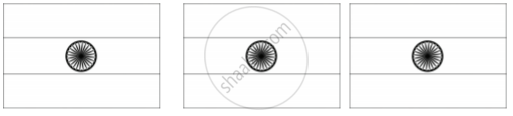
Read the passage and colour one flag each time you read.
Our national emblem is taken from Ashoka’s pillar at Sarnath. It is found on all government documents, coins, currency notes, postcards, and envelopes. It consists of four lions standing back to back but, we can see only three lions at a time. There is a Dharma chakra in the centre of the base plate, with the figure of a bull in the right and that of a horse in the left. The entire structure is sitting on a lotus. The words ‘Sathyameva Jayate’ is written under it in Devanagari script. These words mean, ‘Truth alone Triumphs’.
Whom did Vicky want to do all his work?
What did the hen-pigeon whisper?
Which is as important as our health?
How does a friend support us?
Kani and Teddy were in the garden at _____.
Are you the first to protect the nature?
Rani thought of herself as a _______ engineer.
Write the word with same meaning.

tap- ______
If the fisher draws his net soon, he won’t get ______ in the net.
Keep moving though your progress is ______.
One day Chris tried to draw a ______.
Match with the opposite gender.
| 1. | prince | bridegroom |
| 2. | hero | princess |
| 3. | bride | heroine |
Replace the bold word/words with a word from the quiver and re-write the sentence –
Nasruddin was surely not a good archer.
Name a few things that sink.
Although Helen could not hear or see, what kind of girl was she?
Find words from the passage which mean the same as the following.
- a malevolent desire for revenge (para 1)
- tactful (para 2)
- despise (para 3)
Here is an amazing news item on how the qualities of duty and devotion is not restricted to humans alone but shared by animals. Read the passage and answer the questions that follow.
Caesar, the Hero of Mumbai on 26/11
- Mumbai: Caesar, the last surviving hero of his kind, died of a heart attack on Thursday. Caesar, a Labrador Retriever, was covered with tri-color and given an emotional farewell from the city Police Force. The Mumbai Police Commissioner too marked the passing of the hero with a tweet.
- Caesar, who was 11 years old was the sole survivor among the dogs of Mumbai Police who took part in bomb detection operations during the terrorist attack on Mumbai that began on November 26, 2008. He died of a heart attack at a farm in Virar where he and his three canine buddies had been sent after retirement. During the terror attack in Mumbai, Caesar saved several lives when he sniffed out the hand grenades left by the terrorists at the busy CST railway station.
- Caesar was also a part of the search team at Nariman House, where terrorists were holed up for three days. Earlier he was also pressed into service for bomb search operation after the 2006 serial train blasts and July 2017 blast in Mumbai. The Mumbai police officials also tweeted their grief saying, “Services of retired members of Dog Squad during 26/11 will be unforgettable. We will remember our heroes forever.”
Answer the following questions.
- The Labrador Retriever was covered with tri-color. What does this signify?
- How did Caesar save several lives at the CST railway station?
- Which word in the third paragraph of the passage means the same as ‘forced’?
- “Services of retired members of Dog Squad during 26/11 will be unforgettable”. Mention three services rendered by Caesar.
- Caesar is a Labrador breed of dogs. Name a few other native breeds that are used by the Police Force.
- Try to rewrite the news item in your mother tongue without losing the spirit and flavour of the text. Give a suitable title to the translated version.
