Advertisements
Advertisements
प्रश्न
Discuss in pairs or in small groups
What does a novel do?
Advertisements
उत्तर
A novel reflects human condition in terms of a narrative involving character or characters.
It basically tells a story that entertains us and even gives us messages. A novel may be realistic based on real life incidents or fictitious.
APPEARS IN
संबंधित प्रश्न
Read the following extract and do the given activities:
B.1) Fill in the Balloons with suitable ideas from the poem:
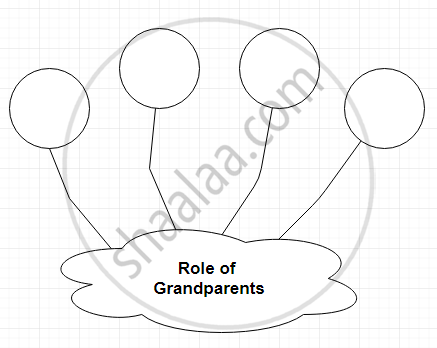 “Oh, the value of the elderly! How could anyone not know?
They hold so many keys, so many things they can show.
We all will read the other side this I firmly believe
And the elderly are closest oh what clues we could retrieve.
For their characters are closest to how we’ll be on high.
They are the ones most developed, you can see it if you try.
They’ve let go of the frivolous and kept things that are dear
The memories of so sweet, of loved ones that were near.
As a nation, we are missing our greatest true resource,
To get to know our elders and let them guide our course.”
B.2) Find Evidence:
Pick out the line from the extract which supports the given ideas:
(i) The elders have many things to share.
(ii) Everybody knows the value of elderly people.
(iii) The elderly people have vast experience.
(iv) The elderly people are a boon to the nation.
B.3) Write a pair from the extract that rhymes with the given word:
| Fear | ........................... | .......................... |
Read the following passage and do the given activities:
A.1) True or False
State whether the following statements are true or false:
(i) The patient stirred and looked about in cheerful anticipation
(ii) The patient’s wife wanted to know the truth …………
The lady went away to the kitchen. She felt restless. She felt she must know the truth whatever it was. Why was the great man so evasive? The suspense was unbearable. Perhaps he could not speak so near the patient’s bed. She beckoned to him from the kitchen doorway.
The doctor rose and went over. She asked, “What about him now? How is he?” The doctor bit his lips and replied, looking at the floor, “Don’t get excited. Unless you must know about it, don’t ask now.” Her eyes opened wide in terror. She clasped her hands together and implored, “Tell me the truth.” The doctor replied, “I would rather not talk to you now.” He turned around and went back to his chair. terrible wailing shot through the still house; the patient stirred and looked about in bewilderment. The doctor got up again, went over to the kitchen door, drew it in securely and shut off the wail.
A.2) Give reasons for the following:
(i) Her eyes opened wide in terror.
(ii) The lady went away to the kitchen.
A.3) How, according to you, should the nature of the doctor be?
Mention the three phases of the author’s relationship with his grandmother before he left the country to study abroad.
Does the poem talk of an exclusively personal experience or is it fairly universal?
Read the play out in parts. Enact the play on a suitable occasion.
We 'draw up a deed'. Complete the following phrase with an appropriate word.
________one's will
Why is the quality of pity earth-bound while the other two passions are elevating?
How do the words in bold, in the lines below, illustrate the poet’s ability to convey criticism cryptically?
Our meddling intellect
Misshapes the beauteous forms of things:
We murder to dissect.
There are intervals of silence in the interaction between the landlady and the prospective tenant. What are the reasons for this?
What makes the urgency of the child's demand seem logical?
What message does this story bring out for youngsters?
Answer in your own words.
What explanation did he give to the fellow-pilgrim for his thoughtful deed?
Find proof from the poem for the following.
The struggle of the cherry tree for survival.
Answer the given question in your own words.
What decision did the Swallow finally make? Was it a wise one? Comment.
For preparing questions based on the poem, an overall understanding of the poem is a must. Discuss with your partner and prepare a set of five questions.
For example:
- What is the name of the bridge?
- ________________________________
- ________________________________
- ________________________________
- ________________________________
- ________________________________
Correct the following statement.
Sue ignored Johnsy completely.
Do as directed. (Make sure you do not change the meaning and tense of the sentence).
I am proud of you. (Rewrite using the noun form of the underlined word).
Discuss in groups and think about it.
Mention three occasions on which you have made someone else angry. What made that person angry? Can you avoid such things in the future?
Discuss and write 1-2 lines about the following,
Yonamine’s ideas about marriage.
Present any one of the speeches given above.
An activity:
Speak fast, think faster! Form groups of 4-6. Discuss each of the following topics. Then each person in the group should choose a topic and speak about it for one minute. Try to say as many sentences as you can in that time
What is not likely to happen or will never happen...
‘It won’t rain in the classroom... I won’t ever see a live dinosaur... The sun will never set in the east...’ etc.
Read the following.
- I mean what I say. I say what I mean.
- I see what I eat. I eat what I see.
Use your imagination to write a funny sentence on this pattern.
Does the poet expect anything in return? What is the poet’s reward?
Answer in your own words.
How many chores did the ancestor from 1800 have to do?
Write in your own words.
What message does the poem convey?
Make adjectives from the following.
- harm
- continue
- believe
- fear
- thought
- wish
- question
- courage
Do you know of similar stories in your mother tongue or in other languages? Narrate it in short.
What examples of plentiful things does the poet give?
What does 'Rangaawali' mean?
Guess the meaning of the following word.
magnificent
Identify the character or speaker.
I was Duke of Milan, and you were a princess.
Identify the character or speaker.
What a trouble must I have been to you then!
Answer the question in a paragraph of about 100 – 150 word.
Narrate how Prospero made his enemies repent to restore his dukedom.
Answer the following question in about 100-150 word.
Narrate the extensive search operation made by the policemen in the house.
What are the three rules given by the bird?
Use this passage to play the game. You can collect information on other famous personalities and play too.
Charlie Chaplin was born on April 16, 1889, in London England. His birth name was Charles Spencer Chaplin, though he had many nicknames growing up such as Charlie, Charlot, and The Little Tramp. His father, Charles Chaplin, and his mother, Hannah Chaplin, were inducted into the music hall of fame, leading the way to his exposure even as a young boy. His first onstage moment was when he was 5 years old; he sang a song that was intended to be sung by his own mother; she had become ill at the time of the performance, so little Charlie Chaplin stood instead and performed for his mother.
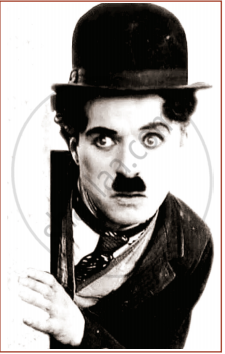
Charlie Chaplin came to the United States in 1910, at the age of 21. He was brought to New York, which was known to be a great place to start out for anyone trying to become a professional actor. Two years later, in 1913, Chaplin signed his very first contract at Keystone and it was no time before he headed to Hollywood. His first movie premiered in 1914, “Making a Living,” and went on to make over 35 movies total in that year alone. Charlie Chaplin grew to become one of the most popular and successful actors of all time. The moment that really kicked off his long career was in 1921 when he starred in, and produced, his first full-length film called “The Kid.” From then on, most people all over the world knew Charlie Chaplin and loved his movies. He had a great career and life, dying on December 25, 1977, in Vevey, Switzerland. He had apparently died of natural causes in his sleep from old age.
Hamid thought that his grandma would be pleased if he bought______
What kind of a life do you want to lead in this world?
Who inhabited the jungles that the train passed through?
The eggs of an Olive Ridley are in the shape and size of a cricket ball.
One of the Lilliputians gave a ten minutes talk in Gulliver’s language.
In Mars ______ Earth days make a year.
Try your own.
The Chinese troops attacked the lonely Indian post located in ______.
Rosy ______a bicycle.
His father wanted him to do well in ______.
Who was Akilan’s inspiration?
How did he win the match?
Uthaman was skilled in _____.
The old man is _____.
Choose the correct answer.

Choose and write the adverbs to complete the sentence.

My dog barks ______.
Circle and write the adverbs.
I drink coffee thrice a day. ______
Match the rhyming words.
| 1. share | dare |
| 2. bread | rest |
| 3. care | needs |
| 4. deeds | ahead |
| 5. zest | bear |
Read the passage and colour one bag each time you read.
There lived a poor but an honest farmer in a village. He supported himself, his wife and seven children using his small piece of land.
One day while he was walking in his field, he found a bag of gold.
He took it home and showed it to his wife. His wife told him to keep some of the gold. He told his wife that honesty is the best policy. He tried to find the person who lost it. At last, he found that the owner of the bag and gave it back. The rich man took the bag and thanked him.

Who said – “Oh, my ears and whiskers? How late it’s getting!”
Are these sentence TRUE or FALSE
The poet tells the child to think of friends after it is dark.
Who was Hiawatha?
Where did they go to buy books?
Read the poem.
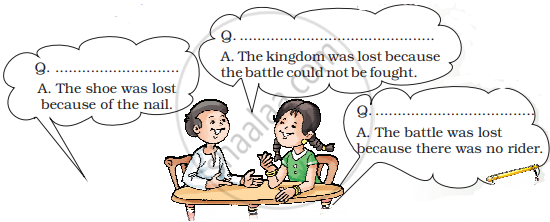
For Want of a Nail
For want of a nail, the shoe was lost,
For want of a shoe the horse was lost,
For want of a horse, the rider was lost,
For want of a rider, the battle was lost,
For want of a battle, the kingdom was lost,
And all for the want of a horseshoe nail!
[traditional rhyme]
Now form questions for the answers given in the speech bubbles.