Advertisements
Advertisements
प्रश्न
How does Shelley's attitude to science differ from that of Wordsworth and Keats?
Advertisements
उत्तर
Wordsworth in his A Poet's Epitaph looks at science with a critical mind. Even in Tables turned he praises nature and appreciates the beauty it bequeaths to the humanity and is critical of how humans ruin it all with their science and art. Keats in Lamia talks of two facets of human nature: one is sensual and other emotional. Keats calls philosophy destructive and pleasure unreal and calls them inseparable. However, it is not that one must take Wordsworth's and Keat's take as absolute. Shelley, for instance, is of a different opinion. For scientists it is best if they consider Shelley. A. N. Whitehead's testimony called Shelley's attitude to Science, an opposite pole to that of Wordsworth. He loved science, and was never tired of expressing in poetry the thoughts, which it suggests. Science symbolised to him joy, and peace, and illumination.
APPEARS IN
संबंधित प्रश्न
We sang our school fight song dozens of times – en route to Arlington National cemetery, and even on an afternoon cruise down the Potomac River. We visited the Lincoln Memorial twice, once in day – light, the second time at dusk. My classmates and I fell silent as we walked in the shadows of those 36 marble columns, one for every state in the Union that Lincoln laboured to preserve. I stood next to Frank at the base of the 19 foot seated statue. Spotlights made the white Georgian marble seem to glow. Together we read famous words from Lincoln’s speech at Gettysburg remembering the most bloody battle in the war between the status : “………….we here highly resolve that these dead shall not have died in vain – that this nation, under God, shall have a new birth of freedom………..”
As Frank motioned me into place to take my picture, I took one last look at Lincoln’s face. He seemed alive and so terribly sad.
The next morning I understand a little better why he wasn’t smiling. “Clifton,” a chaperone said, “could I see you for a moment?”
(1) When did the boys visit Lincoln Memorial?
(2) What made the Georgian marble glow?
(3) What did the words: “………. We here highly resolve that these dead shall not have died in vain – that this nation, under God, shall have a new birth of freedom …………” remind them?
(4) Do you believe in building memorials? What kind should they be, if your answer is ‘yes’? If no, give reasons why you do not believe in memorials?
Read the passage carefully.
1. I remember my childhood as being generally happy and can recall experiencing some of the most carefree times of my life. But I can also remember, even more vividly, moments of being deeply frightened. As a child, I was truly terrified of the dark and getting lost. These fears were very real and caused me some extremely uncomfortable moments.
2. Maybe it was the strange way things looked and sounded in my familiar room at night that scared me so much. There was never total darkness, but a street light or passing car lights made clothes hung over a chair take on the shape of an unknown beast. Out of the corner of my eye, I saw curtains move when there was no breeze. A tiny creak in the floor would sound a hundred times louder than in the daylight and my imagination would take over, creating burglars and monsters. Darkness always made me feel helpless. My heart would pound and I would lie very still so that 'the enemy' wouldn't discover me.
3. Another childhood fear of mine was that I would get lost, especially on the way home from school. Every morning, I got on the school bus right near my home ‒ that was no problem. After school, though, when all the buses were lined up along the curve, I was terrified that I would get on the wrong one and be taken to some unfamiliar neighbourhood. I would scan the bus for the faces of my friends, make sure that the bus driver was the same one that had been there in the morning, and even then ask the others over and over again to be sure I was in the right bus. On school or family trips to an amusement park or a museum, I wouldn't let the leaders out of my sight. And of course, I was never very adventurous when it came to taking walks or hikes because I would go only where I was sure I would never get lost.
4. Perhaps, one of the worst fears I had as a child was that of not being liked or accepted by others. First of all, I was quite shy. Secondly, I worried constantly about my looks, thinking people wouldn't like me because I was too fat or wore braces. I tried to wear 'the right clothes' and had intense arguments with my mother over the importance of wearing flats instead of saddled shoes to school. Being popular was very important to me then and the fear of not being liked was a powerful one.
5. One of the processes of evolving from a child to an adult is being able to recognise and overcome our fears. I have learnt that darkness does not have to take on a life of its own, that others can help me when I am lost and that friendliness and sincerity will encourage people to like me. Understanding the things that scared us as children helps to cope with our lives as adults.
(a) On the basis of your reading of the above passage, make notes using headings and subheadings. Use recognizable abbreviations wherever necessary.
(b) Make a summary of the passage in not more than 80 words using the notes made and also suggest a suitable title.
Which language do you think the author and his grandmother used while talking to each other?
What is the meaning of the line “Both wry with the laboured ease of loss”.
What do the following utterance indicate?
(i)“I told her, through Daniel ...”
(ii)“It’s a cold,” he said finally through Tsetan.
|
The energy stored in coal and petroleum originally came to the earth from the sun. The bulk of the present-day supplies was laid down some 200 to 600 million years ago, when tropical conditions were widespread. Lush, swampy forests produced huge trees; warm coastal seas swarmed with microscopic forms of life. When these organisms died, much of their tissue was recycled as it is today — through scavenging and decay. But a significant amount of dead plant and animal material was covered with mud, which prevented complete decomposition. With the passage of time, layer upon layer of the fine sediment was deposited over the once-living material; the sheer weight turned the sediments to rock. Sandwiched between the layers, both coal and petroleum were produced and preserved under pressure. Coal was formed mostly of giant fern-like plants that have only small counterparts today. Coal may still be forming here and there on earth, but conditions are not right for the production of significant quantities. |
Group related points.
Briefly explain the following statement from the text.
Gangadharpant could not help comparing the country he knew with what he was witnessing around him.
Read the play out in parts. Enact the play on a suitable occasion.
Look at the words given in the box below
|
snigger |
wriggle |
sneak |
squeak |
|
squawk |
titter |
pant |
chuckle |
|
giggle |
jeer |
chortle |
guffaw |
|
sigh |
sidle |
boo |
shriek |
|
scramble |
croak |
straggle |
plod |
|
gasp |
|
|
|
Now classify them according to their closeness in meaning to the words given below
|
A |
B |
C |
D |
E |
|
snigger |
wriggle |
squeak |
jeer |
sigh |
Notice this word in the poem and guess its meaning from the context.
turquoise
How is colour highlighted in the poem and why? List all the words in the poem that suggest colour.
How does the nightingale's song plunge the poet into a state of ecstasy?
Fill in the blank.
The author wanted to grow ______________.
Read the story and complete the following.
At first, Revathi’s plants did not look normal and healthy because, ____________.
Answer in your own words.
How did the plants respond when Revathi played her favourite tune?
Answer in your own words.
What helped Revathi to claim her plants - her belief in magic or the belief in her convictions? Explain your choice.
Study the pictures below and note down the differences.
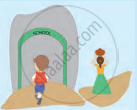
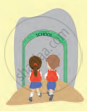
Find from the lesson word/phrase that mean the following.
colours .............
Find out from the internet the poem ‘Song of Youth’ by Dr APJ Abdul Kalam.
- Copy it down in your notebook and write its theme in your own words.
- Using information from your school library or the Internet, prepare a Profile of any great Indian Scientist.
Find proof from the poem for the following.
The struggle of the cherry tree for survival.
Answer the given question in your own words.
Why did the Swallow finally decide not to leave the Prince?
Read other poems by Leigh Hunt, especially 'Abou Ben Adhem'.
Compare the messages in that poem with those in 'The Plate of Gold'. What do you observe?
Find at least two things from the poem that show the following:
The atmosphere is pleasant.
Read the passage and answer the following question:
What makes Indra’s vajra or weapon invincible?
Describe the following with the help of the story.
Thiruvalluvar
Find 2/4 expressions of humour from the extract.
Write a conversation between a donkey and a school boy.
Bassanio was very rich.
Sayali was travelling in space for the first time.
You want to start human settlement somewhere else other than the earth, in the universe. Will you select a star or a planet? Why? What features supporting life will you look for? Try to find answers to such questions and make a presentation using scientific information and your imagination.
What changes do we see in the life of human beings when the season changes? Write with reference to their celebrations.
How does the following character in the story live up to their name? Provide points from the story.
Taffimai Metallumai
Read the word. Write the words that combine to make it.
stepmother
List and say whether the following statement agrees with the passage or not.
You should look at the person you are talking to.
Write how the travellers crossed the second gulf.
Where was the well situated?
What did the Bodwells think when they heard the mother shout.
How did Zigzag communicate with the Krishnans?
Why did Granny scold Hamid?
Read the comic strip and answer the following question.
Do you think that all the information online can be used without any permission?
What kind of a life do you want to lead in this world?
Write the names of the characters in this story.
1. ______ 2. ______ 3. ______
The______ of ______ are nearly run.
- soft
- vain
- fear
- joy
- love
- heard
- toiled
- mild
- good
- sand
- life
- harsh
Read the lines and answer the questions.
They are of all forms and shapes
They all have an excellent ending
What do have an excellent ending?
Raj did not buy______.
We get water by burning _______.
Why did the trees become a green blur?
Name the character or speaker.
"Play me a pleasant song."
Why do we discover a mystery?
_______ is our culture.
Whose hospitality is described in the poem?
Some words sound the same but their spelling and meaning are different. Such words are called homophones. There are many homophones.
Meena studied in ______ standard.
Imagine your world and write its qualities in the cloud.

Nithin had many ______toys.
If the fisher draws his net soon, he won’t get ______ in the net.
Write about the places where the poet wants us to run.
What happens when the day is over?
What did Pinocchio say in the end?
