Advertisements
Advertisements
Question
How does Shelley's attitude to science differ from that of Wordsworth and Keats?
Advertisements
Solution
Wordsworth in his A Poet's Epitaph looks at science with a critical mind. Even in Tables turned he praises nature and appreciates the beauty it bequeaths to the humanity and is critical of how humans ruin it all with their science and art. Keats in Lamia talks of two facets of human nature: one is sensual and other emotional. Keats calls philosophy destructive and pleasure unreal and calls them inseparable. However, it is not that one must take Wordsworth's and Keat's take as absolute. Shelley, for instance, is of a different opinion. For scientists it is best if they consider Shelley. A. N. Whitehead's testimony called Shelley's attitude to Science, an opposite pole to that of Wordsworth. He loved science, and was never tired of expressing in poetry the thoughts, which it suggests. Science symbolised to him joy, and peace, and illumination.
APPEARS IN
RELATED QUESTIONS
How did a story book, 'Little Lord Fauntleroy' open a window of knowledge to Helen and help to shape her career?
Chimps making their own fishing rods is an indication that
Read the following extract and do the given activities:
B.1) Fill in the Balloons with suitable ideas from the poem:
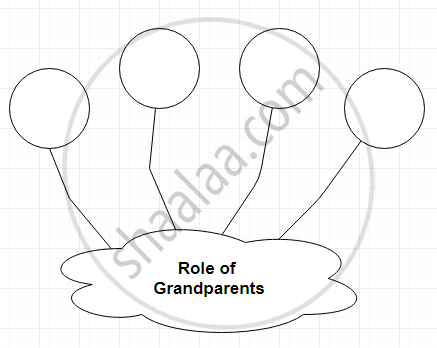 “Oh, the value of the elderly! How could anyone not know?
They hold so many keys, so many things they can show.
We all will read the other side this I firmly believe
And the elderly are closest oh what clues we could retrieve.
For their characters are closest to how we’ll be on high.
They are the ones most developed, you can see it if you try.
They’ve let go of the frivolous and kept things that are dear
The memories of so sweet, of loved ones that were near.
As a nation, we are missing our greatest true resource,
To get to know our elders and let them guide our course.”
B.2) Find Evidence:
Pick out the line from the extract which supports the given ideas:
(i) The elders have many things to share.
(ii) Everybody knows the value of elderly people.
(iii) The elderly people have vast experience.
(iv) The elderly people are a boon to the nation.
B.3) Write a pair from the extract that rhymes with the given word:
| Fear | ........................... | .......................... |
Does the poem have a consistent rhyme scheme?
Notice these expression in the text. Infer their meaning from the context.
salt flats
Briefly comment on:
The author’s physical condition in Darchen.
Why do you think Paul's mother was not satisfied with the yearly birthday gift of 1,000 pounds for five years.
What strong qualities possessed by them, could have helped them achieve success and fame, all over?
Find from the story one word for the following.
a low constant sound made by cats ______
Make sentence of your own using the following expression.
bargain:
Pick out words from the poem to fill in the web diagram. They should be related to the theme in the web.
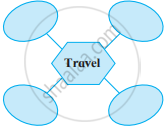
Read the story and complete the following.
Revathi was confident of proving her ownership of her pot of plants because, ____________.
Discuss in your class.
What are the advantages of learning science?
Read the first and second stanza of the poem. We understand that the poet wants to suggest the powerful dominance of the planners who shape the town according to their selfish desires. Make a list of such expressions. You may begin with -
- All the spaces are gridded, filled with permutations of possibilities.
- ________________________________
- ________________________________
- ________________________________
Read the lesson and name the following.
The First surgeon to perform operations ______
Complete the phrase using a word from the poem.
______ march
Apart from the children, no other human beings are mentioned in the poem. However, many natural elements are shown to act like persons. Name them and also write what they do.
Find more information about other Param Vir Chakra awardees. Prepare a collage using photographs, pictures, and text matter written in beautiful handwriting.
Form pairs. Complete the following table through discussions.
| Occupation | Necessary Qualities | Reasons |
| Student | ||
| Teacher | ||
| Housewife | ||
| Sportsman | ||
| Artist | ||
| Singer | ||
| Author | ||
| Umpire | ||
| Actor | ||
| Scientist |
Complete the following using your own idea:
His head was too big to ______.
Antonio’s ships were lost at sea.
Start a collection of new and interesting words. Write the words in colored ink on cards of equal size and arrange them in alphabetical order. Try to use the words in your writing or conversation from time to time.
If you were to draw a landscape on the basis of this poem, what elements will you show in it? What colours will you use?
Find out the following with the help of your teacher and the internet.
Seasonal Rains (monsoon) in India and other countries.
Prepare similar word chains using the following ideas.
wind - breeze __________________.
Complete the following sentence with reference to the passage.
They may be composed and sung or recited for many years before __________________.
Discuss:
In the story, human settlements are mentioned but not cities or villages. Why is it so?
Note that most of the time well-known works are parodied, because people can enjoy the parody better when they know the original. Try to find more examples of parodies in English or other languages.
Find the words that mean the following from the first stanza.
- Gold hammered into a flat, thin shape: ______
- show off proudly: ______
- tilt, move at an angle: ______
- across, especially in a slanting direction: ______
Write in your own words.
How should that person sing?
Now try to add a contradictory word to the following:
- What a ______ mess you’ve got us into!
- It’s a ______ imitation of a diamond necklace.
- My trip to Matheran was a ______ holiday.
- With such heavy makeup, she looks ______ ugly.
- A ______ crowd gathered to see the magic show.
Note: Contrasting words that go together are examples of the language device called Oxymoron.
Find out how the following game is played.
Badminton
Which event in the story tells us that the scarecrow was intelligent?
Helen Keller’s life is the story of ______.
The narrator searched for three days to buy ceramic paint.
When and where was the first ATM installed?
Find a sentence/word from the text which express the following.
Words related to prize.
Who told the children the story about the ghosts on Haunted Hill?
What do you need to learn to live a good life in this world?
Write down the word that alliterate in the poetic line below
Festival of Flowers.
Activity
It’s fun to help out in the kitchen. You can even practice reading aloud when reading the recipe. And you can learn a little math by figuring out how to measure. Here are a few fun items to make that are “Alice” themed.
Give a picturesque view through which the train travels.
Read the line and answer the question.
And the wheel’s kick and the winds song and the white sail’s shaking
What according to the poet are the pleasures of sailing?
What did mother ask Raj to buy?
How should one react to adversity?
When did the richest farmer get upset? Why?
What are the three parts of a robot
The old man helped ______ and ______.
What is your hobby?
The hen-pigeon got dry _______ for the bird catcher.
Karate makes me brave and bold. Would you like to learn it?
Identify the character/speaker.
He set the fish free.
Parents help us to overcome our______.
What happened to Jayan?
What will help us grow?
Match the animals with their sounds.
 |
bray |
 |
croak |
 |
bark |
 |
hum |
 |
neigh |
 |
mew |
The garden Alice saw was
Choose the right word.
This famous tree is in ______.
Read the passage carefully and complete the activities:
A1. Complete the following sentences. [2]
- Female sparrows lay ______.
- Sparrows build their nest out of ______.
- The eggs are ______.
- In cities, sparrows build their nest in ______.
|
A sparrow is a small bird which is found throughout the world. There are many different species of sparrows. Sparrows are only about four to six inches in length. Many people appreciate their beautiful songs. Sparrows prefer to build their nests in low places-usually on the ground clumps of grass low trees and low bushes. In cities, they build their nests in building nooks or holes. They rarely build their nests in high places. They build their nests out of twigs grasses and plant fibers. Their nests are usually small and well-built structures. Female sparrows lay four to six eggs at a time. The eggs are white with reddish-brown spots. They hatch within eleven to fourteen days. Both the male and female parents care for the young. Insects are fed to the young after hatching. The large feet of the sparrows are used for scratching seeds. Adult sparrows mainly eat seeds. Sparrows can be found almost everywhere where there are humans. Many people throughout the world enjoy these delightful birds. The sparrows are some of the few birds that engage in dust bathing. Sparrows will first scratch a hole in the ground with their feet then lie in it and fling dirt or sand over their bodies with flicks of their wings. They will also bathe in water or in dry or melting snow. Water bathing is similar to dust bathing with the sparrow standing in shallow water and flicking water over its back with its wings also ducking its head under the water. Both activities are social with up to a hundred birds participating at once and are followed by preening and sometimes group singing. |
A2. How do sparrows take a bath? [2]
A3. Find out adjectives for the following nouns from the passage. [2]
- ______ Song
- ______ Water
- ______ Bird
- ______ species
A4. Do as directed. [2]
- A sparrow is a small bird which is found throughout the world.
(Underline the subordinate clause) - Female sparrows lay four to six eggs at a time.
(Frame a ‘wh’ type question to get the underlined part as an answer.)
A5. ‘We have to save the birds.’ Do you agree with this statement? Why? [2]
Which of the following should one avoid while using social media? Tick against the correct options.
