Advertisements
Advertisements
प्रश्न
Briefly comment on:
The author’s physical condition in Darchen.
Advertisements
उत्तर
Darchen was a derelict; dusty and refused. When the author and Tsetan reached the town it was dark already, they pulled up in a guest house. The night they settled in was troublesome for the author. The open-air rubbish dump that passed for the town of Hor had set off his cold once more . One of his nostrils blocked, he tried to accustom to breathing with one nostril. However it did not provide him with sufficient oxygen so he tried to breathe from mouth. Still he could not sleep, his chest felt heavy and the fear never let him sleep for the rest of the night. The next morning Tsetan took him to the Darchen's medical college. The doctor, after asking a few question, declared that the author had caught cold and the effects of altitude. The doctor prescribed the author various medicines, one of which tasted like cinnamon. That night after having the medicines the author had a sound sleep finally
APPEARS IN
संबंधित प्रश्न
Mention the three phases of the author’s relationship with his grandmother before he left the country to study abroad.
Notice the following uses of the word ‘tell’ in the text.
1. Her fingers were busy telling the beads of her rosary.
2. I would tell her English words and little things about Western science and learning.
3. At her age, one could never tell.
4. She told us that her end was near.
Given below are four different senses of the word ‘tell’. Match the meanings to the uses listed above.
1. make something known to someone in spoken or written words
2. count while reciting
3. be sure
4. give information to somebody
Notice these expression in the text. Infer their meaning from the context.
billowed
How does the connection drawn between the tail and the eyes add to the descriptive detail of the poem?
What quality of 'beauty' and 'love' does the poem highlight?
How does the poem bring out the elusive nature of happiness in human existence?
Read the following statement and mark those that apply to you.
I wish to be friends with someone but my friendship is rejected.
Read the story and complete the following.
At first, Revathi’s plants did not look normal and healthy because, ____________.
State whether the following statement is True or False. Correct the false statement by finding evidence from the poem to support your remark.
The poem has an underlying message about the importance of trees.
Correct the following statement.
Sue ignored Johnsy completely.
Pick out the statements which aptly depict the theme of the poem.
- In the poem, the speaker memorises the past.
- In ‘The Planners’ the poet describes the unstoppable force of modernisation.
- The poet talks about the replacement of natural environment by the concrete jungle.
- The poet proposes to stop modernisation.
- The poet laments helplessly.
Discuss with your partner the different ideas connoted by the word 'season'.
- _______________________
- _______________________
- _______________________
The drone is given a death sentence because he ______.
Answer the following question in short.
Why was Tenali Raman taken to the court in a palanquin?
Write a sentence each about three of your friends. Each time you should say what your friend cannot do, and yet, pay a compliment to your friend.
Suggest what you would do in the following situation:
Your very close friend has been using a fake social media account to play pranks on others and is not ready to stop in spite of several attempts by you.
Read the passage and answer the following question:
What is 'Param Vir Chakra'?
Find more information about other Param Vir Chakra awardees. Prepare a collage using photographs, pictures, and text matter written in beautiful handwriting.
Choose the odd one out :
Bottom, Moth, Mustardseed, Cobweb.
Discuss the following question after you have seen a presentation of the ‘ad’.
What would happen if you ate proper meals like rice and dal or dal-roti?
Antonio’s ships were lost at sea.
Hold a mock trial for the following offence. There should be a complainant, a defendant, and lawyers to argue the case on behalf of them. The whole class can vote to pass the judgment. On what occasions will you plead for justice? What punishment will you suggest? When will you plead for mercy?
A poor man stole some ornaments from a rich girl.
Read the passage and answer the following:
When was the book written?
Find the meaning of the following word.
thee
Write about Malti and Rima using the following points:
 |
 |
| Appearance... | Appearance... |
| Studies... | Studies... |
| Singing... | Singing... |
| Attitude to others... | Attitude to others... |
| Weak points... | Weak points... |
Use details from the story and your own imagination when you write the above descriptions.
Answer in your own words.
What did the ancestor from 1910 wish to do instead of making his bed?
Using your imagination, write about a beautiful region - its landforms, water bodies, flora and fauna, night sky, people, etc.
Write in your own words.
What does the poet miss?
Find the meaning of the following word.
adorning
Guess the meaning of the following word.
beautify
Read the following line from the poem and answer the question that follow.
Let me but live my life from year to year, With forward face and unreluctant soul; Not hurrying to, nor turning from the goal; Not mourning for the things that disappear.
Identify the rhyme scheme of the given lines.
Answer the question in a paragraph of about 100 – 150 word.
Narrate how Prospero made his enemies repent to restore his dukedom.
What did the Bodwells think when they heard the mother shout.
What woke up the mother?
Read the following line from the poem and answer the question given below.
They growl at that and they growl at this;
Whatever comes, there is something amiss;
- What does the word ‘growl’ mean here?
- Why do they find everything amiss?
With their treasure, the boys would buy ______ in Eidgah.
What should we learn from our teachers?
What makes us happy and free, according to the poet?
Where did Raj’s mother send him?
Work in pair, find answer for the question and share in the class.
Name the seasons mentioned in the poem?
What should we do to save the Earth?
How will you treat your guest?
Identify the character or the speaker.
“I will camp here for the night.”
Some words sound the same but their spelling and meaning are different. Such words are called homophones. There are many homophones.
What did they use as net?
Did they find a new country?
______ over heard her father’s talking on the phone about the robbery.
Circle and write the adverbs.
He laughed merrily ______.
Circle and write the adverbs.
Suddenly the old man fainted. ______
Number the pictures in the correct order of the story.

Try your own.
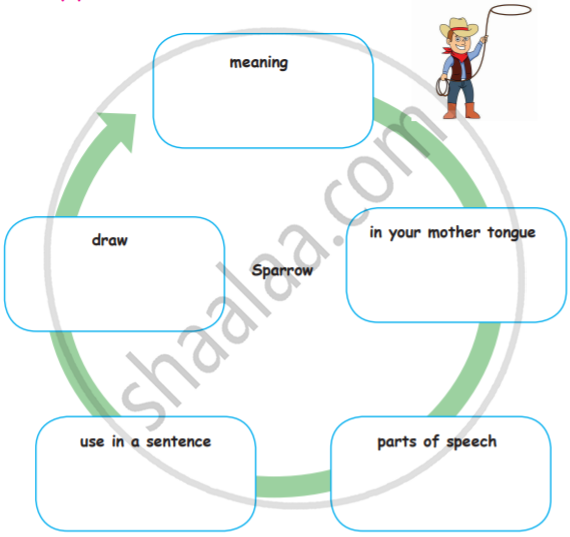
Read the advertisement and answer the question given below.

What is the name of the dealer?
Fill in the blank with rhyming word.
tunnels- ______
A Shepherd had a _______.
In which season is ice cream popular?
What will you do if you have a gold plate?
What happen to a child who shuts his ears?
Choose the right word.
Tansen was a famous ______.
Write the related words as shown in the example:
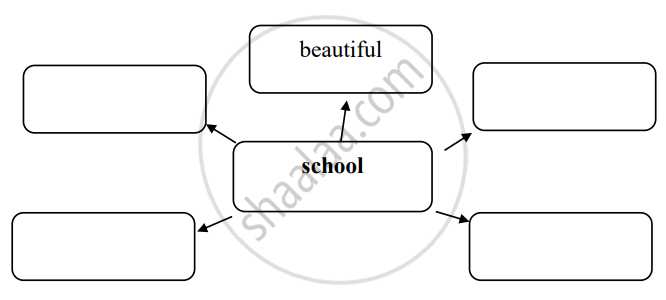
Why is it not advisable to play online games?
