Physical Properties of Hydrogen Chloride
Topics
Periodic Properties and variations of Properties - Physical and Chemical
- Modern Periodic Table
- Salient Features of the Modern Periodic Table
- Periodicity
- Shells and Valency
- Periodic Properties
- Atomic Size
- Metallic Character
- Non-metallic Character
- Ionisation Potential (Ionisation Energy)
- Electron Affinity
- Electronegativity
- Other Physical and Chemical Properties
- Chemical Reactivity of the Elements
- Summary Periodic Properties
- Atomic Number and Mass Number
- Comparison of Alkali Metals and Halogens
Chemical Bonding
- The Element of the First three Periods of the Periodic Table
- Concept of Chemical Bonding
- Ionic or Electrovalent Bond
- Conditions for the Formation of an Electrovalent (or ionic) Bond
- Structures of Some Electrovalent Compounds
- The Covalent Bond
- Types of Covalent Bonds
- Covalent Vs Electrovalent Compounds
- Covalent Molecules and their Structures
- Non-Polar Covalent Compounds
- Polar Covalent Compounds
- Polar Vs Non-polar Covalent Molecules
- Effect of Electricity on Electrovalent and Covalent Compounds
- Coordinate Bond
- Formation and Structures of some Coordinate Molecules
- Properties and Comparison of Electrovalent and Covalent Compounds
Study of Acids, Bases and Salts
- Basics of Acids, Bases, and Salts
- Acids
- Classification of Acids
- Preparation of Acids
- Properties of Acids
- Uses of Acids
- Bases
- Classification of Bases (Alkalis)
- Preparation of Bases
- Properties of Bases
- Uses of Bases
- Strength of Acid and Base Solutions : pH Scale
- Indicators
- Universal Indicator
- Salts
- Classification of Salts
- Preparation of Salts
- Properties of Salts
- Recognition and Identification of Gases
- Identification of Anions
- Differentiate a Solution of Dilute acid and Alkali
- Test for Common gases
- Effect of Heat
- Action of Heat
- Action of Dilute Acids on Salts
Analytical Chemistry
- Chemical Analysis
- Colours of the Salts and Their Solutions
- Action of Sodium Hydroxide Solution on Certain Metallic Salt Solutions
- Action of Ammonium Hydroxide on Certain Salt Solutions
- Action of Alkalis on Certain Metals
- Action of Alkalis on Metal Oxides
- Identification of Cations
- Physical Examination of Salts
- Flame Test
Mole Concept and Stoichiometry
- Gas Laws
- Gay-Lussac's Law
- Avogadro's Law
- Atomic Mass
- Relative Atomic Mass (RAM)
- Gram Atomic Mass
- Molecular Mass
- Relative Molecular Mass
- Gram Molecular Mass
- Mole Concept
- Avogadro's Number
- Vapour Density and Its Relation to Relative Molecular Mass
- Percentage Composition
- Empirical Formula of a Compound
- Determination of Molecular Formula
- Calculations Based on Chemical Equations
Electrolysis
- Electrolysis
- Conductors
- Metallic Conductors Vs Electrolytic Conductors
- Strong Electrolytes vs Weak Electrolytes
- Acids, Bases and Salts as Electrolytes
- Anode vs Cathode
- Cations vs Anions
- Oxidation
- Chemical Properties of Carbon Compounds > Reduction
- Theory of Electrolytic Dissociation
- Conduction in Compounds
- Mechanism of Electrolysis
- Characteristics of Electrolysis
- Electrolytic Dissociation
- Ionisation
- Comparison of Ionisation and Dissociation
- Electrochemical Series (Electromotive Series)
- Preferential or Selective Discharge of Ions at Electrodes
- Examples of Electrolysis
- Applications of Electrolysis > Electroplating
- Applications of Electrolysis > Electrolytic Refining of Metals
- Applications of Electrolysis > Electrometallurgy
Metallurgy
- Metals
- Position of Metals in Periodic Table
- Activity Series or Reactivity Series of Metals
- Occurrence of Metals
- Minerals and Ores
- Common Ores of Aluminium, Iron and Zinc
- Galvanisation
- Basic Principles of Metallurgy > Extraction of Metals
- Calcination Vs Roasting
- Metallurgy
- Dressing (Concentration) of Ores
- Conversion of Concentrated Ore to Its Oxide
- Reduction of Metal Oxides to Metals
- Refining of the Metals
- Extraction of Aluminium
- Alloys
Study of Compounds: Hydrogen Chloride
- Concept of Hydrogen Chloride
- Preparation of Hydrogen Chloride Gas
- Physical Properties of Hydrogen Chloride
- Chemical Properties of Hydrogen Chloride
- Hydrochloric Acid
- Preparation of Hydrochloric Acid
- Properties of Hydrochloric Acid > Physical Properties
- Properties of Hydrochloric Acid > Chemical Properties
- Uses of Hydrochloric Acid
- Tests for Hydrogen Chloride and Hydrochloric Acid
- Identification of Anions
- Action of Concentrated Hydrochloric Acid
Study of Compounds: Ammonia
Study of Compounds: Nitric Acid
Study of Compounds: Sulphuric Acid
Organic Chemistry: Organic Compounds
Saturated Hydrocarbons: Alkanes
Unsaturated Hydrocarbons: Alkenes
Unsaturated Hydrocarbons: Alkynes
Alcohols
Carboxylic Acids
Advertisements
CISCE: Class 10
Key Points: Physical Properties of Hydrogen Chloride Gas
| No. | Property | Description |
|---|---|---|
| 1. | Colour | Colourless gas |
| 2. | Smell | Pungent choking smell |
| 3. | Taste | Sour (acidic) in taste |
| 4. | Physiological nature | It is corrosive in nature. It irritates nose, throat and lungs. |
| 5. | Density | About 1.25 times heavier than air (V.D. of HCl is 18.25; air is 14.4). |
| 6. | Boiling point | –83 °C |
| 7. | Melting point | –113 °C |
| 8. | Liquefaction and solidification | Liquefies to a colourless liquid under 40 atm pressure at 10 °C. |
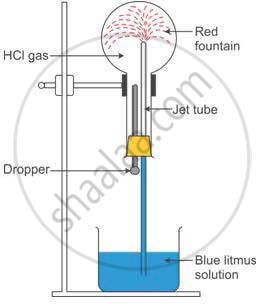
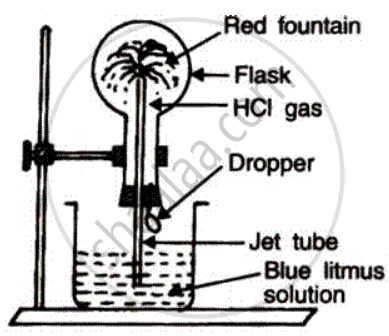
| 9. | Solubility | Highly soluble in water (1 vol. water dissolves 452 vol. gas); also soluble in non-polar solvents like acetone and toluene. |