Advertisements
Online Mock Tests
Chapters
1: The First War of Independence, 1857
2: Growth of Nationalism
3: First Phase of the Indian National Movement
4: Second Phase of the Indian National Movement
5: The Muslim League
2. MASS PHASE OF THE NATIONAL MOVEMENT (1915-1947)
6: Mahatma Gandhi and the National Movement
7: The Quit India Movement
8: Forward Bloc and The INA
9: Independence and Partition of India
3. THE CONTEMPORARY WORLD
10: The First World War
11: Rise of Dictatorships
12: The Second World War
13: United Nations
14: Major Agencies of the United Nations
15: Non-Aligned Movement
SECTION B - CIVICS : 1. THE UNION LEGISLATURE
1: The Union Parliament-I
2: The Union Parliament-II
2. THE UNION EXECUTIVE
3: The President and The Vice-President
4: Prime Minister and Council of Ministers
3. THE JUDICIARY
5: The Supreme Court
▶ 6: The High Courts and Subordinate Courts
![Morning Star solutions for Total History and Civics [English] Class 10 ICSE chapter 6 - The High Courts and Subordinate Courts - Shaalaa.com](/images/total-history-and-civics-english-class-10-icse_6:5245755610f545c08dc24e700b430f63.jpg "Morning Star solutions for Total History and Civics [English] Class 10 ICSE chapter 6 - The High Courts and Subordinate Courts")
Advertisements
Solutions for Chapter 6: The High Courts and Subordinate Courts
Below listed, you can find solutions for Chapter 6 of CISCE Morning Star for Total History and Civics [English] Class 10 ICSE.
Morning Star solutions for Total History and Civics [English] Class 10 ICSE 6 The High Courts and Subordinate Courts EXERCISES [Pages 263 - 267]
Multiple-Choice Questions
What is the maximum age in order to be qualified for appointment as a Judge in High court?
62 years
68 years
65 years
60 years
In order to be qualified as a Judge of a High court, the individual must have held a judicial office in the territory of India or has been an advocate of a High court for at least ______.
15 years
10 years
5 years
12 years
Purabh wants to be a High Court judge. Which of the following qualifications does he need?
P: He/She should not be over 62 years of age.
Q: He/She has been an advocate of the High Court for at least ten years.
R: He/She should have been distinguished, Jurist.
S: He/She has held a judicial office in the territory of India for at least five years.
P and R
R and S
P and Q
P and S
Identify the statements about the High Court judges that are correct.
P: A judge of a High Court cannot be removed from office on any ground.
Q: A Judge who has worked as a permanent Judge of a High Court cannot practise in any Court after his/her retirement.
R: The salaries and allowances of the Judges of a High Court cannot be changed to their disadvantage during the course of their service.
S: A Judge of a High Court may resign his/her office by writing, addressed to the President of India.
P and Q
R and S
Q and R
P and R
Every High court has the power of interpret the Constitution. This power is known as ______.
Judicial Review
Constitutional Review
High Court Review
Interpretation Review
______ of High court means that the power to accept appeals against decisions of District courts, in civil as well as criminal matters.
Revisory jurisdiction
Judicial jurisdiction
Appellate jurisdiction
Advisory jurisdiction
______ Jurisdiction means that the High court can call for the record of a case which has been decided by a subordinate court.
Advisory
Appellate
Confirmatory
Revisory
All ______ are empowered to issue writs.
High Courts
District courts
Members of Parliament
Ministers of the Cabinet
Which of the following statements about the functions of the High Court are correct?
P: Unlike the Supreme Court, the High Court is not a Court of Record.
Q: The High Court can advise any government departure if they seek advice from it on matters of law.
R: The High Court have the power of Judicial Review.
S: The High Court cannot issue writs.
Q and R
P and S
P and Q
R and S
Ramana is a judge in the Munif court. He is authorised to deal with civil cases involving not more than ______.
₹ 15,000
₹ 20,000
₹ 30,000
₹ 50,000
When a judge decides Civil cases, he/she is called ______ and when he/she decides criminal cases, he/she is called ______.
Sessions Judge; District Judge
District Judge; Sessions Judge
Magistrate; District Judge
Magistrate; Sessions Judge
Identify the statements about the Court of the District Judge which are correct.
P: It is the highest civil court of the district.
Q: The District Judge is appointed by the Chief Justice of the Supreme Court of India.
R: The District Judge decides both civil and criminal cases.
S: The District Judge acts as a Deputy Commissioner and District Collector.
P and Q
P and R
P and S
R and S
First class Magistrate can award imprisonment up to ______ years and/or a fine of ₹ ______.
4 years; ₹ 20,000
3 years; ₹ 10,000
3 years; ₹ 5,000
2 years; ₹ 5,000
Second class Magistrate can award imprisonment for not more than ______ years or impose a fine of ₹ ______ or both.
1 year; ₹ 1,000
2 years; ₹ 5,000
1 year; ₹ 2,000
2 years; ₹ 1,000
Lok Adalat means ______.
District Court
People’s Court
High Court
Supreme Court
Suppose the autorickshaw driver, who daily takes you to school, was issued a number of traffic violation challans and had to pay a fine of five thousand rupees. He pleaded for reducing the fine but was not shown any mercy. To which court he would go to get speedy redressal of his grievance?
Lok Adalat
Sessions Court
High Court
Supreme Court
Read the excerpt given below and answer the question that follow:
| From the 29th of July to the 3rd of August 2024, the Supreme Court is organising a special Lok Adalat. This is part of a series of activities which the Supreme Court is observing to commemorate the 75th year since the establishment of the Supreme Court. Most significantly, we are all, as judges and people, dedicated to the institution of justice, concerned about the large backlog of cases. |
Which of the following is true about the Lok Adalat?
- Saves money
- Reduces burden on other courts
- Works on a compromise
- Speedy justice
All of them.
(i) and (ii)
(i), (ii) and (iii)
(ii) and (iv)
Court A aims to provide a simplified and efficient mechanism for dispute resolution. It is designed to address a range of issues such as civil, petty criminal, family, property, labour, bank loan, revenue, forest, motor accident claims, and challan or e-challan cases. Identify Court A.
High Court
Sessions Court
Lok Adalat
All of the above.
Select the option that shows the correct relationship between Statements I and II.
(I) A District Judge possesses administrative power in addition to judicial power.
(II) A Sessions Judge does not perform any administrative powers.
(I) is true, but (II) is false.
(I) is false, but (II) is true.
Both (I) and (II) are true, but (II) is not the correct explanation of (I).
- Both (I) and (II) are false.
Select the option that shows the correct relationship between Statements I and II.
(I) The Lok Adalats provide legal aid and quick justice to those who cannot afford to engage lawyers.
(II) The Lok Adalats restrict social justice by providing legal aid to weaker sections of society only.
(I) is true, but (II) is false.
(I) is false, but (II) is true.
Both (I) and (II) are true, but (II) is not the correct explanation of (I).
Both (I) and (II) are false.
Short Answer Questions
Name two High Courts of India whose jurisdiction extends to more than two States.
What is the composition of a High Court?
Who administers an oath of office to the Chief Justice and the Judges of a High Court?
By whom is the Chief Justice of a High Court appointed?
Who can remove a Judge of the High Court?
On what grounds can a Judge of the High Court be removed from office?
Who decides the salaries and allowances of the Judges of the High Court?
How is the security of salaries and service conditions of High Court Judges ensured by the Constitution?
How does the High Court protect the Fundamental Rights of individuals?
What is meant by Revisory Jurisdiction of the High Courts?
Read the excerpt given below and answer the question that follows:
|
Over 1.14 Crore Cases Settled in Lok Adalats Among the cases settled were criminal compoundable offences, traffic challans, revenuе cases, bank recovery cases, motor accident claims, cheque dishonour cases, labour disputes, matrimonial disputes (excluding divorce cases), land acquisition cases, IPR or consumer matters, and other civil cases. - The Deccan Herald September, 2024 |
With reference to the above news, state which advantage of the court is being highlighted?
Mention two types of Subordinate Courts in a state.
What is meant by the term Civil Cases?
Which type of cases are known as Criminal Cases?
Which is the highest Civil Court in a District?
Name the highest criminal court in a district.
Who is the highest Judicial Official at the district level for civil and criminal cases?
How are the District Judges in a State appointed?
Differentiate between the Sessions Court and the Court of the District Judge.
Structured Questions
A High Court consists of a Chief Justice and other judges whose number the Parliament may fix from time to time. As regards the composition of the High Court, answer the following questions:
- How are the Chief Justice and other Judges of the High Court appointed?
- State three qualifications for appointment as a Judge of the High Court.
- Mention two ways in which the Constitution ensures the independence and impartiality of the High Courts.
With reference to the powers of the High Court, briefly describe the following:
- What is meant by the Original Jurisdiction of the High Court? Mention two types of cases in which the High Court exercises Original Jurisdiction.
- Mention two types of cases in which the High Court exercises Appellate Jurisdiction.
- How does the High Court control the power of the Legislature and the Executive?
| PIL in Bombay High Court seeks to protect Kolhapuri chappals’ GI from ‘exploitation’. |
- What is a PIL? Which jurisdiction does it enable?
- How does the High Court act as a protector of Fundamental Rights?
- What do we mean when we say that the High Court is a ‘Court of Record’?
With reference to the jurisdiction of High Courts, write short notes on:
- Revisory Jurisdiction of High Courts.
- Its power to issue Writs.
- Custodian of the Constitution.
Study the picture and answer the following questions:
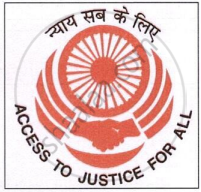
- Identify the court whose logo is given in the picture on the right. How do these courts function?
- What are the advantages of resolving disputes through such courts?
- Do you think that these courts play an important role as an alternative dispute resolution mechanism? Give your reasons.
Higher Order Thinking Skills (HOTS)
Do you think the system of appeals makes the judicial system more just and reliable, but at the same time causes delays?
Why is it important to have both the High Court and Subordinate Courts in the Indian Judicial System?
Solutions for 6: The High Courts and Subordinate Courts
Morning Star solutions for Total History and Civics [English] Class 10 ICSE chapter 6 - The High Courts and Subordinate Courts
Shaalaa.com has the CISCE Mathematics Total History and Civics [English] Class 10 ICSE CISCE solutions in a manner that help students grasp basic concepts better and faster. The detailed, step-by-step solutions will help you understand the concepts better and clarify any confusion. Morning Star solutions for Mathematics Total History and Civics [English] Class 10 ICSE CISCE 6 (The High Courts and Subordinate Courts) include all questions with answers and detailed explanations. This will clear students' doubts about questions and improve their application skills while preparing for board exams.
Further, we at Shaalaa.com provide such solutions so students can prepare for written exams. Morning Star textbook solutions can be a core help for self-study and provide excellent self-help guidance for students.
Concepts covered in Total History and Civics [English] Class 10 ICSE chapter 6 The High Courts and Subordinate Courts are The High Courts, Powers and Jurisdiction of High Court, Family Courts, Functions of the High Court, Independence of the High Court, Subordinate Court, Civil Courts, Criminal Courts, Differences Between Court of the District Judge and Sessions Court, Courts of Revenue, Lok Adalats, The High Courts, Powers and Jurisdiction of High Court, Family Courts, Functions of the High Court, Independence of the High Court, Subordinate Court, Civil Courts, Criminal Courts, Differences Between Court of the District Judge and Sessions Court, Courts of Revenue, Lok Adalats, The High Courts, Powers and Jurisdiction of High Court, Family Courts, Functions of the High Court, Independence of the High Court, Subordinate Court, Civil Courts, Criminal Courts, Differences Between Court of the District Judge and Sessions Court, Courts of Revenue, Lok Adalats.
Using Morning Star Total History and Civics [English] Class 10 ICSE solutions The High Courts and Subordinate Courts exercise by students is an easy way to prepare for the exams, as they involve solutions arranged chapter-wise and also page-wise. The questions involved in Morning Star Solutions are essential questions that can be asked in the final exam. Maximum CISCE Total History and Civics [English] Class 10 ICSE students prefer Morning Star Textbook Solutions to score more in exams.
Get the free view of Chapter 6, The High Courts and Subordinate Courts Total History and Civics [English] Class 10 ICSE additional questions for Mathematics Total History and Civics [English] Class 10 ICSE CISCE, and you can use Shaalaa.com to keep it handy for your exam preparation.
