Advertisements
Advertisements
Question
What is the central argument of the speaker?
Advertisements
Solution
The author G.N. Devy, through his essay ‘Tribal Verse’ attempts to familiarise people with some aspects of the enormous wealth of oral tribal literature. It begins with an extract from an essay by G.N. Devy in which he discusses the need to create a space for the study of tribal literature within the framework of canonized written texts. He argues for a new method to identify and read literature in which orality is not dismissed as casual utterances in different dialects.
APPEARS IN
RELATED QUESTIONS
Write a character sketch of Mrs. Van Daan.
Answer the following in 30-40 words each:
(a) Why do you think the booking clerk refused to accept the money? Why did the narrator get out so fast?
(b) Why could the Russian research vessel, ‘The Akademik Shokaskiy’ not move any further? What did the captain decide then?
(c) What sort of hunts did the Maharaja offer to organize for the high-ranking British officer? What trait of the officer does it reveal?
(d) What did Jo want the wizard to do when Mommy Skunk approached him?
Answer any four of the following questions in 30 - 40 words each:
(a) What does the poet's smile in the poem, 'My Mother at Sixty-six' show?
(b) Listening to them, I see two distinct worlds ... ." In the context of Mukesh, the bangle maker's son, which two worlds is Anees Jung referring to ?
(c) Though the sharecroppers of Champaran received only one-fourth of the compensation, how can the Champaran struggle still be termed a huge success and victory?
(d) Which article in McLeery's suitcase played perhaps the most significant role in Evans' escape and how?
(e) Why does Derry’s mother not want him to go back to visit Mr. Lamb?
(f) What considerations influenced the Tiger King to get married?
Mention three ways in which the author’s grandmother spent her days after he grew up.
Give reasons for the following statement.
The author thought that his positive thinking strategy worked well after all.
Guess the meaning of the following word:
Drokba
In which language are these word found?
Discuss in groups plays or films with a strong message of social reform that you have watched.
The episode has been narrated in a light vein. What social mores does the author seem to ridicule?
We 'draw up a deed'. Complete the following phrase with an appropriate word.
________a deaf ear to
'Now I hold Creation in my foot' – explain the centrality of this assertion in the poem. What makes the hawk's assertion of its invincibility so categorical?
Comment on the subtlety with which the poet captures the general pattern of communication within a family.
Comment on the capitalisation of all the words in the line:
'Children Must be Disciplined'.
How is the essence of the poem captured in the lines 'two tickets to Happiness'?
Fill in the blank.
“Hybrids need more _____________”, said Devu Handa.
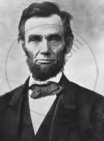
Name the world-famous personality who reached great heights despite of humble circumstances.
Find from the story one word for the following.
any animal that catches mice ______
Make groups and discuss the following:
Name a few scientists/explorers/social reformers/inventors/discoverers, who spent most of their lives to find solutions to some major problems/setbacks, that mankind faced.
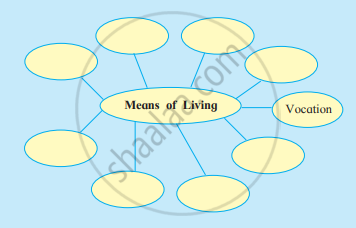
Pick out words that refer to ‘means of living’ and fill them in the Web.
(profession/recreation/occupation/job/ pastime/employment/hobby/career/entertainment/mission/trade/buisness/sports/retirement/placement)
Make a list of the preparations made for an assault on Tiger Hill.
Individual guns ___________.
The two best things the servants brought to God were gold and jewel stones.
Rearrange the following in the proper order and insert them into a flow chart as per the poem.
- The plate turned to lead when it was gifted to false-hearted claimants.
- Many claimants donated their wealth to receive the plate of gold.
- For almost two years, no claimants received the plate of gold.
- A plate of gold fell in a temple from Heaven.
- The peasant offered comfort and courage to a blind miserable beggar, whom all had ignored.
- The priests announced that the one who loved God most of all would receive the gift from Heaven.
- When the priest gave the plate of gold to that peasant, it shone with thrice its luster.
- A simple peasant, who had nothing to offer, came to that temple.
Expand the idea inherent in the following proverb :
Fools rush in where angels fear to tread - Alexander Pope.
Discuss orally in your class.
In what subjects is knowledge of mathematics used, at school level, and college/university level? Name them.
Did you know maths is used in music and poetry also? Can you tell how?
Birbal thought Akbar was greater than God.
Suggest what you would do in the following situation:
Your very close friend has been using a fake social media account to play pranks on others and is not ready to stop in spite of several attempts by you.
The whole world is happy because children are going to school. Why is it so? Discuss it in the classroom.
Read the passage and answer the following question:
What is seen on the obverse and reverse of the PVC medal?
Write a short note on the following:
Utilization of animal by-products in the ancient world.
What do the following event/action tell us about the characters? Discuss.
The Archbishop announced that everyone was free to try his hand at the sword and called all the Lords to a Tournament.
Rearrange the following in their proper order as in the poem. Write the serial number against each line:-
(a) The Ostad sang the Malkous Raga enchantingly.
(b) Akbar followed Tansen, dressed miserably.
(c) I request you to sing such a song that will I experience unmatched joy.
(d) Ostad was nowhere to be seen.
(e) O Divine Teacher, please gift us the joy of your song.
(f) One day, the singer sang Deepak Raga in the court.
(g) Akbar expressed his wish to meet the Teacher.
(h) He experienced heavenly delight.
(i) Tansen sings to please the earthly king but Ostad devotes his songs to God.
(j) She sang Raga Malhar, which had a cooling effect.
Read the poem and answer the following.
Which are the two different places where strawberries grow?
Find out how the following game is played.
Football
List the words or phrases related with computers or the Internet.
What are search engines?
What is a password?
What will happen to the bird in imprisonment?
From the poem ‘The Grumble Family’ what kind of behavior does the poet want the readers to possess?
Hamid’s granny scolded him for buying iron tongs. Then she understood that Hamid had bought it ______.
Find a sentence/word from the text which express the following.
One of the qualities of the teacher.
Discuss with your partner and complete the table.
| S.No. | Question | Who asked this? | Who answered? | What was the answer? |
|
1. |
Shall we run back together? | |||
| 2. | Can you see something behind the wall? | |||
| 3. | Who said good bye? | |||
| 4 | Was it just the wind? |
The market was ______ away from the village.
What do you need to learn to live a good life in this world?
They may have______ in______.
- soft
- vain
- fear
- joy
- love
- heard
- toiled
- mild
- good
- sand
- life
- harsh
Read the following article about the amazing similarities between the assassination of John F. Kennedy and Abraham Lincoln; then underline the passive forms.
Abraham Lincoln was elected to Congress in 1846. Voters elected John F. Kennedy to Congress in 1946.
Lincoln was elected president in 1860. Voters elected Kennedy president in 1960.
Both men were particularly concerned with civil rights.
Both wives lost their children while living in the White House.
Lincoln was shot on a Friday. Someone shot Kennedy on a Friday.
Lincoln was shot in the head. The gunman shot Kennedy in the head.
Lincoln’s secretary was called Kennedy. Kennedy’s secretary was called Lincoln.
Lincoln was assassinated by a Southerner. A Southerner assassinated Kennedy.
Lincoln was succeeded by a Southerner named Johnson. A Southerner named Johnson succeeded Kennedy.
Andrew Johnson, who succeeded Lincoln, was born in 1808.
Lyndon Johnson, who succeeded Kennedy, was born in 1908.
John Wilkes Booth, who assassinated Lincoln, was born in 1839. Lee Harvey Oswald, who assassinated Kennedy, was born in 1939.
Both assassins were known by their three names and both names are composed of fifteen letters.
Lincoln was shot at a theatre named “Ford”. The gunman shot Kennedy in a car called a “Lincoln” that the company Ford made.
Booth ran from the theatre and was caught in a warehouse. Oswald ran from a warehouse and the police caught him in a theatre.
Booth was assassinated before his trial. Someone assassinated Oswald before his trial.
Read the events of the story. They are in the wrong order. Put them in the correct order.
| 1. And it charged straight at the cavalry officers on horseback. |
| 2. And so she flew onto the back of the cow. |
| 3. So everybody panicked and made a general rush to safety |
| 4. The startled cow charged off in fear |
| 5. She applied brakes, but was thrown off the cycle. |
| 6. Just then she saw a lone cow in the middle of the road. |
| 7. Finally the cow fell into a ditch and dislodged the girl. |
| 8. The girl cried out in delight as she overtook her brother on her cycle. |
Try your own.
Karmugilan went to __________ for higher studies.
What does it sing?
Arrange the pictures by using numbers.

Choose the odd one out.
Write the rhyming word.
face - ______.
Take out the correct rhyming pair from the poem and match with the given word.
| 1. | tall | |
| 2. | light | |
| 3. | might |
Match the rhyming words.
| pale | knows |
| boat | gale |
| goes | goat |
Meena studied in ______ standard.
Imagine your world and write its qualities in the cloud.

Hundial is a______ pot.
Choose the correct one.
Monkey

Who was burning with curiosity?
Why did he go there?
