Advertisements
Advertisements
Question
How do the patterns of creativity displayed by scientists differ from those displayed by poets?
Advertisements
Solution
Poets are the bards celebrating the nature surrounding them. While, scientists are the ones to harvest nature and its mechanism and mark inventions. Poets such as Wordsworth and Keats criticise humans of exploiting nature. Whereas, scientists on the other hand utilize the given resources of nature to create and invent. However, it is not that there is an enmity between poets and scientists. Shelley said, undoubtedly the promoters of utility, in this limited sense, have their appointed office in society They make space and give time.Here we have Darwin, who enjoyed literature immensely, however, until he was thirty. He said later,' My mind seems to have become a kind of machine for grinding general laws out of large collections of facts but why this should have caused the atrophy of that part of the brain alone on which the higher tastes depend.Thus, it can be understood, while the poets celebrate the present and arrest it making it all immortal, the scientists create and invent leading us to a tomorrow, thus, marking a difference.
APPEARS IN
RELATED QUESTIONS
A1. True or False
State whether the following statements are true or false:
(1) The author's new house was situated at Bangalore.
(2) The writer was delighted because their new house, was the biggest they ever lived.
One of the advantages of growing up in an Army household was the frequency with which we moved. 'Postings' came with predictable regularity every three years. What was unpredictable and therefore exciting was the suspense. Where would we go this time? Ambala, Pune, Dehradun, Allahabad, Tejpur, Bangalore, Yo! ............ In my short span of thirteen years we had moved lock. stock and barrel eleven times!
Every move meant change. New journeys, new places, new schools, my new books, new uniforms, new friends and new houses. We lived in tents, bashas, Nissen huts, flats and bungalows. No matter what the shape and size of the dwelling, mother soon put her own special stamp on it and transformed it into a familiar place - our home - complete with bright yellow-curtains, coffee-brown carpet, assorted pictures, hanging ferns and potted palms - providing a comforting sense of continuity in our essentially nomadic life.
I was thirteen, the year we moved to the Cantonment at Allahabad. In stark contrast to the razzle-dazzle of the city's commercial areas like Katra and Chowk, the Cantonment was a quiet, orderly place with broad tree-lined roads that still carried the names of long-dead Britishers. Our bungalow was on a sleepy by-lane called MacPherson Road. When we first saw it, my brothers and I were delighted. It was by far the biggest house we had ever lived in. The task of furnishing those huge, echoing rooms daunted Mother.
A2. Complete
a. The broad tree-lined roads were named after.............................
b. Katra and Chowk are .............................
c. Mother was daunted with the task of................................. .
d. The suspense was exciting because the posting was.........................
A3. Personal response
What do you think are the problems faced by those who change households frequently.
Read the following extract and answer the questions given below:
If you do not get lowered in your own eyes
While you raise yourself in those of others,
If you do not give in to gossips and lies
Rather heed them not, saying, 'who bothers?'
You may be the person I am looking for.
If you crave not for praise when you win
And look not for sympathy while you lose,
If cheers let not your head toss or spin
And after a set-back, you offer no excuse,
You may be the person I and looking for.
(1) What should be your reaction towards gossips and lies?
(2) Who are your role models? Why?
(3) Give the rhyming pairs of words from the first stanza.
(4) Which line is repeated in this extract and what is its effect?
Complete the following table :
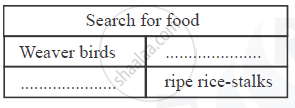
With reference to ‘The Story of My Life’, describe how a teacher can positively impact a child’s life ?
How did Griffin meet his end ?
What has the camera captured?
“One day back there in the good old days when I was nine and the world was full of every imaginable kind of magnificence, and life was still a delightful and mysterious dream. ” The story begins in a mood of nostalgia. Can you narrate some incident from your childhood that might make an interesting story?
How has the author linked the symbol of the rocking-horse to Paul's triumphs at the races?
Discuss in pairs or groups of four.
It is difficult to part with personal items like a watch which have a sentimental value attached to them.
How does the poet juxtapose the human condition with the behaviour of the political class?
How did the author feel about her mother's passion to make her a dancer?
No trees except the one which grows and seethes in one's dreams'– why is the phrase 'grows and seethes' used?
Say why the speaker of the poem wishes to be a -
gardener
Discuss with your partner and describe the atmosphere in the woods when Mrs. Adis didn’t hand over Peter Crouch to the keepers because -
- _________________
- _________________
- _________________
The two best things the servants brought to God were gold and jewel stones.
The poem expresses feelings of serenity. Pick out expressions from the above poem that express the same.
Go through the poem and state whether the following statement is true or false.
Planners deliberately find drawbacks in the old city planning.
Say WHY. . . . . .
Ramanujan had to be hospitalized.
Form pairs and decide whether the following statements are those of a Great Indian Bustard or not.
| Statements | Great Indian Bustard | Some Other Bird |
| (a) I am the heaviest flying bird in India. | ||
| (b) I am known as Maldhok or Hoom in Marathi. | ||
| (c) I live in mountainous regions. | ||
| (d) I don’t like grasshoppers or beetles. | ||
| (e) We don’t believe in building nests. | ||
| (f) Our chick stays with the mother for a period of nearly one year. | ||
| (g) I am the State bird of Maharashtra. | ||
| (h) We have been pushed away from more than 90 percent of our home regions. |
Write a short note on the following:
The living world on Rakata
Discuss the question after you have seen a presentation of the ‘ad’.
What does the ad tell you?
Discuss the following question after you have seen a presentation of the ‘ad’.
What would happen if you ate proper meals like rice and dal or dal-roti?
Have you seen non-commercial advertisements - those that are not ‘selling’ anything but are only giving people useful information?
Answer the following question in one sentence.
Why does he ‘miss all the fun’?
The wheel, which was probably invented more than 6000 years ago, is thought of as one of the greatest technological advances made by man. Why do you think the wheel is so important in human civilization?
Read the passage and answer the following:
Why is the tollbooth called a ‘phantom’ tollbooth?
Fill in the following blanks with reference to the poem.
'In time of rain when spring and life are ______, the butterflies lift ______ wings to catch a ______ cry and trees put forth ______ leaves to sing in ______ beneath the sky as ______ boys and girls too ______ singing down the roadway'.
Using your imagination, write how the other pets in the house could have objected to Caesar living in their house.
Read the poem aloud using proper intonation.
What are the complaints of the animals?
Guess the meaning of the following word.
coarse grained
Read the following line from the poem and answer the question that follow.
Let me but live my life from year to year, With forward face and unreluctant soul; Not hurrying to, nor turning from the goal; Not mourning for the things that disappear.
Identify the rhyme scheme of the given lines.
Mention the things that the grandfather imagined.
How did Hamid’s friends show that they enjoyed eating the sweets?
Learning About Nature
Learn about caterpillars and butterflies. Read a book about a caterpillar turning into a butterfly. You can get one from the library or go online and find information with pictures.
Give a picturesque view through which the train travels.
How does the poet describe the Indian seasons? Write in your own words in about 50 words.
It is used in the fisher’s _____.
_________ is the memorial for the soldiers.
When did the battle of Nauranang start? How long did it continue?
Match the dialogue to the character.
| "I will do all the work myself." |  |
| "First, you charge my battery." |  |
| "I have bought you a robot." |  |
Identify the character or the speaker.
“Do not feel sad dear.”
What did the hen-pigeon whisper?
Match the words with the pictures.
| Robinson |  |
| cannibals |  |
| Friday |  |
| footprint |  |
Answer using Yes or No and pick sentence from the story to support your answer.
Did Robinson’s ship sink?
Like whom did they want to do?
Did Nandhini have fever?
Moles trap worms and store them.
What is the main idea of the text?
What did Ani's parents teach her?
What does Amma often say?
Write the word with same meaning.

queue- ______
Write the word with same meaning.

Sink
Write about the places where the poet wants us to run.
What strange things did Alice see?
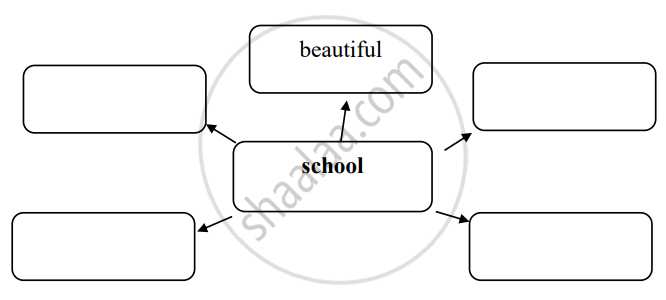
Write the related words as shown in the example:
Circle the words where you get a zzzzz sound. One is done for you.
| honeybees | |||
| price | prize | maze | face |
| rice | rise | blaze | fizz |
| lazy | lacy | busy | racy |
| raise | rays | race | ace |
| chase | this | these | frosty |
Why is it not advisable to play online games?
