Advertisements
Advertisements
Question
“I can see clear bridges between my life experiences and my work in dance.” How does Kumudini Lakhia weave episodes from the two realms in her account?
Advertisements
Solution
Kumudini Lakhia in her account shows that her life experiences form the basis of her work in dance. Though she was focussed on dance, yet she tells us that she lived her life. She has taken cues from her life experiences to present these in her dance.
She recounts how in Duvidha or conflict she has examined the plight of a middle class woman who is chained to the traditions of Indian life. In Atah Kim, we can see how Kumudini bases the theme on the desire for power which she experienced after her schooling was over.
Her work Panch Paras is on the spiritual realm of life. Kumudini tells us about her experience on spiritualism, the arguments she used to have with her grandmother regarding the existence of God etc. She has used this bit of experience as theme in Panch Paras.
APPEARS IN
RELATED QUESTIONS
Answer the following question in 120-150 words :
Mrs. Hall is greedy but efficient in her business.
Attempt a character sketch of Mrs. Hall.
Answer any four of the following questions in 30-40 words each:
(a) How could the peddler enter the forge without being noticed by the blacksmith?
(b) At Champaran what did the British landlords want from the sharecroppers?
(c) How does the poet show the futility of Aunt Jennifer's efforts?
(d) Stephen Spender in his poem, 'An elementary School Classroom in a Slum' paints a dismal picture of poverty. Comment.
(e) How did Evans have the last laugh at the Governor?
(f) How did the General plan to get rid of the American POW?
(i) The interest of Maharashtra and that of India should be one for the progress of Maharashtra state, because ................
Mention three ways in which the author’s grandmother spent her days after he grew up.
Look for a story, a poem and a newspaper article on environment conservation and see how the style of each is different from the other.
What do you understand of Einstein’s nature from his conversations with his history teacher, his mathematics teacher and the head teacher?
Look at the following set of words and mention what is common to them both in form and meaning.
|
Snuffle |
snort |
sniffle |
snore |
Adi Song for the Recovery of Lost Health' is in Miri Agom while Adi Agom is the Adi community's language for routine conversation. How does this reflect upon the high level of language sensitivity of the Adi? Can you think of other parallels in modern languages between the literary variety and the colloquial variety?
Pick out some sentences from the lesson that convey a general truth.
State whether the following statement is True or False. Correct the false statement by finding evidence from the poem to support your remark.
The poet repents planting the cherry tree.
Johnsy realised that her thinking was wrong.
The tone of the poet is sarcastic. When he writes ‘All spaces are gridded filled with permutations of possibilities’ he intends to indicate the efforts made by the planner to exploit every available piece of land without any consideration of harming nature or violating attachments of people to places. Make pairs/groups and find out some more sarcastic lines having the same effect.
Read the lesson and name the following.
The First surgeon to perform operations ______
Read the description of the Kabaddi match and do the following:
Write, in your own words, what happened in the second half.
Read aloud the account of how Flying Officer Nirmal Jit Singh Sekhon sacrificed his life to defend our country.
There were some reasons why Theseus was initially against but later gave consent for the marriage of Helena with Lysander. Explain.
Can you imagine life without wheels? Try and think of what life would be like if there were no wheels around.
Find the meaning of ‘Charity begins at home’. Find other sayings which have a similar meaning.
Write the following in short:
What the young lawyer pleaded.
Hold a mock trial for the following offence. There should be a complainant, a defendant, and lawyers to argue the case on behalf of them. The whole class can vote to pass the judgment. On what occasions will you plead for justice? What punishment will you suggest? When will you plead for mercy?
A very poor and honest servant has broken a vase while cleaning it. The vase was valuable and the employer liked it very much.
We all follow a class time table made by the school. Imagine for a minute what will happen if there was no time table for your class.
Correct the following sentence using facts from the passage.
The great heroes avoided one another.
Read the ode ‘To Autumn’ by the famous poet John Keats. ‘Season of mists and mellow fruitfulness...’
Prepare a ‘PowerPoint’ presentation, using one slide for each of the above points. Present your review in a PPT format in the classroom.
Rewrite in your own words.
One event from the story.
From any collection of classic poetry or the internet, find another famous poem by Robert Frost titled ‘Stopping by the Woods on a Snowy Evening’. Try to understand the symbolism used in that poem in 8-10 lines.
What do you notice about the following pairs of words?
- act naturally
- liquid gas
- open secret
- sound of silence
- sweet sorrow
- original copy
- only choice
- growing smaller
Using the following points frame a character sketch of the narrator. Support each character trait with instances from the lesson.
- Diffident and timid
- Unusual behavior
- Ignorant about banking
- Nervous and careless
- Economical.
Who said the following, to whom, and when?
“O Holy Master, bless us with thy song !”
Find the meaning of the following word.
rated
Read the poem aloud using proper intonation.
Write what the following do, with the help of the poem.
ripples
What examples of plentiful things does the poet give?
Which event in the story tells us that the lion was brave?
Who is a ‘netizen’?
Discuss, why it was considered as an adventurous and dangerous thing to travel in those days?
What did the bird suggest Chulong, in exchange for its freedom?
Read the following line from the poem and answer the question given below.
Let us learn to walk with a smile and a song,
No matter if things do sometimes go wrong;
- What does the poet expect everyone to learn?
- What should we do when things go wrong sometimes?
How did the children react when they met each other at the ruins?
Look at the number pattern. Fill the blank in the middle of the series or end of the series.
CMM, EOO, GQQ, ______, KUU
How does the coconut tree grow?
You don’t need ______ and ______ in the Earth.
Why did the family move to Patna?
Which planet has rings around it?
Imagine you are the girl and give a different ending to the story.
Match the actions with the picture.
| mixes for community food service | 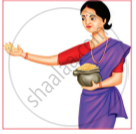 |
| sows the grain |  |
| feeds the birds |  |
Read scene I of the play carefully and answer the question below.
List the characters that appear in the scene. What human characteristics do they exhibit?
Fruits and shadows are free under the _______.
Why did the bird catcher need fire?
Why did she pick up her pace?
Fill in the blank
Do you like apple______ orange?
What will you do with your savings?
Do you tell the truth always? Why?
Name the things that good merchant offered for the plate
Why is the play called ‘The Giving Tree’?
Write the related words as shown in the example:
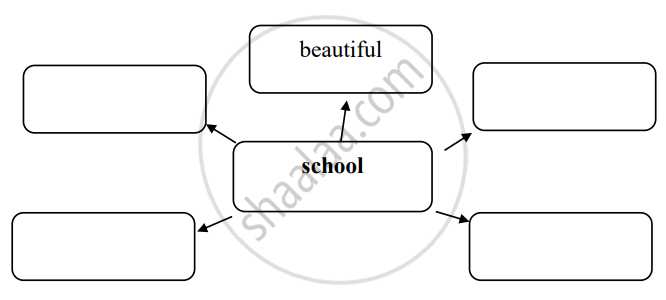
Read the passage carefully and complete the activities:
A1. Complete the following sentences. [2]
- Female sparrows lay ______.
- Sparrows build their nest out of ______.
- The eggs are ______.
- In cities, sparrows build their nest in ______.
|
A sparrow is a small bird which is found throughout the world. There are many different species of sparrows. Sparrows are only about four to six inches in length. Many people appreciate their beautiful songs. Sparrows prefer to build their nests in low places-usually on the ground clumps of grass low trees and low bushes. In cities, they build their nests in building nooks or holes. They rarely build their nests in high places. They build their nests out of twigs grasses and plant fibers. Their nests are usually small and well-built structures. Female sparrows lay four to six eggs at a time. The eggs are white with reddish-brown spots. They hatch within eleven to fourteen days. Both the male and female parents care for the young. Insects are fed to the young after hatching. The large feet of the sparrows are used for scratching seeds. Adult sparrows mainly eat seeds. Sparrows can be found almost everywhere where there are humans. Many people throughout the world enjoy these delightful birds. The sparrows are some of the few birds that engage in dust bathing. Sparrows will first scratch a hole in the ground with their feet then lie in it and fling dirt or sand over their bodies with flicks of their wings. They will also bathe in water or in dry or melting snow. Water bathing is similar to dust bathing with the sparrow standing in shallow water and flicking water over its back with its wings also ducking its head under the water. Both activities are social with up to a hundred birds participating at once and are followed by preening and sometimes group singing. |
A2. How do sparrows take a bath? [2]
A3. Find out adjectives for the following nouns from the passage. [2]
- ______ Song
- ______ Water
- ______ Bird
- ______ species
A4. Do as directed. [2]
- A sparrow is a small bird which is found throughout the world.
(Underline the subordinate clause) - Female sparrows lay four to six eggs at a time.
(Frame a ‘wh’ type question to get the underlined part as an answer.)
A5. ‘We have to save the birds.’ Do you agree with this statement? Why? [2]
Now read the following article on the emerging career options in the modern era and answer the questions that follow.
The students at the higher secondary level in schools start thinking of suitable courses to take up at the university level based on their aptitude, ability, and interests. While considering the higher education options, they should also plan the career path they wish to take. In today’s complex job scenario, there is a mismatch between demand and supply. On one hand, we have qualified professionals desperately trying to find a job, while on the other hand, there are many professions that need suitable talented employees. But such skilled employees are unavailable. Therefore, the need of the hour is that students have an understanding of the emerging career options. and globalisation has widened the scope of career options in the twenty–first century. Let us consider some popular careers.
Fashion Designing
The current cosmopolitan and fashion–conscious wave that has taken over our country has opened up a huge arena for careers in fashion. These careers encompass designing clothes, costumes, jewellery, footwear, wardrobe, cosmetics, accessories and the like.
Culinary Arts
With food and cookery shows being a major trend across the world, culinary arts, a sub-domain of the hospitality sector, has now become the most sought-after career.
Paramedical sciences
In recent times, there has been a great demand in the health care industry. Paramedical professionals who support medical practitioners in areas such as optometry, pathology, nursing, physiotherapy, and dentistry are much sought after.
Media, Journalism and Advertising
In this information era, print and entertainment media have become a force to reckon with. This arena has become a huge career playground because youngsters are attracted to it as the exposure and reach are greater through such mass media. We notice that radio and TV channels, internet companies, and advertising agencies are increasingly recruiting qualified professionals.
Hotel Management
The hotel industry is the fastest-growing industry in India. The number of international travellers (both for business and leisure) is increasing. The hospitality and service industry offers career options such as house keeping, front-desk executives, tourism management, etc.
Sports Management
With multinational companies supporting sports, careers in sports offer enormous scope. One need not be a player or an athlete to shine in a sports career because the field of sports offers various career options such as technical trainers, commentators, sports journalists, dieticians, referees, etc. Conducting sports events successfully, organizing the event laudably, preparing the ground for the event are all part of sports management.
- When do students start thinking about their career path?
- How can students build a strong career?
- What are the integral aspects of a successful career?
- What is meant by ‘culinary art’?
- Why is media a popular career option?
- Name some paramedical courses mentioned in the passage.
- Why is the hotel industry seen as the fastest growing in India?
- Does one have to be a player to opt for a career in the field of sports? Answer giving reasons.
- Pick one word from the passage which is the opposite of ‘modern’.
- Which word in the passage means ‘composed of people from many parts of the country’?
