Advertisements
Advertisements
Question
Besides better aeration and mixing properties, what other advantages do stirred tank bioreactors have over shake flasks?
Advertisements
Solution
The laboratory uses shake flasks to cultivate and mix materials on a small scale. Microbes, plants, and animal cells, as well as their enzymes, use bioreactors to convert basic materials into specialised products. Bioreactors are used to produce biomass or cell products on a large scale in an aseptic environment. Here, huge volumes of culture (100 to 1000 litres) can be treated. A bioreactor provides the optimal conditions for producing the desired product (temperature, pH, substrate, salts, vitamins, and oxygen). The most commonly used bioreactors are of the stirring type. A bioreactor is a better option than shake flasks. It has an agitator system to mix the contents correctly, an oxygen delivery system to ensure oxygen availability, a foam control system, a temperature control system, a pH control system, and a sampling port to withdraw small volumes of the culture regularly.
APPEARS IN
RELATED QUESTIONS
Draw a labelled sketch of sparged-stirred-tank bioreactor. Write its application.
Can you list 10 recombinant proteins which are used in medical practice? Find out where they are used as therapeutics (use the internet).
Describe briefly the following:
Bioreactors
Describe briefly the following:
Downstream processing
Explain briefly:
PCR
State the importance of using a bioreactor.
Prepare a flow chart in formation of recombinant DNA by the action of restriction endonuclease enzyme EcoRI.
Answer the following question:
Describe the formation of recombinant DNA by the action of EcoRI.
______ plays an important role in blood clotting.
DNA fragments generated by the restriction endonuclease in a chemical reaction can be separated by ______.
A single strand of nucleic acid tagged with a radioactive molecule is called ______.
Blood stains are found at the site of a murder. It DNA profiling technique is to be used for identifying the criminals, which of the following is ideal for use?
During the purification process for recombinant DNA technology, the addition of chilled ethanol precipitates out ______.
During the process of gene amplification using PCR, if a very high temperature is not maintained in the beginning, then which of the following steps of PCR will be affected first?
Which of the following contributed in popularising the PCR (polymerase chain reactions) technique?
A bacterial cell was transformed with a recombinant DNA molecule that was generated using a human gene. However, the transformed cells did not produce the desired protein. Reasons could be ______.
How is copy number of the plasmid vector related to yield of recombinant protein?
Assertion (A): Synthetic oligonucleotide polymers are used during Annealing in a PCR.
Reason (R): The primers bind to the double stranded DNA at their complementary regions.
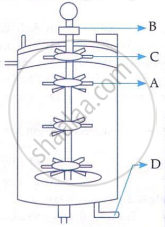
Identify the part of a bio-reactor which is used as a foam braker from the given figure.
Upon exposure to UV radiation, DNA stained with ethidium bromide will show ______.
What is the primary definition of recombinant DNA technology?
In agarose gel electrophoresis, why do DNA fragments move toward the positive electrode?
What is the process of cutting out and recovering a separated DNA band from an agarose gel called?
Which of the following are direct methods used for introducing recombinant DNA into host cells besides chemical transformation?
