Advertisements
Online Mock Tests
Chapters
2: Control and Coordination
3: How do Organisms Reproduce
4: Heredity
▶ 5: Our Environment
![Lakhmir Singh solutions for बायोलॉजी पार्ट ३ [इंग्रजी] इयत्ता १० chapter 5 - Our Environment - Shaalaa.com](/images/biology-part-3-english-class-10_6:41708f3ab2794127a375d812799082f6.jpg "Lakhmir Singh solutions for बायोलॉजी पार्ट ३ [इंग्रजी] इयत्ता १० chapter 5 - Our Environment")
Advertisements
Solutions for Chapter 5: Our Environment
Below listed, you can find solutions for Chapter 5 of CBSE, Karnataka Board Lakhmir Singh for बायोलॉजी पार्ट ३ [इंग्रजी] इयत्ता १०.
Lakhmir Singh solutions for बायोलॉजी पार्ट ३ [इंग्रजी] इयत्ता १० 5 Our Environment Exercise 1 [Pages 267 - 273]
Very Short Answer Type Questions
What is the functional unit of the environment comprising of the living and non-living components called?
Name two natural ecosystems.
Name two artificial ecosystems.
Which one of the following is not a terrestrial ecosystem?
Forest, Grassland, Aquarium, Desert
Why are plants called producers?
What name has been given to those organisms which break down the complex organic compounds present in dead animals and plants?
What are planktons?
The following statement is true or false :
In biology, human beings are called producers.
The following statement is true or false :
Secondary consumers and tertiary consumers, both are carnivores.
Which category of organisms forms the starting point of a food chain?
Which of the following belong to the same trophic level?
Goat ; Spider ; Plants ; Hawk ; Rat
Which of the following belong to the same trophic level?
Tree ; Frog ; Snake ; Grass ; Lizard
Write an aquatic food chain.
Name the organisms belonging to the second and the fourth trophic levels in the food chain comprising the following :
Frogs, Plants, Snakes, Hawk, Insects
What are the various steps of food chain called?
Construct a food chain comprising the following :
Snakes, Hawk, Rats, Plants
Arrange the following in a food chain:
Fish, Algae, Small animals, Big Fish
Which organisms belong to third and fourth trophic levels in the food chain comprising the following?
Rats, Plants, Hawk, Snakes
Which one term in the following includes the others?
air, flora, fauna, environment, water, sunlight, soil
A food chain represents a unidirectional flow of X. What is X?
Fill in the following blanks with suitable words:
Fill in the following blank with suitable word :
Decomposer organisms are..........in their action.
Fill in the following blank with suitable word :
In nature, all green plants are............ whereas animals are consumers.
Fill in the following blank with suitable word :
A series of organisms, each of which feeds on the next organism, the beginning of which is a green plant, is called a .............
Fill in the following blank with suitable word :
The science that deals with the inter-relationships of living things with one another and their environment is called...........
Fill in the following blank with suitable word :
Plastic is a ...............material whereas paper is a.............material.
Short Answer Type Questions
Explain the term ‘producer’.
Explain the term ‘consumer’.
Give two examples of producers.
Give two examples of consumers.
Define decomposers.
Name one decomposer.
What is the role of decomposers in the ecosystem?
What is meant by a primary consumer?
What is meant by a secondary consumer?
What is meant by a tertiary consumer?
Give one example of a primary consumer.
Give one example of a secondary consumer.
Give one example of a tertiary consumer.
Give an example of a four step food chain operating in grassland. Name the secondary consumer in this food chain
What is a trophic level?
Draw the food chain with four trophic levels.
What will happen if we kill all the organisms in one trophic level?
What is the difference between the food habits of organisms belonging to the first and the third trophic levels? Give one example each of the organisms belonging to these two trophic levels.
Can the organisms of any trophic level be removed without causing any damage to the ecosystem? Will the impact of removing all the organisms in a trophic level be different for different trophic levels?
Consider the food chain :
Grass → Deer → Lion
What will happen if all the lions are removed from the above food chain?
The number of malaria patients in a village increased tremendously when large number of frogs were exported from the village. What could be the cause for it?
How does a biodegradable waste differ from a non-biodegradable waste? Give two examples of non-biodegradable wastes which pollute our environment.
Which of the following are biodegradable and which non-biodegradable?
Glass bottle, Paper, Ball point pen refill, Hay, DDT, Wheat, Cake, Wood, Polythene bag, Jute bag, Cotton cloth, Grass, Vegetable peels
Describe an activity to show that while paper is biodegradable but plastic (say, polythene) is non-biodegradable.
Explain why, some materials are biodegradable but some are non-biodegradable.
Write down a food chain in the sea.
Write down a food chain which ends with humans.
Write down a food chain with five links in it.
At which trophic level a person is feeding when he is eating roasted chicken.
At which trophic level a person is feeding when he is eating bread.
At which trophic level a person is feeding when he is eating eggs.
At which trophic level a person is feeding when he is eating apple.
At which trophic level a person is feeding when he is eating fish.
A student went to study a local pond. In one part of the pond she noticed tadpoles scraping at some pond weed. In another part she saw a water beetle holding a tadpole in its jaws.
(a) Construct a food chain for the pond.
(b) How many links are there in this chain?
Construct a long food chain.
Construct a short foodchain, ending with man.
State one advantage of using jute bags over plastic bags for shopping.
Write a common food chain of a pond ecosystem having four links.
We do not clean ponds or lakes but an aquarium needs to be cleaned periodically. Why?
What will be the consequence of the absence of decomposers in the ecosystem
Distinguish between a food chain and a food web.
Write one or two word for the following statement/definition :
Each level of food chain where transfer of energy takes place
Write one or two word for the following statement/definition :
The physical factors like temperature, rainfall, light soil air and water of an ecosystem
Write one or two word for the following statement/definition :
Organisms which depend on the producers for food either directly or indirectly
Write one or two word for the following statement/definition :
The physical and biological world where we live in
Write one or two word for the following statement/definition :
Selfcontained unit of living things and their non-living environment needing only sunlight for its functioning
Long Answer Type Questions
What is meant by biodegradable waste materials?
Give two examples of biodegradable wastes.
Which of the following materials are non-biodegradable?
Aluminium wire, Tea leaves, Synthetic fibre, Wool
What is meant by non-biodegradable waste materials?
Give two examples of non-biodegradable wastes.
Which of the following materials are biodegradable?
Animal bones, Iron nails, Plastic mugs, Leather belts, Silver foil
Define an ecosystem.
Give examples of any two ecosystems.
List the biotic and abiotic components of an ecosystem.
What is a food chain?
Give one example of a simple food chain.
What is a 'food web'? Show its formation.
What is meant by 'environment'?
What type of substances are the major pollutants of the environment? Name two such substances
Name the organisms whose uncontrolled activities are damaging the environment.
Explain why, it is better to use paper bags than plastic bags.
Multiple Choice Questions (MCQs)
Which of the following constitute a food-chain?
Grass, wheat and mango
Grass, goat and human
Goat, cow and elephant
Grass, fish and goat
In a food chain, the initial organism is usually :
(a) photosynthetic
(b) herbivore
(c) saprophytic
(d) parasitic
Which of the following represents a possible food chain found in a pond :
| Primary producers |
Primary consumers | Secondary consumers |
| (a) green algae | fish | mosquito larvae |
| (b) fish | green algae | mosquito larvae |
| (c) mosquito larvae | fish | green algae |
| (d) green algae | mosquito larvae | fish |
Which of the following are decomposers of dead organisms?
| Bacteria | Fungi | Viruses |
| (a) no | yes | yes |
| (b) yes | no | yes |
| (c) yes | yes | no |
| (d) yes | yes | yes |
Which of the following is an artificial ecosystem?
(a) pond
(b) crop field
(c) lake
(d) forest
Disposable plastic plates should not be used because ______.
they are made of light weight materials
they are made of toxic materials
they are made of biodegradable materials
they are made of non-biodegradable materials
In a food chain, the third trophic level is always occupied by :
(a) carnivores
(b) herbivores
(c) decomposers
(d) producers
Accumulation of non-biodegradable pesticides in the food chain in increasing amount at each higher trophic level is known as ______.
eutrophication
pollution
biomagnification
accumulation
If a grasshopper is eaten by a frog, then the energy transfer will be from ______.
producer to decomposer
producer to primary consumer
primary consumer to secondary consumer
secondary consumer to primary consumer
An ecosystem includes ______.
all living organisms
non-living objects
both living organisms and non-living objects.
all living organisms and input of sun's energy.
The decomposers in an ecosystem ______.
convert inorganic material, to simpler forms
convert organic material to inorganic forms
convert inorganic materials into organic compounds
do not breakdown organic compounds
What will happen if deer is missing in the food chain given below?
Grass → Deer → Tiger
The population of tiger increases
The population of grass decreases
Tiger will start eating grass
The population of tiger decreases and the population of grass increases.
Organisms which synthesise carbohydrates from inorganic compounds by using radiant energy are called ______.
decomposers
producers
herbivores
carnivores
Organisms of a higher trophic level which feed on several types of organisms belonging to a number of lower trophic levels constitute the ______.
food web
ecological pyramid
ecosystem
food chain
In the following groups of materials, which group/groups contain only non-biodegradable materials?
- wood, paper, leather
- polythene, detergent, PVC
- plastic, detergent, grass
- plastic, bakelite, DDT
(iii)
(iv)
(i) and (iii)
(ii) and (iv)
Which of the following statement is incorrect?
All green plants and blue green algae are producers.
Green plants get their food from organic compounds.
Producers prepare their own food from inorganic compounds.
Plants convert solar energy into chemical energy.
Which of the following group of organisms are not constituents of a food chain?
- grass, lion, rabbit, wolf
- plankton, man, fish, grasshopper
- wolf, grass, snake, tiger
- frog, snake, eagle, grass, grasshopper
(i) and (iii)
(iii) and (iv)
(ii) and (iii)
(i) and (iv)
In the figure given alongside, the various trophic levels are shown in the form of a pyramid. At which trophic level the maximum energy is available?
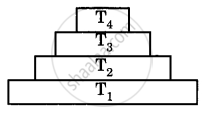
T4
T2
T1
T3
One of the following is not a biodegradable material. This one is :
(a) cotton
(b) animal bones
(c) aluminium foil
(d) wood
Which of the following is not a non-biodegradable material?
(a) nylon socks
(b) plastic school bag
(c) jute carry bag
(d) polyester clothes
The use of one of the following will pollute the environment. This one is :
(a) paper carry bags
(b) cotton cloth carry bags
(c) nylon cloth carry bags
(d) jute carry bags
One of the following is not a consumer. This one is :
(a) giraffe
(b) antelope
(c) algae
(d) alligator
Which of the following is not a producer?
(a) grass
(b) zooplankton
(c) phytoplankton
(d) paddy
One of the following is a micro-consumer. This one is :
(a) ant
(b) lice
(c) fungi
(d) mosquito
Which of the following act as decomposers in an ecosystem?
(a) Lactobacillus bacteria
(b) Cyanobacteria
(c) Putrefying bacteria
(d) Rhizobium bacteria
One of the following helps in the recycling of materials in an ecosystem. This one is :
(a) autotrophs
(b) saprotrophs
(c) omnivores
(d) carnivores
In the food chain comprising of a snake, grass, insect, and frog, the secondary consumer is :
(a) insect
(b) snake
(c) frog
(d) grass
Sahara Desert was formed over a period of time due to one of the following uncontrolled activities of man :
(a) excessive cutting down of forest plants and trees
(b) excessive killing of large herbivores
(c) excessive killing of large carnivores
(d) excessive use of poisonous chemicals herbicides
Questions Based on High Order Thinking Skills (HOTS)/Case Based Questions
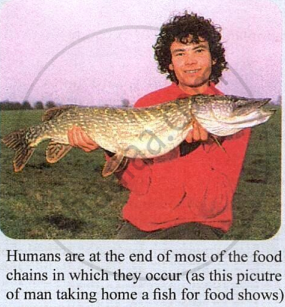
The sea water contains water beetles, tadpole, fish and weeds.
- Write a food chain comprising all the given organisms.
- Which organisms in the food chain are (i) herbivore, and (ii) carnivores?
- Which organisms are (i) predators, and (ii) prey?
- Which organisms can trap solar energy to make food?
- Which organism is a secondary consumer?
| The following is a food chain that ends with human: plants → bee → human |
- Explain how plants provide food for bees.
- How do bees provide food for humans?
- How does this food chain differ from a usual food chain involving human such as: plants → goat → human?
- Do you think that the food chain given in this question can really be regarded as a food chain? Explain your answer.
|
A food chain occurring in the sea which provides food for many people can be written as: phytoplankton → zooplankton → X → Y |
- Name one phytoplankton.
- Name two zooplanktons.
- What could be Х?
- Name the organism which Y could be.
- Which organism in the above food chain is a (i) primary consumer, and (ii) tertiary consumer?
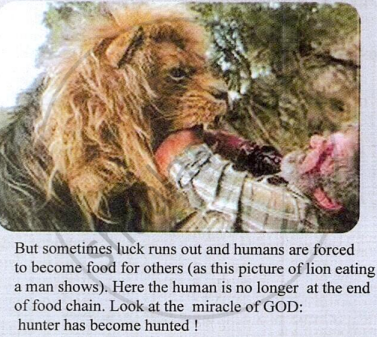
| Some hunters are roaming in the plush green forest of Africa. They spot a deer and kill it. They decide to roast the deer there and then and eat it. When the hunters had just finished enjoying the feast of roasted deer, a lion attacks them. The lion kills one of the hunters and eats his flesh. |
- Write a food chain which provides food to the lion in this case.
- Which animal (other than deer) the lion could look for food if he did not get the hunter as prey?
- Which other animal in the forest could have been in place of lion?
- How does the above food chain differ from the food chain such as: plants → goat → man?
  |
What would happen to the number of rabbits and grass plants if the number of foxes increased?
What would happen to the number of rabbits and grass plants if the number of foxes decreased?
What would happen to the number of grass plants and foxes if the number of rabbits increased?
What would happen to the number of grass plants and foxes if the number of rabbits decreased?
(a) Match the terms given in column I with the terms given in column II and column III having the same meaning:
| Column I | Column II | Column III | |
| (i) | Secondary consumer | Herbivore | 1st trophic level |
| (ii) | Primary consume | Autotroph | 3rd trophic level |
| (iii) | Producer | Carnivore | 4th trophic level |
| (iv) | Tertiary consumer | Large carnivore | 2nd trophic level |
(b) Give one example of a food chain having four organisms. Below each organism write the three appropriate terms from the part (a) above which you think it represents.
Lakhmir Singh solutions for बायोलॉजी पार्ट ३ [इंग्रजी] इयत्ता १० 5 Our Environment Exercise 2 [Pages 283 - 289]
Very Short Answer Type Questions
Write the percentage of solar energy captured by the autotrophs.
Write the percentage of energy transferred from autotrophs to the next level in a food chain.
Name the process in which a harmful chemical enters the food chain and gets concentrated at each trophic level.
In a food chain consisting of grass, frog, bird and insects, where will the concentration of the harmful chemicals be maximum?
If a harmful chemical enters a food chain comprising cat, mice and plants, which one of these organisms is likely to have the maximum concentration of the harmful chemical in its body?
Which radiations are absorbed by ozone layer?
Name the group of chemical compounds which damages the ozone layer.
Name two waste materials which can be recycled.
Name the process by which the volume of solid wastes can be reduced.
If 5 joules of energy is available at producer level (plants), then how much energy will be transferred to the lion in the following food chain?
Plants → Goat → Lion
The following statement is true or false:
Only 10 per cent of the light energy given by the sun is available for transfer at each higher trophic level in a food chain.
Where does all the energy in living organisms originate from?
Why are there rarely more than five links (or five organisms) in a food chain?
Name two predators of snakes in a food web operating in a forest ecosystem.
Fill in the following blanks with suitable words:
Fill in the following blank with suitable word :
Ultraviolet rays can cause skin..............
Fill in the following blank with suitable word :
Pesticides enter the food chain at the ...........level
Fill in the following blank with suitable word :
Grass → ........... → Human
Fill in the following blank with suitable word :
Lettuce → ............. → Fox
Fill in the following blank with suitable word :
Plants → Antelope → ............
Short Answer Type Questions
What is ten per cent law? Explain with an example.
Write the full name of CFC.
Give one harmful effect of CFC.
Explain how, harmful ultraviolet radiations of sunlight are prevented from reaching the earth's surface.
What are the causes of depletion of ozone layer?
Which diseases are likely to be caused if the ozone layer will become thinner?
Explain how harmful chemicals enter our bodies.
'If we excessively use pesticides to protect the crops from diseases, then it may cause long-term damage to mankind'. Justify this statement.
What is biological magnification?
With the help of a food chain, explain how biological magnification of harmful chemicals can occur.
What is meant by bioconcentration of pesticides
Which common pesticide has accumulated in human body in considerable amounts?
What is garbage?
What does garbage consist of?
Name the various modes of waste disposal.
How can the wastes such as paper, plastic and metal objects be disposed of?
Give a method for the disposal of household wastes such as left-over food, fruit and vegetable peels, and leaves of potted plants.
What is meant by incineration? for what purpose is it used?
How are most of the solid wastes in urban areas disposed of?
State two advantages of using disposable paper cups over disposable plastic cups.
What is sewage? How is sewage disposed of?
Write the harmful effects of ozone depletion.
What would happen if the ozone layer in the atmosphere completely disappears?
Long Answer Type Questions
With the help of a flow diagram, describe how energy from the sun flows through various trophic levels.
Explain why, the flow of energy in the ecosystem is said to be unidirectional.
What is ozone?
How Ozone is Formed?
How does ozone layer protect us from harmful effects in the environment?
What is UNEP?
What step has been taken by UNEP in 1987 to prevent too much damage to the ozone layer?
How is energy introduced into the ecosystem?
Consider the following food chain
(i) Plants → Mice → Snakes → Hawks
(ii) Plants → Mice →Hawks
If energy available at the producer level in both the food chains is 100 J, in which case will hawks get more energy as food and by how much? Justify your answer.:
Explain why, a food chain usually cannot have more than three or four steps.
Calculate the amount of energy that will be available to big fish in the following food chain, if 10,000 J of energy is available to small algae from the sun :
Small algae → Zooplankton → Fish → Big fish
Name and state the law given by Lindeman which tells us how much energy entering a particular trophic level of organisms is available for trasnsfer to the next higher trophic level.
How much energy will be available to hawks in the food chain comprising hawk, snake, paddy and mice, if 10,000 J of energy is available to paddy from the sun?
Multiple Choice Questions (MCQs)
What provides the energy which then flows through a food chain?
(a) glucose
(b) oxygen
(c) respiration
(d) sunlight
Which pollutant released into the air during refrigeration and airconditioning is the greatest contributor to the depletion of ozone layer?
(a) BHC
(b) DDT
(c) CFC
(d) UNEP
In the food chain given below, if the amount of energy available at fourth trophic level is 5 kJ, what was the energy available at the producer level?
Grass → Grasshopper → Frog → Snake → Hawk
(a) 500 kJ
(b) 50 kJ
(c) 5000 kJ
(d) 5 kJ
Which of the following limits the number of trophic levels in a food chain?
(a) insufficient food supply from producer level
(b) decrease in energy at higher trophic levels
(c) increase in the number of organisms at higher trophic levels
(d) accumulation of harmful chemicals at higher trophic levels
What percentage of sun's energy falling on the leaves of green plants is utilised by the plants in the process of photosynthesis and stored as chemical energy of food?
(a) 99 per cent
(b) 10 per cent
(c) 1 per cent
(d) 20 per cent
The depletion of ozone layer in the upper atmosphere is mainly due to the emission of :
(a) unburnt hydrocarbons
(b) chlorofluorocarbons
(c) greenhouse gases
(d) ultraviolet radiations
In an ecosystem, 10% of energy available for transfer from one trophic level to the next is in the form of ______.
heat energy
chemical energy
mechanical energy
light energy
The flow of energy in an ecosystem is always :
(a) unidirectional
(b) bidirectional
(c) cyclic
(d) multidirectional
The excessive exposure of humans to ultraviolet rays results in:
- damage to immune system
- damage to lungs
- skin cancer
- peptic ulcers
(i) and (ii)
(ii) and (iv)
(i) and (iii)
(iii) and (iv)
Which of the following gets the minimum energy through the food chain in an ecosystem?
(a) carnivore
(b) large carnivore
(c) producer
(d) herbivore
A food chain comprises of cat, seed-eating bird, plants, and dog. The organism which will have the maximum concentration of harmful pesticides coming through the food chain is most likely to be :
(a) cat
(b) plants
(c) dog
(d) seed-eating bird
An aquatic food chain comprises of the organisms like tadpoles, weeds, fish and water beetles. The organism which gets the minimum energy through this food chain is :
(a) water beetles
(b) tadpoles
(c) weeds
(d) fish
Most of the water surface of a lake is covered with algae. This algae is part of the food chain which also includes small fish, bird, larvae and big fish. Which of the following will obtain the maximum energy?
(a) big fish
(b) bird
(c) larvae
(d) small fish
If the energy available at the producer level in a food chain is 150 J, how much energy will be transferred to : tertiary consumer?
(a) 15 J
(b) 10 J
(c) 1.50 J
(d) 0.15 J
In addition to wheat plants, a crop field ecosystem has organisms such as snake, peacock, eagle and mice. If the wheat plants are sprayed with pesticides periodically, which of the following will have the minimum concentration of pesticides in the body?
(a) snake
(b) eagle
(c) mice
(d) peacock
Which of the following is the best method to dispose of biological wastes from hospitals?
(a) landfill
(b) recycling
(c) incineration
(d) composting
In an ecosystem :
(i) the flow of energy is unidirectional
(ii) the flow of materials is unidirectional
(iii) the flow of materials is cyclic
(iv) the flow of energy is cyclic.
(a) (i) and (ii)
(b) (ii) and (iii)
(c) (i) and (iv)
(d) (i) and (iii)
The ten per cent law is associated with
(a) transfer of energy from various trophic levels to decomposers in a food chain
(b) transfer of ATP energy into muscular energy
(c) transfer of chemical energy from one organism to another
(d) transfer of sun's energy to the organisms called producers.
The harmful chemical which is accumulating in human beings through food chain is :
(a) benzenehexachloride
(b) dichlorodiphenyltrichloroethane
(c) chlorofluorocarbon
(d) abscisic acid
O2 is converted into O3 by the action of :
(a) infrared radiations
(b) ultraviolet radiations
(c) gamma radiations
(d) cosmic radiations
Which of the following cannot be added in a composting pit to prepare compost?
(a) sunflower plants
(b) fruit and vegetable peels
(c) flowers of plastic
(d) red worms
Questions Based on High Order Thinking Skills (HOTS)/Case Based Questions
The gas A is used by most of the animals to obtain energy from food by the process of respiration. When A is acted upon by radiation X, it gets converted into another gas B which is an allotrope of A but poisonous when inhaled. B forms a kind of layer C in the upper atmosphere which absorbs radiations X coming from a source Y and prevent them from reaching the earth. Some chemicals Z released from the various devices on the earth are destroying the layer C slowly. In fact, a hole has already been formed in layer C over the area D of the earth.
(a) What are gases (i) A, and (ii) B? Write their molecular formulae.
(b) Name the layer C.
(c) What are (i) X, (ii) Y, and (iii) Z?
(d) Name the area D.
(e) Name any two human ailments which may be caused by X.
The surface of water in a lake appears green due to a layer of tiny free-floating organisms X on its surface. The lake water also contains organisms like water beetle, fish and tadpole. The sun shines over the lake water and provides energy for the functioning of this lake ecosystem.
(a) What could organisms X be?
(b) Write a food chain comprising of all the four organisms mentioned.
(c) What is the general name of the food chains like the one written above?
(d) Name (i) secondary consumer (ii) producer (iii) tertiary consumer, and (iv) primary consumer, in the above food chain.
(e) If the tertiary consumer gets 0.2 J of energy from the secondary consumer, then how much energy was radiated by the sun to the producer?
A forest ecosystem having a lot of green plants has some foxes, lions and rabbits in it.
(a) Write a food chain comprising all the four organisms mentioned above.
(b) Name (i) one herbivore, and (ii) two carnivores, in this food chain.
(c) Name the link which is a predator as well as a prey.
(d) Name (i) second trophic level, and (ii) third trophic level.
(e) Which link of this food chain can feed on second trophic level as well as third trophic level, independently?
(f) If the sun provides 1000 J of energy to the plants, then how much energy will be transferred to fox through the food chain.
| A food chain consists of fish, larvae, phytoplanktons and birds. The level of pesticides in water in which the fish, larvae and phytoplanktons live is quite high. |
- In which organisms the pesticides enter from the polluted water? What is this level of organisms known as?
- Which organism will have the maximum amount of pesticides accumulated through the food chain? What is this process known as?
- Write the food chain comprising all the organisms mentioned above.
- Which other organism you could write in place of bird in the above food chain?
Every household produces a lot of material A daily. In one of the methods of disposal B, material A is burned at a very high temperature of about 1000°C in a structure called C. During this process, the organic matter present is removed as D and E whereas F is left behind (which can be dumped in a landfill site).
(a) What is material A?
(b) Name the method of disposal B.
(c) What is structure C known as?
(d) What are (i) D (ii) E, and (iii) F?
(e) This method is especially suitable for the disposal of materials produced by certain institutions. Name such institutions.
In the following questions, two statements are given-one labelled Assertion (A) and the other labelled Reason (R): Select the correct answer from the options given below.
Assertion (A): The micro-organisms which break down the complex organic compounds present in dead organisms like dead plants and animals, and their products like faeces, urine, etc., into simpler substances are called decomposers.
Reason (R): It is due to the presence of decomposers that the various nutrient elements which were initially taken by plants from the soil, air and water are returned to the soil, air and water after the death of plants and animals.
Both A and R are true and R is correct explanation of the assertion.
Both A and R are true but R is not the correct explanation of the assertion.
A is true but R is false.
A is false but R is true.
Assertion (A): The flow of energy in the ecosystem is said to be cyclic because the sun’s energy radiated from the living organisms of a food chain can be reused by plants in photosynthesis.
Reason (R): When we move from the first trophic level of producers (plants) to second trophic level of herbivores and third trophic level of carnivores, the amount of energy available gradually decreases.
Both A and R are true and R is correct explanation of the assertion.
Both A and R are true but R is not the correct explanation of the assertion.
A is true but R is false.
A is false but R is true.
Assertion (A): The ozone layer in the upper atmosphere is very important for the existence of life on earth because it absorbs most of the harmful ultraviolet radiations coming from the sun and prevents them from reaching the earth.
Reason (R): The ultraviolet radiations coming from the sun can cause skin cancer. They also damage the eyes by causing an eye-disease called cataract. Ultraviolet rays also damage immune system by lowering the body’s resistance to diseases.
Both A and R are true and R is correct explanation of the assertion.
Both A and R are true but R is not the correct explanation of the assertion.
A is true but R is false.
A is false but R is true.
Assertion (A): In a food chain consisting of frog, peacock, grass, snake and grasshopper, the minimum concentrations of harmful chemicals will be in the body of peacock.
Reason (R): The increase in concentration of harmful chemical substances like pesticides in the body of living organisms at each trophic level of a food chain is called biological magnification.
Both A and R are true and R is correct explanation of the assertion.
Both A and R are true but R is not the correct explanation of the assertion.
A is true but R is false.
A is false but R is true.
Assertion (A): If 50,000 joules of sun’s light energy falls on the plants (producers), the energy which will be available in plant matter as food will be 500 joules.
Reason (R): If 50,000 joules of sun’s light energy falls on the plants (producers), the energy which will be available is plant matter as food will be 5000 joules.
Both A and R are true and R is correct explanation of the assertion.
Both A and R are true but R is not the correct explanation of the assertion.
A is true but R is false.
A is false but R is true.
Solutions for 5: Our Environment
Lakhmir Singh solutions for बायोलॉजी पार्ट ३ [इंग्रजी] इयत्ता १० chapter 5 - Our Environment
Shaalaa.com has the CBSE, Karnataka Board Mathematics बायोलॉजी पार्ट ३ [इंग्रजी] इयत्ता १० CBSE, Karnataka Board solutions in a manner that help students grasp basic concepts better and faster. The detailed, step-by-step solutions will help you understand the concepts better and clarify any confusion. Lakhmir Singh solutions for Mathematics बायोलॉजी पार्ट ३ [इंग्रजी] इयत्ता १० CBSE, Karnataka Board 5 (Our Environment) include all questions with answers and detailed explanations. This will clear students' doubts about questions and improve their application skills while preparing for board exams.
Further, we at Shaalaa.com provide such solutions so students can prepare for written exams. Lakhmir Singh textbook solutions can be a core help for self-study and provide excellent self-help guidance for students.
Concepts covered in बायोलॉजी पार्ट ३ [इंग्रजी] इयत्ता १० chapter 5 Our Environment are .
Using Lakhmir Singh बायोलॉजी पार्ट ३ [इंग्रजी] इयत्ता १० solutions Our Environment exercise by students is an easy way to prepare for the exams, as they involve solutions arranged chapter-wise and also page-wise. The questions involved in Lakhmir Singh Solutions are essential questions that can be asked in the final exam. Maximum CBSE, Karnataka Board बायोलॉजी पार्ट ३ [इंग्रजी] इयत्ता १० students prefer Lakhmir Singh Textbook Solutions to score more in exams.
Get the free view of Chapter 5, Our Environment बायोलॉजी पार्ट ३ [इंग्रजी] इयत्ता १० additional questions for Mathematics बायोलॉजी पार्ट ३ [इंग्रजी] इयत्ता १० CBSE, Karnataka Board, and you can use Shaalaa.com to keep it handy for your exam preparation.
