Advertisements
Advertisements
प्रश्न
Fill in the following blank with suitable word :
Lettuce → ............. → Fox
Advertisements
उत्तर
Lettuce → Rabbit → Fox .
APPEARS IN
संबंधित प्रश्न
Which of the following belong to the same trophic level?
Tree ; Frog ; Snake ; Grass ; Lizard
What is the difference between the food habits of organisms belonging to the first and the third trophic levels? Give one example each of the organisms belonging to these two trophic levels.
Can the organisms of any trophic level be removed without causing any damage to the ecosystem? Will the impact of removing all the organisms in a trophic level be different for different trophic levels?
Which of the following represents a possible food chain found in a pond :
| Primary producers |
Primary consumers | Secondary consumers |
| (a) green algae | fish | mosquito larvae |
| (b) fish | green algae | mosquito larvae |
| (c) mosquito larvae | fish | green algae |
| (d) green algae | mosquito larvae | fish |
In a food chain, the third trophic level is always occupied by :
(a) carnivores
(b) herbivores
(c) decomposers
(d) producers
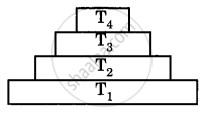
In the figure given alongside, the various trophic levels are shown in the form of a pyramid. At which trophic level the maximum energy is available?
One of the following is a micro-consumer. This one is :
(a) ant
(b) lice
(c) fungi
(d) mosquito
The sea water contains water beetles, tadpole, fish and weeds.
Which organism is a secondary consumer?
|
A food chain occurring in the sea which provides food for many people can be written as: phytoplankton → zooplankton → X → Y |
- Name one phytoplankton.
- Name two zooplanktons.
- What could be Х?
- Name the organism which Y could be.
- Which organism in the above food chain is a (i) primary consumer, and (ii) tertiary consumer?
What would happen to the number of grass plants and foxes if the number of rabbits increased?
(a) Match the terms given in column I with the terms given in column II and column III having the same meaning:
| Column I | Column II | Column III | |
| (i) | Secondary consumer | Herbivore | 1st trophic level |
| (ii) | Primary consume | Autotroph | 3rd trophic level |
| (iii) | Producer | Carnivore | 4th trophic level |
| (iv) | Tertiary consumer | Large carnivore | 2nd trophic level |
(b) Give one example of a food chain having four organisms. Below each organism write the three appropriate terms from the part (a) above which you think it represents.
Name the process in which a harmful chemical enters the food chain and gets concentrated at each trophic level.
'If we excessively use pesticides to protect the crops from diseases, then it may cause long-term damage to mankind'. Justify this statement.
If the energy available at the producer level in a food chain is 150 J, how much energy will be transferred to : tertiary consumer?
(a) 15 J
(b) 10 J
(c) 1.50 J
(d) 0.15 J
| A food chain consists of fish, larvae, phytoplanktons and birds. The level of pesticides in water in which the fish, larvae and phytoplanktons live is quite high. |
- In which organisms the pesticides enter from the polluted water? What is this level of organisms known as?
- Which organism will have the maximum amount of pesticides accumulated through the food chain? What is this process known as?
- Write the food chain comprising all the organisms mentioned above.
- Which other organism you could write in place of bird in the above food chain?
Give some examples for Biodegradable and Non-biodegradable waste.
| S. No. | Biodegradable waste | Non-biodegradable waste |
| 1. | Food Waste | Plastic Bottles |
| 2. | ||
| 3. | ||
| 4. | ||
| 5. |
Green plants utilize ______ percent of sun’s energy to prepare their food by the process of photosynthesis.
Which group of organisms are not constituents of a food chain?
- Grass, lion, rabbit, wolf
- Plankton, man, fish, grasshopper
- Wolf, grass, snake, tiger
- Frog, snake, eagle, grass, grasshopper
According to the 10% law, if producers in an ecosystem have 10,000 units of energy, approximately how much energy is available to primary consumers?
If a secondary consumer receives 100 units of energy from primary consumers, how much energy approximately originated from the producers?
