मराठी

In which language do you think Bhausahebanchi Bakhar was written?

Advertisements
Advertisements

प्रश्न

There is mention of three communities in the story: the Marathas, the Mughals, the Anglo-Indians. Which language do you think they used within their communities and while speaking to the other groups?

एका वाक्यात उत्तर
Advertisements

उत्तर

The Muslims were Urdu speaking, the Marathas spoke Marathi, while the Anglo-Indians generally used English to speak with their communities. But while interacting with other groups they must have used the local dialect of Hindustani.

shaalaa.com
Reading Skills
  या प्रश्नात किंवा उत्तरात काही त्रुटी आहे का?
पाठ 5: The Adventure - Thinking about language [पृष्ठ ७०]

APPEARS IN

एनसीईआरटी English Hornbill (Core) Class 11
पाठ 5 The Adventure
Thinking about language | Q 3 | पृष्ठ ७०

संबंधित प्रश्‍न

Answer the following question in 120-150 words : 

Nancy Lammeter is a typical country girl. Comment. 


Read the passage given below : 

1. Maharana Pratap ruled over Mewar only for 25 years. However, he accomplished so much grandeur during his reign that his glory surpassed the boundaries of countries and time turning him into an immortal personality. He along with his kingdom became a synonym for valour, sacrifice and patriotism. Mewar had been a leading Rajput kingdom even before Maharana Pratap occupied the throne. Kings of Mewar, with the cooperation of their nobles and subjects, had established such traditions in the kingdom, as augmented their magnificence despite the hurdles of having a smaller area under their command and less population. There did come a few thorny occasions when the flag of the kingdom seemed sliding down. Their flag once again heaved high in the sky thanks to the gallantry and brilliance of the people of Mewar.
 
2. The destiny of Mewar was good in the sense that barring a few kings, most of the rulers were competent and patriotic. This glorious tradition of the kingdom almost continued for 1500 years since its establishment, right from the reign of Bappa Rawal. In fact, only 60 years before Maharana Pratap, Rana Sanga drove the kingdom to the pinnacle of fame. His reputation went beyond Rajasthan and reached Delhi. Two generations before him. Rana Kumbha had given a new stature to the kingdom through victories and developmental work. During his reign, literature and art also progressed extraordinarily. Rana himself was inclined towards writing and his works are read with reverence even today The ambience of his kingdom was conducive to the creation of high-quality work of art and literature. These accomplishments were the outcome of a longstanding tradition sustained by several generations.
 
3. The life of the people of Mewar must have been peaceful and prosperous during the long span of time; otherwise, such extraordinary accomplishment in these fields would not have been possible. This is reflected in their art and literature as well as their loving nature. They compensate for the lack of admirable physique by their firm but pleasant nature. The ambience of Mewar remains lovely thanks to the cheerful and liberal character of its people.
 
4. One may observe astonishing pieces of workmanship not only in the forts and palaces of Mewar but also in public utility buildings. Ruins of many structures which are still standing tall in their grandeur are testimony to the fact that Mewar was not only the land of the brave but also a seat of art and culture. Amidst aggression and bloodshed, literature and art flourished and creative pursuits of literature and artists did not suffer. Imagine, how glorious the period must have been when the Vijaya Stambha which is the sample of our great ancient architecture even today, was constructed. In the same fort, Kirti Stambha is standing high, reflecting how liberal the then administration was which allowed people from other communities and kingdoms to come and carry out construction work. It is useless to indulge in the debate whether the Vijaya Stambha was constructed first or the Kirti Stambha. The fact is that both the capitals are standing side by side and reveal the proximity between the king and the subjects of Mewar.
 
5. The cycle of time does not remain the same Whereas the reign of Rana Sanga was crucial in raising the kingdom to the acme of glory, it also proved to be his nemesis. History took a turn. The fortune of Mewar – the land of the brave, started waning. Rana tried to save the day with his acumen which was running against the stream and the glorious traditions for some time.
 
On the basis of your understanding of the above passage answer each of the questions given below with the help of options that follow :
 
(a) Maharana Pratap became immortal because :
(i) he ruled Mewar for 25 years.
(ii) he added a lot of grandeur to Mewar.
(iii) of his valour, sacrifice and patriotism.
(iv) both (ii) and (iii)

(b) Difficulties in the way of Mewar were :
(i) lack of cooperation of the nobility.
(ii) ancient traditions of the kingdom.
(iii) its small area and small population.
(iv) the poverty of the subjects.
 
(c) During thorny occasions :
(i) the flag of Mewar seemed to be lowered.
(ii) the flag of Mewar was hoisted high.
(iii) the people of Mewar showed gallantry.
(iv) most of the rulers heaved a sigh of relief.

(d) Mewar was lucky because :
(i) all of its rulers were competent.
(ii) most of its people were competent.
(iii) most of its rulers were competent.
(iv) only a few of its people were incompetent.
 
Answer the following questions briefly:
(e) Who is the earliest king of Mewar mentioned in the passage?
(f) What was Rana Kumbha's contribution to the glory of Mewar?
(g) What does the writer find worth admiration in the people of Mewar?
(h) How could art and literature flourish in Mewar?
(i) How did the rulers show that they cared for their subjects?
(j) What does the erection of Vijaya Stambha and Kirti Stambha in the same fort signify?
(k) Find words from the passage which mean the same as each of the following:
(i) surprising (para 4)
(ii) evidence (para 4)

Mention three ways in which the author’s grandmother spent her days after he grew up.


Briefly comment on:

The author’s meeting with Norbu.


Guess the meaning of the following word:
Kora
In which language are these word found? 


The narrative has many phrases to describe the scenic beauty of the mountainside like: 
A flawless half-moon flated in a perfect blue sky.
Scan the text to locate other such picturesque phrases.


Is drama a good medium for conveying a social message? Discuss.


We 'draw up a deed'. Complete the following phrase with an appropriate word.

________one's word


How have the three passions contributed to the quality of Russell's life?


What does the line 'I never writ, nor no man ever loved' imply?


What would you say are 'the finer growths' that the story supports in a novel?


How does Kumudini Lakhia describe her guru Ramgopal's influence on her?


Think and answer in your own words.

Does the poet really wish to become a hawker/gardener/watchman? Justify your response.


Study the pictures below and note down the differences.


There are different types of short stories. Use a dictionary/internet and find out what each of the following types refers to.

  1. fable:
  2. anecdote:
  3. fairy tale:
  4. parable:
  5. tragedy:
  6. humorous story:
  7. detective story:
  8. myth: 

Answer the given question in your own words.

Why did the swallow decide to stay under the statue of the Happy Prince at night?


Name the festival that you enjoy most of all. Fill in the facts about that festival.

  1. Name of the festival:
  2. When it is celebrated:
  3. Why it is celebrated:
  4. How it is celebrated:
  5. Special cuisine:
  6. Other special features:

Read the story and choose the appropriate meaning.

Palette __________________.


Say where . . . . . . .

______ do stars shine in the daytime?


Expand the idea inherent in the following proverb:

A Bad workman blames his tools.


Answer the following question in one sentence.

What does the title of the poem say?


Answer the following question in one sentence.

What does the man who misses all the fun do?


Write a short note on the following:

Utilization of animal by-products in the ancient world.


What did Mr. Gizare appreciate the most?


Write a short note on the following:

The message in the vision.


Read the passage and answer the following:

Who is the main character in the story?


Start a collection of new and interesting words. Write the words in colored ink on cards of equal size and arrange them in alphabetical order. Try to use the words in your writing or conversation from time to time.


Colour, sound, and images from nature add to the beauty of a poem: 'Tartary' is a perfect example of the above. Pick outlines that contain –

  • Colour
  • Sound 
  • Images from nature

The items in the programme below have got mixed up. Rearrange them in the proper order. Just add the number in the left-hand column.

Balanand Vidyalaya Art Festival Programme
(   ) → Koli Dance
(   ) → igniting the Lamp
(   ) → Chief Guest Speaks
(   ) → Appraisal of the Art Festival
(   ) → Dignitaries Arrive
(   ) → Recital of ‘Taal kacheri’
(   ) → Welcome and Introduction of Guests
(   ) → Prize Distribution
(   ) → The Boy Comes Home - A skit by Std IX
(   ) → Vote of Thanks

Choose the appropriate phrase to insert in the gap, to make the sentence meaningful. Use the appropriate form of the verb.

Sorrowful times are ______ darkness.


How does the following character in the story live up to their name? Provide points from the story.

Tengumai Bopsulai


Fill in the blank choosing the appropriate word/idiom from the lesson.

As soon as I ______ of my home, I greet my family.


Identify the character or speaker.

I will tie you neck and feet together.


Why did Prospero set Ferdinand a severe task to perform?


When and where was the first ATM installed?


Rearrange the jumbled sentences and write them in the correct order.

  • But Hamid bought a pair of tongs.
  • Granny Ameena felt proud of her grandson.
  • Hamid’s friends bought different toys of their choice.
  • Hamid proudly compared his tongs with a brave tiger.
  • Hamid had less money than his friends.
  • Granny Ameena was worried as he had to go to the Eidgah alone.

Identify the character/speaker.

I'll see you later at the Queen's croquet game.


Turtles are sea animals.


Female Olive Ridleys come ashore at night to lay eggs.


What is the poem about?


What does the teak tree give us?


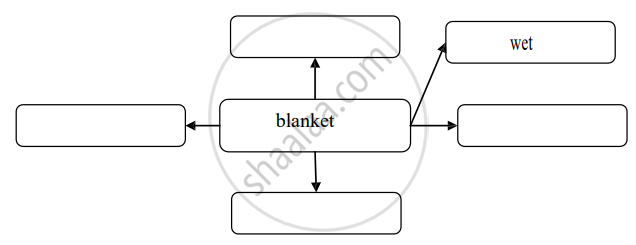
Complete the mind map given below


Where did the boys and girls go?


The horses were four and a half inches tall.


He offered _______ to his daughters.


The second daughter ________ the milet to a flock of birds.


Why do the soldiers (people) die? When will it stop?


They ate a bowl of __________.


Read scene I of the play carefully and answer the question below.

Who is about to go on a hunt? Do the wolves panic on his arrival? Explain.


Why did Robinson name the tribe Friday?


The sparrow solved the problem with her _____.


Does the poet want diversity? why?


Humans give importance to save______.


What was his dream ?


The passage given below is on Kabbadi. Read the passage and complete the activities that follow.

Kabbadi (கபடி - in Tamil) is a contact team sport that originated in Tamil Nadu, India. It is the national sport of Bangladesh. It is also popular in South Asia and is the state game of the Indian states of Tamil Nadu, Kerala, Andhra Pradesh, Bihar, Haryana, Karnataka, Maharashtra, Punjab, and Telangana.

Kabbadi is played between two teams of seven players: the objective of the game is for a single player on offence referred to as a 'raider', to run in to the opposing teams half of a court, tag out as many of their defenders as possible, and return to their own half of the court–all without being tackled by the defenders. Points are scored for each player tagged by the raider, while the opposing team earns a point for stopping the raider. Players are taken out of the game if they are tagged or tackled, but can be 'revived' for each point scored by their team from a tag or tackle. The raider should hold his breath and utter the words like 'kabbadi kabbadi, hututu hututu, chadu kudu' etc. while the opponents try to catch him. If he stops uttering these words, he is considered out.

The game is known by its regional names in different parts of the subcontinent, such as Kabbadi or Chedugudu in Andhra Pradesh, Kabbadi in Kerala and Telangana, Hadudu in Bangladesh, Bhavatik in Maldives, Kauddi or Kabbadi in the Punjab Region, Hu-Tu-Tu in Western India and Hu-Do-Do in Eastern India and Chadakudu in South India. The highest governing body of Kabbadi is the International Kabbadi Federation.

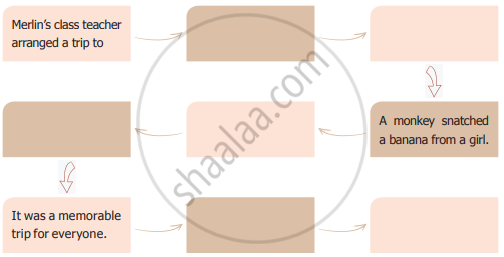
Given below is the visual presentation of the first paragraph.

i) Represent the other paragraphs in a visual form of your choice(flow chart, mind-map, pie-chart, etc.).

ii) Choose the correct option.

1. A contact sport usually involves a ______contact between players.

  1. violent
  2. gentle
  3. physical

2. Kabbadi is a game played between ______.

  1. seven teams of two players
  2. two teams of seven players
  3. four teams of seven players

3. A single ______.

  1. player on offence is referred to as a raider
  2. offence is referred to as a raider
  3. raider is an offence by the player

iii) Answer the following.

  1. How does a raider score points for his team?
  2. When does a raider concede a point to the opponent team?
  3. Can a player be revived when he/she is out of the game? Explain your answer.
  4. Kabbadi is called by different names in different parts of India. Do you know how Pallankuzhi is called in Karnataka, Andhra Pradesh and Kerala?

How does Tagore acknowledge Gandhi’s noble work?


Read the passage given below and answer the questions that follow

Humans have long been fascinated by fiction. We experience excitement in assigning supernatural power to imaginary characters in fictional stories – and so we have Spider man, Batman, He–man, Titans and many more. The ‘Cyborg’ was an offshoot of such wild imagination of humans to invest our species with superhuman powers. Today, the Cyborg is no more an imaginary organism. We are living in a world where a sizeable population of humans have merged their bodies with technological implants. The term ‘Cyborg’, short for ‘cybernetic organism’, was coined to describe a man, whose body is implanted with technological devices to supplement and substitute body functions.

Cyborgs include people with cardiac pacemakers, contact lenses, bionic ears and eyes, prosthetics and so on. In other words, a cyborg is partly human and partly machine. The technological innovations in the field of medicine and healthcare augment humans with machines, producing a beta version of the human body. The advent of brain machine interfaces is certain to blur the boundary between humans and machines. Scientists are working hard to find a technique for age reversal too. People do not want to die, so mankind is striving to get to the final frontier, which is development of machines and devices that would accord man immortality.

The needs of humans are not limited. As time passes, food habits change, thinking patterns change, and even appearances change. We are about to travel by driverless, fully automated vehicles. Computers and smart phones have become our masters. The more we depend and merge with technological advancements, the more the humanness in us slowly erodes. Intelligence is sought to be infused into machines and robotics are designed in such a way to give man a virtual human companion. The field of artificial intelligence is overtaking the human brain and many fear that it could even harm the human race. Despite certain limitations and potential threats, many believe that cyborgs will be the next step in the evolution of mankind. The amalgamation of man and machine is sure to add a new dimension to the life of mankind and this will prove to be the ‘biggest evolution in Biology’ since the emergence of life, four billion years ago.

Questions:

a) Account for the popularity of characters with supernatural powers.

b) Who is referred to as a ‘Cyborg’?

c) What is expected to happen with the advent of the brain machine interface?

d) The needs of humans are not limited. How is this statement elaborated in the passage?

e) How can a machine turn into a virtual companion for humans?

f) Explain the flipside of the rapid technological advancement.

g) Identify the word in para 1 which means ‘everlasting life’.

h) Which of the following words is synonymous with ‘amalgamation’?

  1. recreation
  2. integration
  3. exploration
  4. proposition

i) Which of the following options is the antonym of the word ‘advent’?

  1. drawback
  2. dispute
  3. departure
  4. danger

j) Find out the word which is the antonym of ‘natural’ in para 3.


Read the following passage and do the activities:

A1. Fill in the blanks:  (2)

  1. ______ percent of our daily communication is non-verbal.
  2. Eye contact is another type of ______ communication.
  3. Frequent blinking is a sign of the person feeling ______.
  4. One can readily detect _______.

According to some experts, a staggering 93 percent of our daily communication is non-verbal. Facial expressions are easy to decipher. One can readily detect happiness, sadness, anger. Physicians can tell a patient is doing well (or not) by looking at his/her face.

Eye contact is another type of non-verbal communication, which can tell a lot about the other person. The eyes convey a range of emotions-happiness, sadness, boredom, surprise, confidence .......... even emotional interest. Staring at someone's forehead may intimidate the recipient, staring at the mouth is sometimes interpretated as a sign of emotional interest. In fact, staring into someone's eyes is a sign of lying, and so is looking away. In certain cultures, lack of eye contact is taken as a sign of respect.

If body language is to be defined, it is a combination of facial expression, gestures, eye contact, body movements and posture and voice.

Frequent blinking is a sign of the person feeling distressed or uncomfortable. If the pupils are dilated, it ofter indicates interest, even emotional interest. The lips also reflect our body language, and lip biting indicates worry and/or anxiety; tightening of the lips may be an indication of disapproval. Slightly turned-up lips indicate happiness and slightly turned-down lips indicate sadness.

A2.

A3. Find the antonyms of:    (2)

  1. verbal × ______
  2. entertaining × ______
  3. sender × ______
  4. comfortable × ______

A4. Do as Directed:   (2)

  1. The eyes convey a range of emotions.   (Frame a 'Wh' question in order to get the underlined part as answer).
  2. Physicians can tell about a patient's wellness.  (Rewrite using 'able to')

A5. Personal Response:   (2)

Non-verbal communication plays an important role in our daily life. Comment.


Share
Notifications

Englishहिंदीमराठी


      Forgot password?
Use app×