मराठी

The narrative has many phrases to describe the scenic beauty of the mountainside like: A flawless half-moon flated in a perfect blue sky.Scan the text to locate other such picturesque phrases.

Advertisements
Advertisements

प्रश्न

The narrative has many phrases to describe the scenic beauty of the mountainside like: 
A flawless half-moon flated in a perfect blue sky.
Scan the text to locate other such picturesque phrases.

टीपा लिहा
Advertisements

उत्तर

Here are a few extracts from the text that describe the scenic beauty of the Tibet region:
"Extended banks of cloud like long French loaves glowed pink as the sun emerged to splash the distant mountain tops with a rose-tinted blush."
"We entered a valley where the river was wide and mostly clogged with ice, brilliant white and glinting in the sunshine. The trail hugged its bank, twisting with the meanders as we gradually gained height and the valley sides closed in."

shaalaa.com
Reading Skills
  या प्रश्नात किंवा उत्तरात काही त्रुटी आहे का?
पाठ 8.1: Silk Road - Working with words [पृष्ठ ८३]

APPEARS IN

एनसीईआरटी English (Core) - Hornbill
पाठ 8.1 Silk Road
Working with words | Q 1 | पृष्ठ ८३

संबंधित प्रश्‍न

Read the passage given below and answer the questions that follow: 

The term dietary fibres refers collectively to indigestible carbohydrates present in plant foods. The importance of these dietary fibres came into the picture when it was observed that the people having diet rich in these fibres, had low incidence of coronary heart disease, irritable bowel syndrome, dental caries and gall stones.

The foodstuffs rich in these dietary fibres are cereals and grains, legumes, fruits with seeds, citrus fruits, carrots, cabbage, green leafy vegetables, apples, melons, peaches, pears etc.

These dietary fibres are not digested by the enzymes of the stomach and the small intestine whereas most of other carbohydrates like starch and sugar are digested and absorbed. The dietary fibres have the property of holding water and because of it, these get swollen and behave like a sponge as these pass through the gastrointestinal tract. The fibres add bulk to the diet and increase transit time in the gut. Some of these fibres may undergo fermentation in the colon.

In recent years, it has been considered essential to have some amount of fibres in the diet. Their beneficial effects lie in preventing coronary heart disease, and decreasing cholesterol level. The fibres like gums and pectin are reported to decrease postprandial (after meals) glucose level in blood. These types of dietary fibres are recommended for the management of certain types of diabetes. Recent studies have shown that the fenugreek (Methi) seeds, which contain 40 per cent gum, are effective in decreasing blood glucose and cholesterol levels as compared to other gum containing vegetables.

Some dietary fibres increase transit time and decrease the time of release of ingested food in colon. The diet having less fibres is associated with colon cancer and the dietary fibres may play a role in decreasing the risk of it.

The dietary fibres hold water so that stools are soft, bulky and readily eliminated. Therefore high fibre intake prevents or relieves constipation.

The fibres increase motility of the small intestine and the colon and by decreasing the transit time there is less time for exposure of the mucosa to harmful toxic substances. Therefore, there is a less desire to eat and the energy intake can be maintained within the range of requirement. This phenomenon helps in keeping a check on obesity. Another reason in helping to decrease obesity is that the high-fibre diets have somewhat lower coefficients of digestibility.

The dietary fibres may have some adverse effects on nutrition by binding some trace metals like calcium, magnesium, phosphorus, zinc and others and therefore preventing their proper absorption. This may pose a possibility of nutritional deficiency especially when diets contain marginal levels of mineral elements. This may become important constraints on increasing dietary fibres. It is suggested that an intake of 40 grams dietary fibres per day is desirable.

(Extracted from ‘The Tribune’)

(a) On the basis of your reading of the above passage make notes on it in points only, using recognizable abbreviations wherever necessary. Also suggest a suitable title. (5)

(b) Write a summary of the above in about 80 words. (3)


How did Helen display her passion for Radcliffe College?


Notice these expression in the text. Infer their meaning from the context.
swathe


Give reasons for the following statement.
The author thought that his positive thinking strategy worked well after all.


Group related points.


While tribal communities may not seem to possess the scientific temper,there are many ideas from tribal conventions that could enrich modern societies.


Explain the phrase.

Time's fool


How is the idyllic juxtaposed with the pedestrian in the poem?


What were the lessons of life learnt in her younger days that Kumudini carried into her adult life?


The significance of reading an autobiography lies in drawing lessons from another life. What is the significance of Kumudini's account for us as readers?


How does the poem bring out the elusive nature of happiness in human existence?


Read the extract 'Being Neighborly' and complete the following statement:

Jo swept a path around the garden for ________________.


Answer in your own words.

Why did the old man have no need to build the bridge, across the chasm?


Write the Rhyming word and Scheme of the 2nd stanza.

“Old man,” said a fellow pilgrim near,
“Why waste your time in building here?
Your journey ends with the close of the day You never again will pass this way.
You have crossed the chasm deep and wide Why build ye here at even tide?”


Using a dictionary/internet note down the main difference between a developing nation and a developed nation.


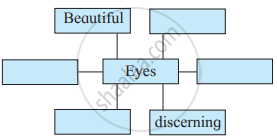
Discuss with your partner and complete the web, highlighting the sad and gloomy aspects of life mentioned in the first part of the poem.


Read the story and choose the appropriate meaning.

Wielded the brush ____________.


Complete the following sentence using your own ideas. 

The princess was as ______ as ______. (Positive)


What is described in the poem?


Comment on the given statement after reading the given dialogue -

And if we get him itself, nothing but abuse on our heads for it from the people, and maybe from our own relations -

you may begin like this

We do not think about society at large _________________________________________________.


Comment on the given statement after reading the given dialogue -

It’s a pity some honest man not to be better of that ________________________________________________.


Mayor Peter Stockmann is a contrast to Dr. Thomas Stockmann. Justify.


Present the information in the box ‘My Teacher says’. Translate the box ‘My Teacher says’ into your mother tongue.


Answer the following question in one sentence.

Why does he ‘miss all the fun’?


Explain the idea of ‘Conservation of Nature through Livelihood’ briefly, using the example given here.


What do you like better - the original poem or the parody? Why?


Read the lines of the following poem. Guess and fill in suitable words to make the lines rhyme -

Golden Glow

Soon after dawn, rises the _________________.
It wakes and enlivens every _________________.
It scares away the long, dark _________________.
The shining stars go out of _________________.
From tree to tree birds flit and, _________________.
Searching for food, with a sharp _________________.
The buds that open now show their, _________________
As flowers, they dance with beauty and _________________.
The hill slope wears a grassy green,_________________
The curved sparkling river, it's gold _________________.
The cock then crows to give a loud, _________________
Come on! wake up, folks! One and _________________.
I, then wake up, ‘Good Morning’ to,_________________
Let’s all look forward to a golden _________________.


Choose the appropriate phrase to insert in the gap, to make the sentence meaningful. Use the appropriate form of the verb.

The minister ______ his personal body-guards. 


Write the symbol that is used in the poem to represent the following idea.

Equally good options.


Say whether you agree or disagree.

The youngest child was most irritating.


Read the poem and answer the following.

Which are the two different places where strawberries grow?


Write other meaningful words that begin/end with snowwhite.


Imagine that you are in a land of tiny people like Lilliput. Write about some of the interesting things you might see there, including animals, houses, plants, vehicles, etc. Find an interesting name for this land.


Look at the photographs on textbook pages 19-20 carefully and imagine the following:

  • The colours, shape, size, actions, etc. of what you see in the picture.
  • The sound/sounds you may hear at the scene of the photograph.
  • How the different things, birds, animals, etc. in the picture feel to the touch.
  • The smell / smells you may smell at the scene of the picture.
  • The taste of what you see in the pictures.

In short, let your imagination include oil your five senses.

Now, write short descriptions of any 8-10 of your choice. 

Remember to make use of your senses (one or more!) when you describe a photograph. You will find the following words and phrases useful. You may also use other words you know.


Guess the meaning of weary. 


‘They’ descended on the sweet and toy-vendors’ stores like an army moving to attack.

Who does they refer to? Did they move one by one in a line or in a big group?


Fill in the table

Problems Faced By Mr. Fogg And His Team Solution
The train stopped in the middle of the forest.  
They couldn’t hire the elephant.  
They were in need of an elephant driver.  

Neerja was sent to London based on______.


Vasantha could not see the rescue operation because ______


A turtle’s flippers help it to ______.


What made the trip a memorable one?


Which line tells you that the girl was faster than the boy?


"I think it would be nice if we moved quickly from here.”

  1. Who does ‘I’ refer to?
  2. Why did they want to move quickly from there?

Who is the wisest of all? Why?


Match the following.

treat everyone love each of her child
nation no inner boundaries
kind not divided as people
country alike

How should we treat everyone?


Did Tabaqui receive a warm welcome from the pack of wolves? How do you know?


The robot did not obey his master.


Where did Anitha go?


Identify the character/speaker.

"Grow the fish at home, Anbu."


______ over heard her father’s talking on the phone about the robbery.


Name the character or speaker.

"Are you alright?"


What do you save? Why it is needed?


In real the plate was made of ______.


Read the passage and colour one bag each time you read.

There lived a poor but an honest farmer in a village. He supported himself, his wife and seven children using his small piece of land.

One day while he was walking in his field, he found a bag of gold.

He took it home and showed it to his wife. His wife told him to keep some of the gold. He told his wife that honesty is the best policy. He tried to find the person who lost it. At last, he found that the owner of the bag and gave it back. The rich man took the bag and thanked him.


Finally, ______, he got permission to study Science.


Now, read the following biographical extract on Sujatha Rangarajan, a Sciencefiction writer, and answer the questions that follow.

  1. Sujatha is the allonym of the Tamil author S. Rangarajan and it is this name that is recognised at once by the Tamil SciFi reading community. You might have seen the Tamil movie ‘Endiran’ where the robot Chitti exhibits extraordinary talents in an incredible manner. The robot could excel a human being in any act, beyond one’s imagination. Jeeno, a robotic dog which appeared in Sujatha’s science fiction novel “En Iniya Iyandhira” (My Dear Robot) formed the basis of Chitti’s character. Like Chitti, Jeeno was an allrounder who could cook, clean and fight. High-tech computer technology terms are used in the story. Jeeno, a pet robot, plays an important role throughout the story. As the story proceeds, it behaves and starts to think on its own like a human and instructs Nila, a human being, on how to proceed further in her crises.
  2. In the preface of ‘En Iniya Iyandhira’, the writer states the reason for his attraction to the genre: “Science gives us the wonderful freedom to analyse thousands and thousands of alternative possibilities. While using it, and while playing with its new games, a writer needs to be cautious only about one thing. The story should draw some parallels or association from the emotions and desires of the present humankind. Only then it becomes interesting. Jeeno, the robot dog, was intelligent. But the character became popular only because of the robot’s frequently displayed human tendencies.” It is no wonder that all his works echo these words and will remain etched in the minds of the readers who enjoy reading his novels to have a wonderful lifetime experience.
  3. It was Sujatha, who set the trend for sci-fi stories. He had tracked the origin from Mary Shelly’s Frankenstein to his short stories. He has written 50 sci-fi short stories and these were published in various Tamil magazines. His stories have inspired many readers to extend their reading to English sci-fi writers like Isaac Asimov. The themes were bold, even if there was a dependence on a very well-established characterization of English fiction. Sujatha opened up a new world to us with his writings on holograms, computers and works like ‘En Iniya Iyanthira’ inspire many to study computer science.
  4. He has been one of the greatest writers for more than four decades. He combined reasoning and science in his writings. Being a multifaceted hi-fi and sci-fi humanistic author, he expressed his views distinctively. He was the one who took Tamil novels to the next level. As an MIT alumnus and an engineer at BHEL, he was very good at technology. He could narrate sci-fi stories impressively. His readers always enjoyed reading all his detective and sci-fi novels which featured the most famous duo ‘Ganesh’ and ‘Vasanth’.
  5. Sujatha has played a crucial role as a playwright for various Tamil movies which have fascinated movie lovers. Hence, it is fathomable that the writer’s perspective of future India enthuses every reader and paves a new way to reading sci-fi stories in English.

A. Answer the following questions in a sentence or two.

  1. How was Jeeno different from other robots?
  2. What precaution should one take while writing Science fiction stories?
  3. What inspired Sujatha’s themes?
  4. Why were Sujatha’s sci-fi stories impressive?

B. Find words from the passage which mean the same as the following.

  1. difficult to believe (para 1)
  2. a style or category of art, music or literature (para 2)
  3. having many sides (para 4)
  4. capable of being understood (para 5)

Read the following passage and answer the questions that follow:

The Stationmaster’s Supreme Sacrifice by Sanchari Pal (Adapted)

  1. Thirty-three years ago, on the night of December 2, 1984, Bhopal was hit by a catastrophe that had no parallel in the world’s industrial history. An accident at the Union Carbide pesticide plant in Bhopal had released almost 30 tons of a highly toxic gas called methyl isocyanate, turning the city into a vast gas chamber. The result was a nightmare; more than 600,000 people were exposed to the deadly gas cloud that left thousands dead and many more breathless, blind and in agonizing pain. Few people know that during the Bhopal gas tragedy a heroic stationmaster risked his own life to save others.
  2. On the evening of December 3, 1984, Ghulam Dastagir was settling down in his office to complete some pending paperwork. This work kept him in his office till 1am in the night, when he emerged to check the arrival of the Gorakhpur Mumbai Express. As he stepped on to the platform, the deputy stationmaster felt his eyes burn and a queer itching sensation in his throat. He did not know that poisonous fumes leaking from Union Carbide’s pesticide factory were stealthily enveloping the railway station.
  3. Beginning to choke, Dastagir did not know then that twenty-three of his railway colleagues, including his boss, station superintendent Harish Dhurve, had already died. It was later reported that Dhurve had heard about the deadly gas and had immediately tried stopping the movement of trains passing through Bhopal before collapsing in his office chamber. His suddenly worsening health and years of experience told Dastagir that something was very wrong. Though he did not fully comprehend what was happening, he decided to act immediately when he did not get any response from the station master. He alerted the senior staff at nearby stations, like Vidisha and Itarsi, to suspend all train traffic to Bhopal.
  4. However, the jam-packed GorakhpurKanpur Express was already standing at the platform and its departure time was 20 minutes away. Listening to his gut instinct, Dastagir summoned his staff and told them to immediately clear the train for departure. When they asked if they should wait until the order to do so came from the head office, Dastagir replied that he would take complete responsibility for the train’s early departure. He wanted to ensure that the train left immediately, without any delay. His colleagues later recalled that Dastagir could barely stand and breathe as he spoke to them. Breaking all rules and without taking permission from anyone, he and his brave staff personally flagged off the train.
  5. But Dastagir’s work was not done. The railway station was filling up with people, desperate to flee the fumes. Some were gasping, others were vomiting, and most were weeping. Dastagir chose to remain on duty, running from one platform to another, attending, helping and consoling victims. He also sent an SOS to all the nearby railway offices, asking for immediate medical help. As a result, four ambulances with paramedics and railway doctors arrived at the station. It was winter and the gas was staying low to the ground, a thick haze poisoning everything in its path. Besieged by hordes of suffering people, the station soon resembled the emergency room of a large hospital. Dastagir stayed at the station, steadfastly doing his duty, knowing that his family was out there in the ill-fated city. That day all he had for his protection was a wet handkerchief on his mouth.
  6. Ghulam Dastagir’s devotion to duty saved the lives of hundreds of people. However, the catastrophe didn’t leave him unscathed. One of his sons died on the night of the tragedy and another developed a lifelong skin infection. Dastagir himself spent his last 19 years shuttling in and out of hospitals; he developed a painful growth in the throat due to prolonged exposure to toxic fumes. When he passed away in 2003, his death certificate mentioned that he was suffering from diseases caused as a direct result of exposure to MIC (Methyl Isocyanate) gas. A memorial has been built at platform No.1 to pay tribute to those who sacrificed their lives in the line of duty on the fateful night of December 3, 1984. However, Ghulam Dastagir, who died later, is not one of them. A forgotten hero whose sense of duty and commitment saved countless lives, Dastagir’s story deserves to be recognized and remembered by our fellow countrymen.
  1. Why was the accident at Union Carbide unparalleled in the world’s industrial history?
  2. How was Dastagir affected by the poisonous gas?
  3. What was the action taken by the station superintendent?
  4. How did Dastagir and his staff break rules?
  5. What was the cause of Dastagir’s death?
  6. Find words from the passage which mean the opposite of the following.
  1. safeguard (para 1)
  2. common or familiar (para 2)
  3. prompt (para 4)
  4. cause (para 6)

Share
Notifications

Englishहिंदीमराठी


      Forgot password?
Use app×