Topics
Psychology : A Scientific Discipline
- Science of Psychology
- Key Features of Science
- History of Psychology as a Science
- Research Methods in Psychology> Experimental Method
- Research Methods in Psychology> Survey Method
- Research Methods in Psychology> Observation Method
- Research Methods in Psychology> Case Study Method
- Research Methods in Psychology> Correlation Studies
- Challenges in Establishing Psychology as a Science
- Importance of Rationality
Intelligence
- Concept of Intelligence
- Perspectives on Intelligence
- Intelligence as a Single, General Ability
- Theories of Intelligence
- E. L. Thorndike's Theory
- Louis Thurstone’s Multifactor Theory
- Charles Spearman's Two Factor Theory
- Theory of Intelligence by Cattell
- Howard Gardner's Multiple Intelligence Theory
- Measurement of Intelligence
- History of Measurement of Intelligence
- Mental Age
- Intelligence Quotient
- Types of Intelligence Tests
- Individual Test
- Group Test
- Verbal Test
- Non-Verbal Test
- Applications of Intelligence Testing
- New Trends in Intelligence> Social Intelligence
- New Trends in Intelligence> Emotional Intelligence
- New Trends in Intelligence> Artificial Intelligence
Personality
Cognitive Processes
Emotions
- Concept of Emotions
- History of Emotions
- Basic Emotions
- Plutchik’s Model
- Physiological Changes During Emotions
- Emotional Well-Being
- Achieving Emotional Well Being
- Benefits of Emotional Well-Being
- Emotional Abuse
- Managing Emotions
- Anger Management
- Anticipating and Managing Anger
- The 3 R's: Relax, Reassess, and Respond
Psychological Disorders
- Concept of Abnormal Behaviour
- Nature of Psychological Disorders
- Criteria for Psychological Disorders
- Concept of Mental Wellness
- Mental Disorders - Its Classification
- Major Psychological Disorder> Anxiety Disorders
- Depressive Disorders
- Major Psychological Disorder> Bipolar Disorder
- Major Psychological Disorder> Trauma and Stress Related Disorders
- Major Psychological Disorder> Substance-Related and Addictive Disorders
- Major Psychological Disorder> Schizophrenia
- Identifying and Treating Psychological Disorders
First Aid in Mental Health
Positive Psychology
- Introduction
- Trait Categories
- Cardinal Traits
- Central Traits
- Secondary Traits
- Key Points: Trait Theory of G. Allport
Introduction
Personality comprises consistent patterns of thinking, feeling, and acting called traits. Gordon Allport analyzed over 18,000 trait-describing words and categorized them into three levels based on their pervasiveness and influence.
Trait Categories
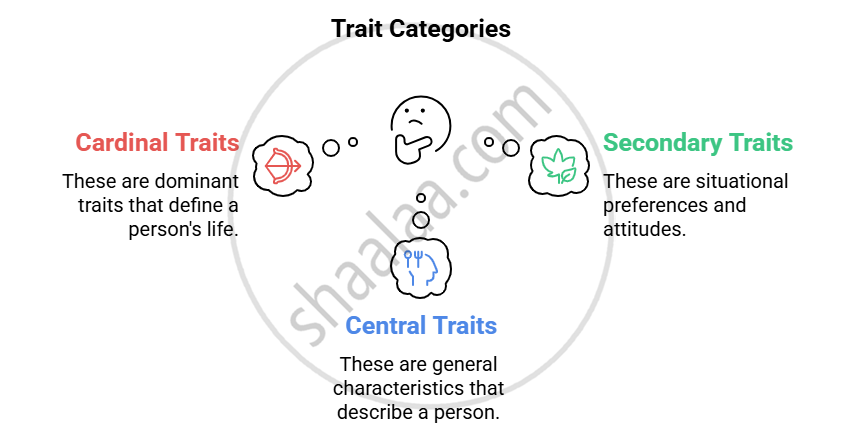
Cardinal Traits
Meaning: A single dominant quality that pervades nearly every aspect of an individual’s life, shaping identity and actions.
Identification Question: “What one value drives all their decisions?”
Examples:
- Truthfulness: Mahatma Gandhi
- Humanitarianism: Mother Teresa
- Ambition: Napoleon Bonaparte
- Lust for Power: Julius Caesar
Key Point: Cardinal traits are all-consuming and often become synonymous with the individual’s name.
Central Traits
Meaning: Five to ten core qualities that form the foundational characteristics of one’s personality.
Identification Method: List adjectives frequently used by friends or family to describe the person.
Examples:
- Honesty: Returns lost items promptly
- Sociability: Easily engages in conversation
- Diligence: Completes tasks before deadlines
Key Point: Central traits are broad descriptors that guide general behaviour without defining every action.
Secondary Traits
Meaning: Context-specific preferences or reactions that appear in limited situations and have minimal impact on overall personality.
Identification Method: Observe behaviours or likes/dislikes that emerge only under certain conditions.
Examples:
- Nervousness only before presentations
- Preferring black coffee exclusively on cold mornings
Key Point: Secondary traits are fleeting and context-dependent.
Maharashtra State Board: Class 12
CISCE: Class 12
Key Points: Trait Theory of G. Allport
- Allport divided personality traits into cardinal, central, and secondary traits.
- Cardinal traits are dominant and shape a person’s whole life (e.g., Gandhi's truthfulness).
- Central traits are general qualities seen often in daily behavior (e.g., honesty, sociability).
- Secondary traits are situation-based and show up only sometimes (e.g., stage fear).
- These traits vary in strength and influence how a person thinks, feels, and acts.
