Topics
Psychology : A Scientific Discipline
- Science of Psychology
- Key Features of Science
- History of Psychology as a Science
- Research Methods in Psychology> Experimental Method
- Research Methods in Psychology> Survey Method
- Research Methods in Psychology> Observation Method
- Research Methods in Psychology> Case Study Method
- Research Methods in Psychology> Correlation Studies
- Challenges in Establishing Psychology as a Science
- Importance of Rationality
Intelligence
- Concept of Intelligence
- Perspectives on Intelligence
- Intelligence as a Single, General Ability
- Theories of Intelligence
- E. L. Thorndike's Theory
- Louis Thurstone’s Multifactor Theory
- Charles Spearman's Two Factor Theory
- Theory of Intelligence by Cattell
- Howard Gardner's Multiple Intelligence Theory
- Measurement of Intelligence
- History of Measurement of Intelligence
- Mental Age
- Intelligence Quotient
- Types of Intelligence Tests
- Individual Test
- Group Test
- Verbal Test
- Non-Verbal Test
- Applications of Intelligence Testing
- New Trends in Intelligence> Social Intelligence
- New Trends in Intelligence> Emotional Intelligence
- New Trends in Intelligence> Artificial Intelligence
Personality
Cognitive Processes
Emotions
- Concept of Emotions
- History of Emotions
- Basic Emotions
- Plutchik’s Model
- Physiological Changes During Emotions
- Emotional Well-Being
- Achieving Emotional Well Being
- Benefits of Emotional Well-Being
- Emotional Abuse
- Managing Emotions
- Anger Management
- Anticipating and Managing Anger
- The 3 R's: Relax, Reassess, and Respond
Psychological Disorders
- Concept of Abnormal Behaviour
- Nature of Psychological Disorders
- Criteria for Psychological Disorders
- Concept of Mental Wellness
- Mental Disorders - Its Classification
- Major Psychological Disorder> Anxiety Disorders
- Depressive Disorders
- Major Psychological Disorder> Bipolar Disorder
- Major Psychological Disorder> Trauma and Stress Related Disorders
- Major Psychological Disorder> Substance-Related and Addictive Disorders
- Major Psychological Disorder> Schizophrenia
- Identifying and Treating Psychological Disorders
First Aid in Mental Health
Positive Psychology
- Introduction
- Activity 1: Examples of Emotional Intelligence
- Importance of EI vs. IQ
- Activity 2: Emotional Intelligence Comparison
- Characteristics: High EI vs. Low EI
- Models of Emotional Intelligence
- Benefits of High EI
- Key Points: Emotional Intelligence
Introduction
Emotional Intelligence is the capacity to perceive, use, understand, and manage one’s own emotions and the emotions of others.
- Perceiving Emotions: Identifying emotions through facial expressions, tone, and body language.
- Using Emotions: Harnessing moods to facilitate reasoning and problem-solving.
- Understanding Emotions: Comprehending how emotions evolve and connect.
- Managing Emotions: Regulating emotional responses in oneself and guiding others.
Activity 1: Examples of Emotional Intelligence
(1) Megha is always afraid of getting less marks in examinations. Therefore, she always becomes restless and avoids going to college.
Answer: Megha represents a person with low emotional intelligence (fearful, restless, anxious).
(2) Shailesh, an ordinary worker in a textile mill, earns a 10,000 salary per month. Though having some financial problems, he never feels anxious; he understands the problems of others, helps needy people, and lives his life happily.
Answer: Shailesh represents a person with high emotional intelligence (calm, empathetic, helpful, and happy).
Importance of EI vs. IQ
While IQ assesses academic intelligence, EI measures social and emotional skills. Studies indicate:
- IQ contributes ~20% to life success, whereas EI accounts for ~80%.
- Individuals with high EI exhibit greater resilience, well-being, and leadership ability.
Example: Shailesh, despite a modest income, remains calm under stress, supports coworkers, and maintains positive relationships.
Activity 2: Emotional Intelligence Comparison
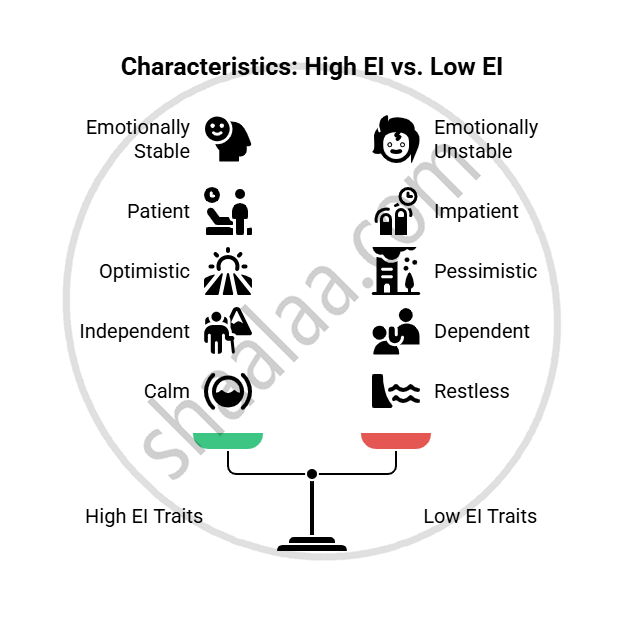
Study the differences between the characteristics of people having high emotional intelligence and low emotional intelligence, and think about what you can do to develop your emotional intelligence.
| Characteristics of people having high emotional intelligence | Characteristics of people having low emotional intelligence |
|---|---|
| Emotionally stable, Patient | Emotionally unstable, Impatient |
| Optimistic, Independent | Pessimistic, Dependent |
| Happy, Enthusiastic | Sad, Apathetic |
| Calm, Satisfied | Restless, Dissatisfied |
Answer for Activity:
To develop my emotional intelligence, I can do the following:
- Stay Calm and Patient – Practice self-control in stressful situations instead of reacting with anger or restlessness.
- Think Positively – Focus on optimism, avoid negative thoughts, and build confidence.
- Be Independent and Responsible – Take responsibility for my actions rather than depending too much on others.
- Show Empathy – Try to understand others’ feelings and help them whenever possible.
- Practice Satisfaction and Gratitude – Appreciate what I have, which will make me feel calm, happy, and enthusiastic.
Characteristics: High EI vs. Low EI
Models of Emotional Intelligence
Ability Model (Salovey & Mayer)
-
Perceive → Reason → Understand → Manage
This four-step process starts with basic emotion detection and progresses to reflective regulation.
Trait Model
-
EI is a set of personality traits measured via self-report, reflecting typical emotional self-perceptions.
Benefits of High EI
- Mental Health: Lower anxiety, improved stress management.
- Workplace Performance: Enhanced teamwork, leadership, and decision-making.
- Relationships: Stronger empathy and social bonds.
- Resilience: Effective adaptation to life challenges.
Maharashtra State Board: Class 12
CISCE: Class 12
Key Points: Emotional Intelligence
- Emotional Intelligence is the ability to understand, use, and manage your own emotions and others' emotions.
- High EI traits include being calm, patient, independent, optimistic, and emotionally stable.
- The Ability Model follows four steps: Perceive, Use, Understand, and Manage emotions.
- EI matters more than IQ for success in relationships, work, and mental well-being.
- Benefits of high EI include better mental health, teamwork, empathy, and resilience.
