Advertisements
Advertisements
प्रश्न
How are amines classified depending on the functional group? Give one example of each class of amines.
Advertisements
उत्तर
Classification of amines:
- Amines are classified as primary (1°), secondary (2°) and tertiary (3°) amines.
- Their structures are obtained in a simple way by replacing one, two, or three hydrogen atoms of NH3 molecule by alkyl/aryl groups.
- The functional group present in primary amines is referred to as an amino group (–NH2).
e.g. Ethylamine [C2H5 – NH2] - The functional group present in secondary amines is referred to as the imino group (>NH).
e.g. Dimethylamine [(CH3)2NH] - The functional group present in tertiary amines is tertiary nitrogen represented as:

e.g. Trimethylamine [(CH3)3N]
APPEARS IN
संबंधित प्रश्न
Give reasons for the following:
CH3NH2 is more basis than C6H5NH2.
Isobutylamine is an example of ______.
Choose the most correct option.
Carbylamine test is given by ____________.
Choose the most correct option.
Identify ‘B’ in the following reactions
\[\ce{CH3 - C ≡ N ->[Na/C2H5OH] A ->[NaNO2/dilHCl]B}\]
How are amines classified?
Write the number of moles of ethanoyl chloride required for complete acylation of N, N-dimethylaniline.
What is the action of nitrous acid on the following compounds?
Isopropyl amine
Assertion: Acetamide on reaction with KOH and bromine gives acetic acid.
Reason: Bromine catalyses hydrolysis of acetamide.
The product formed by the reaction an aldehyde with a primary amine ____________.
The order of basic strength for methyl substituted amines in aqueous solution is ____________.
\[\ce{C6H5NO2 ->[Fe/HCl] A ->[NaNO2/HCl][273 K] B ->[H2O][283 K] C}\] ‘C’ is:
Which of the following amines does not undergo acetylation?
Which one of the following is most basic?
How will you convert nitrobenzene into m-nitro aniline?
Write a short note on the following.
Ammonolysis
Write a short note on the following.
Schotten-Baumann reaction
Account for the following.
pKb of aniline is more than that of methylamine.
Account for the following.
Ethylamine is soluble in water whereas aniline is not.
Account for the following.
Although amino group is o- and p-directing in aromatic electrophilic substitution reactions, aniline on nitration gives a substantial amount of m-nitroaniline.
Arrange the following:
In increasing order of solubility in water:
C6H5NH2, (C2H5)2NH, C2H5NH2
Arrange the following.
In decreasing order of basic strength in gas phase (C2H5)NH2, (C2H5)NH, (C2H5)3N and NH3.
How will you prepare propan-1-amine from butane nitrile?
How will you prepare propan-1-amine from 1-nitropropane?
How will you convert diethylamine into N, N-diethyl acetamide?
How will you convert diethylamine into N-nitrosodiethylamine?
(C2H5)2CHNH2. The following amine can be classified as:
The main product is formed by treating an alkyl or benzyl halide with excess ammonia ____________.
Arrange the following in the increasing order of their basic strength:
C2H5NH2, C6H5NH2, (C2H5)2NH
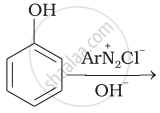
Complete the following reaction.
The amine formed from an amide by mean of bromine and alkali has how many number of carbon atoms?
\[\begin{array}{cc}
\ce{O}\phantom{.........}\\
||\phantom{.........}\\
\ce{H - \underset{(A)}{C} - NH - CH3}
\end{array}\]
and
\[\begin{array}{cc}
\ce{O}\\
||\\
\ce{CH3 - \underset{(B)}{C} - NH2}
\end{array}\]
are which type of isomers?
Classify the following amine as primary, secondary or tertiary:

Classify the following amine as primary, secondary or tertiary:
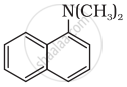
Classify the following amine as primary, secondary or tertiary:
(C2H5)2CHNH2
Assertion A: Aniline on nitration yields ortho, meta and para nitro derivatives of aniline.
Reason R: Nitrating mixture is a storng acidic mixture.
In the light of the above statements, choose the correct answer from the options given below:
Arrange the increasing order of solubility in water.
\[\ce{C2H5Cl, C2H5NH2, C2H5OH}\]
Write short note on the following:
Ammonolysis
Write a short note on the following.
Ammonolysis
Write short note on the following.
Ammonolysis
Write a short note on the following.
Ammonolysis
Write short note on the following.
Ammonolysis
Write short note on Ammonolysis.
Write a short note on the following.
Ammonolysis
Write a short note on the following.
Ammonolysis
Write a short note on the following.
Ammonolysis
