Topics
Living World and Classification of Microbes
Health and Diseases
Force and Pressure
Current Electricity and Magnetism
Inside the Atom
Composition of Matter
- Matter (Substance)
- Characteristics of Particles (Molecules) of Matter
- States of Matter
- The Solid State
- The Liquid State
- The Gaseous State
- Elements
- Earth and Elements
- Non-Metals
- Type of Element: Metalloid
- Compound
- Types of Compound
- Mixture
- Types of Mixtures
- Introduction to Solutions
- Suspension Solution
- Colloidal Solution
- Molecular Formula of Compounds
- Periodic Trends in the Modern Periodic Table
Metals and Nonmetals
Pollution
- Pollution
- Air Pollution
- Prevention and Control of Air Pollution
- Water Pollution
- Effects of Water Pollution
- Prevention and Control of Water Pollution
- Soil Pollution
- Effects of Soil Pollution
- Prevention and Control of Soil Pollution
- Relationship of Soil Pollution with Air and Water Pollution
- Laws for Control, Regulation, and Prevention of Pollution by Indian Government
Disaster Management
Cell and Cell Organelles
- Cell: Structural and Functional Unit of Life
- Prokaryotic and Eukaryotic Cell
- Plant Cell Vs Animal Cell
- Cell Organelles
- Structure of the Cell > Cell Wall: “Supporter and Protector”
- Structure of the Cell > Plasma Membrane / Cell Membrane
- Structure of the Cell > Cytoplasm: “Area of Movement”
- Structure of the Cell > Nucleus: “Brain” of the Cell
- Endoplasmic Reticulum (ER)
- Golgi Apparatus - "The delivery system of the cell"
- Lysosome - “Suicidal Bag”
- Mitochondria - “Power House of the Cell”
- Plastids
- Non-living Substances Or Cell Inclusion
Human Body and Organ System
- Human Body
- Human Organ System
- Mechanism of Respiration > Breathing
- Human Respiratory System
- Blood Circulatory System
- Human Heart
- Blood Vessels
- Circulation of Blood in the Heart (Functioning of Heart)
- Heart Beat
- Blood
- Plasma (The Liquid Portion of Blood)
- Composition of Blood > Cellular Elements: Red Blood Cells (Erythrocytes)
- Composition of Blood > Cellular Elements: White Blood Cells (Leukocytes)
- Composition of Blood > Cellular Elements: Blood Platelets (Thrombocytes)
- Functions of Blood
- Blood Transfusion and Blood Groups (ABO and Rh system)
- Blood Pressure (B.P.)
- Heart Related Conditions
Introduction to Acid and Base
Chemical Change and Chemical Bond
Measurement and Effects of Heat
Sound
Reflection of Light
Man Made Materials
Ecosystems
Life Cycle of Stars
- Formation of Star Clusters
- Stability of Stars
Formation of Star Clusters:
A single gigantic interstellar cloud can produce multiple stars. When a large interstellar cloud contracts due to gravitational forces, it can break into smaller fragments. Each fragment can form its own star or sometimes multiple stars, resulting in a cluster of stars. These clusters often contain thousands of stars that originated from the same cloud, as shown in the figure of star clusters.
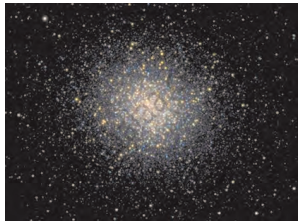
A large cluster of stars. Most of these stars have formed from a single interstellar cloud.
Stability of Stars:
Stars, including the Sun, remain stable for billions of years due to a balance between two opposing forces: gravitational force and gas pressure.

1. Gravitational Force: This is the force pulling all the gas particles inward, toward the centre of the star. It acts like a “cosmic glue” that holds the star together.
2. Gas Pressure: Inside a star, nuclear fusion in the core produces enormous amounts of energy, which heats the gas. This heat creates pressure that pushes outward, away from the centre, trying to expand the star.
When these two forces are perfectly balanced, the star remains stable:
- Inward force: Gravity pulls the gas toward the centre.
- Outward force: Gas pressure pushes outward, opposing gravity.
If one of these forces becomes stronger than the other, the star’s size or structure can change:
- If gravity becomes stronger, the star contracts and becomes smaller.
- If gas pressure becomes stronger, the star expands and becomes larger.
