Topics
Natural Resources – Air, Water and Land
The Living World
Diversity in Living Things and Their Classification
Disaster Management
Substances in the Surroundings –Their States and Properties
Substances in Daily Use
Nutrition and Diet
- Nutrients and Nutrition
- Component of Food
- Carbohydrates
- Diseases Due to Deficiency of Carbohydrates
- Fats (Lipids)
- Diseases Due to Deficiency of Fats
- Proteins
- Diseases Due to Deficiency of Proteins
- Vitamin and Minerals
- Diseases Due to Deficiency of Vitamin
- Diseases Due to Deficiency of Minerals
- Fibre
- Diseases Due to Deficiency of Fibre
- Water
- Diseases Due to Deficiency of Water
- A Balanced Diet
- Nourishment and Malnutrition
- Food Adulteration
Our Skeletal System and the Skin
Motion and Types of Motion
Force and Types of Force
Work and Energy
- Force, displacement and work
- Energy
- The relationship between work and energy
- Forms of Energy > Solar Energy
- Forms of Energy > Mechanical Energy
- Forms of Energy > Geo Thermal Energy
- Forms of Energy > Light Energy
- Forms of Energy > Sound Energy
- Forms of Energy > Chemical Energy
- Conversion of Energies
- Energy Resources
- Energy Resources > Conventional energy resources or non-renewable energy resources
- Energy Resources > Non-conventional energy resources or renewable energy resources
- Energy saving and green energy
Simple Machines
Sound
Light and the Formation of Shadows
Fun with Magnets
The Universe
- Stimulus
- Movement
Maharashtra State Board: Class 6
Stimulus:
A stimulus is any event or change in the surroundings that causes a reaction in living things. For example, loud sounds, light, or touch can be stimuli. Living things react when they sense a stimulus. This reaction is called responsiveness to stimuli, and it is a special feature of all living things.
- Examples of Animal Responses: If someone suddenly enters a cowshed, the cows and buffaloes may stand up, move, or even start mooing. These are examples of how animals react to changes in their environment.
- Examples of Plant Responses: A creeper in the courtyard may lean toward a support. A potted plant placed near a window will grow towards the sunlight. These are examples of plants moving in response to stimuli, even though they don't move like animals.
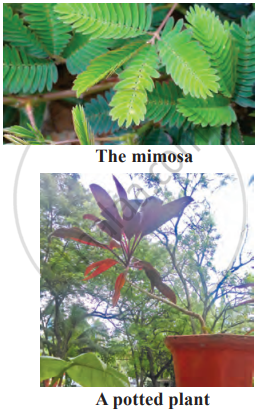
Responsiveness and movement
Maharashtra State Board: Class 6
Movement:
Movement is a change in position or shape that occurs when living things respond to stimuli. Both animals and plants show movement, but they do it in different ways. Being able to respond to stimuli helps living things survive by allowing them to adapt to changes in their environment.
