Topics
Natural Resources – Air, Water and Land
The Living World
Diversity in Living Things and Their Classification
Disaster Management
Substances in the Surroundings –Their States and Properties
Substances in Daily Use
Nutrition and Diet
- Nutrients and Nutrition
- Component of Food
- Carbohydrates
- Diseases Due to Deficiency of Carbohydrates
- Fats (Lipids)
- Diseases Due to Deficiency of Fats
- Proteins
- Diseases Due to Deficiency of Proteins
- Vitamin and Minerals
- Diseases Due to Deficiency of Vitamin
- Diseases Due to Deficiency of Minerals
- Fibre
- Diseases Due to Deficiency of Fibre
- Water
- Diseases Due to Deficiency of Water
- A Balanced Diet
- Nourishment and Malnutrition
- Food Adulteration
Our Skeletal System and the Skin
Motion and Types of Motion
Force and Types of Force
Work and Energy
- Force, displacement and work
- Energy
- The relationship between work and energy
- Forms of Energy > Solar Energy
- Forms of Energy > Mechanical Energy
- Forms of Energy > Geo Thermal Energy
- Forms of Energy > Light Energy
- Forms of Energy > Sound Energy
- Forms of Energy > Chemical Energy
- Conversion of Energies
- Energy Resources
- Energy Resources > Conventional energy resources or non-renewable energy resources
- Energy Resources > Non-conventional energy resources or renewable energy resources
- Energy saving and green energy
Simple Machines
Sound
Light and the Formation of Shadows
Fun with Magnets
The Universe
- Introduction
- Experiment
Maharashtra State Board: Class 6
Introduction:
Frictional force is a force that occurs when two surfaces rub against each other. It always works in the opposite direction of motion, meaning it slows things down or stops them from moving.
- Friction acts as a resistance, trying to stop objects from moving. The rougher the surfaces, the more friction there is, and the faster the object will stop.
- For example, a carrom piece and a rolling ball.
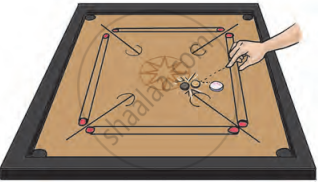
Frictional force
Maharashtra State Board: Class 6
Experiment
1. Aim: To observe how friction affects smooth and rough surfaces when they are rubbed against each other.
2. Requirements: Two pieces of smooth paper, two pieces of sandpaper (rough surface)
3. Procedure:
I. Rubbing Smooth Paper:
- Take the two pieces of smooth paper and rub them against each other.
- Observe how easily they move against one another.
II. Rubbing Sandpaper:
- Now, take the two pieces of sandpaper and rub them against each other.
- Notice the difference in how hard it is to rub the rough surfaces compared to the smooth ones.
4. Conclusion:
- The smooth paper moves easily because there is less friction between the two smooth surfaces.
- The sandpaper is harder to rub together because the rough surfaces create more friction. This experiment shows that friction is less between smooth surfaces and greater between rough surfaces.
