Topics
Natural Resources – Air, Water and Land
The Living World
Diversity in Living Things and Their Classification
Disaster Management
Substances in the Surroundings –Their States and Properties
Substances in Daily Use
Nutrition and Diet
- Nutrients and Nutrition
- Component of Food
- Carbohydrates
- Diseases Due to Deficiency of Carbohydrates
- Fats (Lipids)
- Diseases Due to Deficiency of Fats
- Proteins
- Diseases Due to Deficiency of Proteins
- Vitamin and Minerals
- Diseases Due to Deficiency of Vitamin
- Diseases Due to Deficiency of Minerals
- Fibre
- Diseases Due to Deficiency of Fibre
- Water
- Diseases Due to Deficiency of Water
- A Balanced Diet
- Nourishment and Malnutrition
- Food Adulteration
Our Skeletal System and the Skin
Motion and Types of Motion
Force and Types of Force
Work and Energy
- Force, displacement and work
- Energy
- The relationship between work and energy
- Forms of Energy > Solar Energy
- Forms of Energy > Mechanical Energy
- Forms of Energy > Geo Thermal Energy
- Forms of Energy > Light Energy
- Forms of Energy > Sound Energy
- Forms of Energy > Chemical Energy
- Conversion of Energies
- Energy Resources
- Energy Resources > Conventional energy resources or non-renewable energy resources
- Energy Resources > Non-conventional energy resources or renewable energy resources
- Energy saving and green energy
Simple Machines
Sound
Light and the Formation of Shadows
Fun with Magnets
The Universe
Maharashtra State Board: Class 6
Modes of Nutrition in Plants
Plants obtain their food in different ways. There are three main types of nutrition in plants: autotrophic nutrition, heterotrophic nutrition, and insectivorous plants.
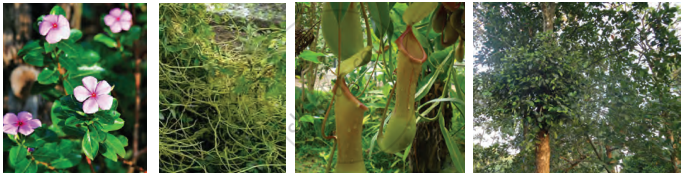
Method of nutrition in plants
Types of Nutrition in Plants:
| Type of Plant | Description | Examples | Special Features |
|---|---|---|---|
| Autotrophic Plants | Produce their own food using sunlight, water, and CO₂ through photosynthesis. | Hibiscus, Pomegranate, Periwinkle | Contain chlorophyll for capturing sunlight and making food. |
| Heterotrophic Plants | Cannot make their own food; depend on other plants for nutrition. | Fungi, Loranthus, Dodder | Attach to host plants and absorb nutrients directly. |
| Insectivorous Plants | Trap and consume insects to get nutrients (especially nitrogen) due to poor soil. | Pitcher Plant, Venus Flytrap | Have special structures to trap insects; digest them to supplement nutrient intake. |
