Topics
Natural Resources – Air, Water and Land
The Living World
Diversity in Living Things and Their Classification
Disaster Management
Substances in the Surroundings –Their States and Properties
Substances in Daily Use
Nutrition and Diet
- Nutrients and Nutrition
- Component of Food
- Carbohydrates
- Diseases Due to Deficiency of Carbohydrates
- Fats (Lipids)
- Diseases Due to Deficiency of Fats
- Proteins
- Diseases Due to Deficiency of Proteins
- Vitamin and Minerals
- Diseases Due to Deficiency of Vitamin
- Diseases Due to Deficiency of Minerals
- Fibre
- Diseases Due to Deficiency of Fibre
- Water
- Diseases Due to Deficiency of Water
- A Balanced Diet
- Nourishment and Malnutrition
- Food Adulteration
Our Skeletal System and the Skin
Motion and Types of Motion
Force and Types of Force
Work and Energy
- Force, displacement and work
- Energy
- The relationship between work and energy
- Forms of Energy > Solar Energy
- Forms of Energy > Mechanical Energy
- Forms of Energy > Geo Thermal Energy
- Forms of Energy > Light Energy
- Forms of Energy > Sound Energy
- Forms of Energy > Chemical Energy
- Conversion of Energies
- Energy Resources
- Energy Resources > Conventional energy resources or non-renewable energy resources
- Energy Resources > Non-conventional energy resources or renewable energy resources
- Energy saving and green energy
Simple Machines
Sound
Light and the Formation of Shadows
Fun with Magnets
The Universe
Maharashtra State Board: Class 6
Mercury:
Mercury is the planet that is nearest to the Sun in our solar system. It is visible in the morning and the evening if it is away from the sun.
- The surface of Mercury is covered with many large holes, called craters, which look like volcanoes. These craters were actually made when meteors (space rocks) hit the planet.
- Mercury moves around the Sun faster than any other planet. It completes one full orbit in just 88 Earth days.
- Since it is so close to the sun, Mercury gets extremely hot during the day. But at night, it can also become very cold because it has almost no atmosphere to trap heat.
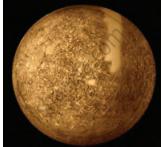
Mercury
