Advertisements
Advertisements
Question
What do the following utterance indicate?
(i)“I told her, through Daniel ...”
(ii)“It’s a cold,” he said finally through Tsetan.
Advertisements
Solution
The author of course did not know Tibetan so he required Tsetan and Daniel to help him to communicate with the locals. So it was always someone helping the author out to communicate, translating his words in Tibetan. First Daniel did to make Lhamo understand what the author was saying. Later, even at the doctor's, Tsetan translated for the author to the doctor what he had to say.
APPEARS IN
RELATED QUESTIONS
B1. Find reasons
(i) The effect of receding forest …………………………………. .
(ii) The number of animals is reduced because ………………………. .
(iii) Elephants entered the city because…………………… .
(iv) Elephants lived a wary life …………………….. .
On the left bank of the Ganga, where it emerges from the Himalayan foothills, there is a long stretch of heavy forest. There are villages on the fringe of the forest, inhabited by bamboo cutters and farmers, but there are few signs of commerce or pilgrimage. Hunters, however, have found the area an ideal hunting ground during the last seventy years, and as a result, the animals are not as numerous as they used to be. The trees, too, have been disappearing slowly; and, as the forest recedes, the animals lose their food and shelter and move further on into the foothills. Slowly, they are being denied the right to live
Only the elephants can cross the river. And two years ago, when a large area of the forest was cleared to make way for a refugee resettlement camp, a herd of elephants - finding their favourite food, the green shoots of the bamboo, in short supply - waded across the river. They crashed through the suburbs of Haridwar, knocked down a factory wall, pulled down several tin roofs, held up a train, and left a trail of devastation in their wake until they found a new home in a new forest which was still untouched. Here, they settled down to a new life but an unsettled, wary life. They did not know when men would appear again, with tractors,bulldozers and dynamite.
B2. Find out
Mention four things the elephants did when they found shortage of food:
(i)………………
(ii)………
(iii) …………
(iv) ………….
B3.Phrases
Make meaningful sentences by selecting any two of the following phrases:
(i) to make way for
(ii) in short
(iii) on the fringe of.
B4. Language study
Select the proper alternative to make the correct voice:
(i) Hunters have found an ideal hunting ground.
-An ideal hunting ground ........found by hunters. (had been, has been, was)
(ii) They are being denied the right to live.
- The people ........them the right to live. (are denying, were denying, denying)
B5.Personal response
What would be your contribution to protect the natural habitat of animals?
B1. Complete the following statements:
(i) The poet is talking about............................. .
(ii) As a nation weare missing our .................................... .
(iii) Old people havekeys ........................... .
(iv) The elderly remember .......................... .
"Oh the value of the elderly! How could anyone not know? They hold so many keys, so many
things they can show.
We all will read the other side this I firmly believe.
And the elderly are closest oh what clues we could retrieve.
For their characters are closest to how we'll be on high.
They are the ones most developed, you can see it if you try.
They've let go of the frivolous and kept things that are dear.
The memories of so sweet, of loved ones that were near.
As a nation we are missing our greatest true resource,
To get to know our elders and let them guide our course."
B2 Express
State what the underlined words mean:
(i) Oh the value of the elderly! State the value ............. .
(ii) They are the ones most developed. 'They' stand for ............. .
B3: Match the words in Column A with their rhyming word in Column B:
| Column A | Column B |
| (i) Course | (a) Show |
| (ii) Believe | (b) resource |
| - | (c) retrieve |
Read the passage given below and answer the questions that follow:
The term dietary fibres refers collectively to indigestible carbohydrates present in plant foods. The importance of these dietary fibres came into the picture when it was observed that the people having diet rich in these fibres, had low incidence of coronary heart disease, irritable bowel syndrome, dental caries and gall stones.
The foodstuffs rich in these dietary fibres are cereals and grains, legumes, fruits with seeds, citrus fruits, carrots, cabbage, green leafy vegetables, apples, melons, peaches, pears etc.
These dietary fibres are not digested by the enzymes of the stomach and the small intestine whereas most of other carbohydrates like starch and sugar are digested and absorbed. The dietary fibres have the property of holding water and because of it, these get swollen and behave like a sponge as these pass through the gastrointestinal tract. The fibres add bulk to the diet and increase transit time in the gut. Some of these fibres may undergo fermentation in the colon.
In recent years, it has been considered essential to have some amount of fibres in the diet. Their beneficial effects lie in preventing coronary heart disease, and decreasing cholesterol level. The fibres like gums and pectin are reported to decrease postprandial (after meals) glucose level in blood. These types of dietary fibres are recommended for the management of certain types of diabetes. Recent studies have shown that the fenugreek (Methi) seeds, which contain 40 per cent gum, are effective in decreasing blood glucose and cholesterol levels as compared to other gum containing vegetables.
Some dietary fibres increase transit time and decrease the time of release of ingested food in colon. The diet having less fibres is associated with colon cancer and the dietary fibres may play a role in decreasing the risk of it.
The dietary fibres hold water so that stools are soft, bulky and readily eliminated. Therefore high fibre intake prevents or relieves constipation.
The fibres increase motility of the small intestine and the colon and by decreasing the transit time there is less time for exposure of the mucosa to harmful toxic substances. Therefore, there is a less desire to eat and the energy intake can be maintained within the range of requirement. This phenomenon helps in keeping a check on obesity. Another reason in helping to decrease obesity is that the high-fibre diets have somewhat lower coefficients of digestibility.
The dietary fibres may have some adverse effects on nutrition by binding some trace metals like calcium, magnesium, phosphorus, zinc and others and therefore preventing their proper absorption. This may pose a possibility of nutritional deficiency especially when diets contain marginal levels of mineral elements. This may become important constraints on increasing dietary fibres. It is suggested that an intake of 40 grams dietary fibres per day is desirable.
(Extracted from ‘The Tribune’)
(a) On the basis of your reading of the above passage make notes on it in points only, using recognizable abbreviations wherever necessary. Also suggest a suitable title.
(b) Write a summary of the above in about 80 words.
Answer the following question in 150-200 words:
How did Miss Sullivan help Helen Keller when she was studying at Cambridge School?
Answer the following question in 150-200 words:
Why did Anne like her father more than she liked her mother?
Notice this expression in the text. Infer their meaning from the context.
the thought was almost revolting
Mention the odd way in which the author’s grandmother behaved just before she died.
What impression of the character of Iona do you get from this story?
How has the author linked the symbol of the rocking-horse to Paul's triumphs at the races?
Explain the line:
Within a week it sickened to a raging fever and its pulse went up to a hundred and fifty in the shade.
Comment on the symbols used in ‘A Munda Song’. What aspect of the tribal worldview do they reflect?
' Kummi', ' ghumar' and 'dandia' are some dance forms mentioned in the text. Make an inventory of folk dance forms in the different regions of the country.
Write down in your own words the way Laurie confirmed the names of the March sisters.
Fill in the blank.
Moru Dada wanted to spray __________ on the moong crop.
Correct the following statement.
Johnsy was eager to recover from her illness.
Read the descriptions of the following from the story and describe any one of them using your own words.
- The ivy vine
- Behrman
- The last leaf that Johnsy saw
Write a short note on Emperor Akbar.
Write a short autobiography of any bird or animal of your choice.
Read and prepare a small presentation in about 100 to 150 words on the ideas of any two philosophers given below.
- Sant Dnyaneshwar
- Gautam Buddha
- Aurobindo Ghosh
- Kahlil Gibran
- Socrates.
What does the poet pray for? Why?
Using your imagination, and information from other sources, describe anyone stalls in detail.
Does the poet expect anything in return? What is the poet’s reward?
Read the following sentence aloud. Write who said it and to whom.
“Would you lend me this, just this?”
Think and answer:
Are the boys and girls happy that it is raining?
Prepare similar word chains using the following ideas.
| rain | drizzle | ______ | ______ | ______ |
| wind | breeze | ______ | ______ | ______ |
| sunshine | warm | ______ | ______ | ______ |
| waterbody | pool | ______ | ______ | ______ |
| size | big | ______ | ______ | ______ |
| size | small | ______ | ______ | ______ |
Correct the following sentence using facts from the passage.
Achilles was killed by an arrow that pierced his heart.
What did the husband want to do with the extra milk?
Read the word. Write the words that combine to make it.
gentle-hearted
What difficulties do the people in the play face in the morning?
Find a picture of a computer with the help of your teacher and label the different parts you see.
For example, monitor, screen, speakers, processor, mouse, mousepad, keyboard, etc.
How did Helen Keller help other blind people?
Guess the meaning of the following word.
coarse grained
Give two reasons why Miranda was so concerned about Ferdinand.
Read the data below and answer the following question.
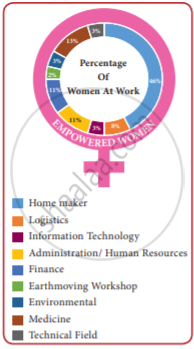
Choose the correct answer.
Identify the three jobs where the same percentage of women work.
Read the comic strip and answer the following question.
What do you mean by cyber safety?
What do the people do when the festival of Music is celebrated?
Which mode of transport did Fogg choose?
Read the following lines and answer the questions.
It’s a slow, unwavering, ingrained trait
With the patience to work and the strength to wait.
- What is an ‘ingrained trait’?
- Why does a courageous man need patience?
Why did the author leave town?
What does the teak tree give us?
Who first brought these vegetables to India?
What made the trip a memorable one?
In this story, what happened to the Earth?
Look at the picture and Choose the correct word.

Why should we read?
The bird-catcher had a pigeon in his _______.
Take out the correct rhyming pair from the poem and match with the given word.
| 1. | tall | |
| 2. | light | |
| 3. | might |
Who disguised himself as an old man?
Divide the following word.
hotel
Which disaster had hit the village?
List the things that humans should save.
A Shepherd had a _______.
Recite the poem with correct intonation.
In real the plate was made of ______.
The merchant paid______ to the boatman.
Describe in your own words the garden that Alice saw.
Read the passage and write a summary of it. Suggest a suitable title for the summary.
|
A sparrow is a small bird which is found throughout the world. There are many different species of sparrows. Sparrows are only about four to six inches in length. Many people appreciate their beautiful songs. Sparrows prefer to build their nests in low places-usually on the ground clumps of grass low trees and low bushes. In cities, they build their nests in building nooks or holes. They rarely build their nests in high places. They build their nests out of twigs grasses and plant fibers. Their nests are usually small and well-built structures. Female sparrows lay four to six eggs at a time. The eggs are white with reddish-brown spots. They hatch within eleven to fourteen days. Both the male and female parents care for the young. Insects are fed to the young after hatching. The large feet of the sparrows are used for scratching seeds. Adult sparrows mainly eat seeds. Sparrows can be found almost everywhere where there are humans. Many people throughout the world enjoy these delightful birds. The sparrows are some of the few birds that engage in dust bathing. Sparrows will first scratch a hole in the ground with their feet then lie in it and fling dirt or sand over their bodies with flicks of their wings. They will also bathe in water or in dry or melting snow. Water bathing is similar to dust bathing with the sparrow standing in shallow water and flicking water over its back with its wings also ducking its head under the water. Both activities are social with up to a hundred birds participating at once and are followed by preening and sometimes group singing. |
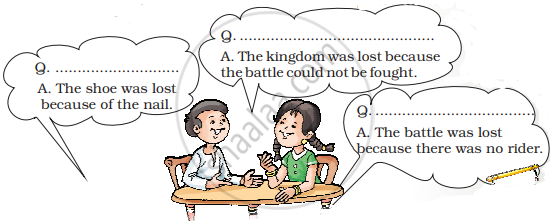
Read the poem.
For Want of a Nail
For want of a nail, the shoe was lost,
For want of a shoe the horse was lost,
For want of a horse, the rider was lost,
For want of a rider, the battle was lost,
For want of a battle, the kingdom was lost,
And all for the want of a horseshoe nail!
[traditional rhyme]
Now form questions for the answers given in the speech bubbles.
Read the following passage carefully and answer the following questions.
Pollution is the introduction of contaminants into the environment that cause harm to the ecosystem. The different kinds of pollution are air pollution, water pollution and land pollution. The release of various gases, finely divided solid particles, or liquid droplets that escape into the atmosphere to disperse and dilute in the environment is called air pollution. Modern society is also concerned about specific types of pollutants, such as noise pollution, light pollution, and plastic pollution.
Particulate Matter (PM), also known as particle pollution, is a complex mixture of extremely small particles and liquid droplets that get into the air. These particles if inhaled can affect health. The impact of PM 2.5 is particularly high in South Asia. Outdoor pollution is caused by a variety of pollutants like public and private vehicles, waste burning in the open, power production industries and construction and even cigarette smoking in public places.
Presently, air pollution is a major and growing risk factor for ill health in India. Delhi is one of the most air polluted cities in India. The air in the city as well as areas surrounding it has worsened to extremely hazardous levels in the recent years. This year’s pollution level is the worst in four years. Several studies have shown that poor air quality is a cause for many health issues among people with lower respiratory disorders with symptoms like dry cough, breathlessness, wheezing, chest discomfort, serious lung infections and cardio vascular diseases. Some studies throw light on the fact that about 16 per cent of the deaths worldwide in 2015 were due to pollution.
Air Masks are an option to protect oneself outdoor. Air masks can be used while commuting or while one is exposed to a polluted area. Some of these masks also include a layer of Activated carbon to filter the air. They protect us from suspended air particles and particulate matter up to the size of 2.5 microns and above. Their usage is limited to some days and should be disposed off after their prescribed duration of usage. The price for air masks starts from Rs 100 and can go up to Rs 500 and more.
We have to take active measures to control pollution and protect ourselves to lead a healthy and pollution free life.
- What is meant by pollution? Mention the different kinds of pollution.
- How does Particulate Matter cause air pollution?
- Identify three major causes of pollution in air
- Name the types of pollution we encounter now.
- What sort of health issues do people face due to air pollution?
- How can we protect ourselves outdoor from air pollution?
- Suggest a suitable title to the passage.
- Identify the meaning of the word similar to the one used in the fourth para:
- emerging
- filtering
- floating
- falling
How should teenagers guard against cyber crimes?
