Advertisements
Advertisements
Question
Identify the common characteristics shared by tribal communities all over the world.
Advertisements
Solution
The essayist identifies some common characteristics shared by tribal communities all over the world. The tribals live in groups that are cohesive and organically unified. They show very little interest in accumulating wealth or in using labour as a device to gather interest and capital. The tribals accept a world view in which nature, human beings and God are intimately linked and they believe in the human ability to spell and interpret truth. They live more by intuition than reason, they consider the space around them more sacred than secular, and their sense of time is personal rather than objective.
APPEARS IN
RELATED QUESTIONS
Answer any four of the following questions in 30 – 40 words each :
(a) After initial reluctance why did the lawyers tell Gandhiji that they were ready to follow him into jail?
(b) What is Mukesh's attitude towards the family business of making bangles?
(c) How does the poet show the futility of Aunt Jennifer's efforts?
(d) Stephen Spender in his poem, 'An Elementary School Classroom in a Slum' paints a dismal picture of poverty. Comment.
(e) Jackson went through the contents of Rev. McLeery's suitcase. Which object therein puzzled him sorely? What was his comment on that?
(f) How did the servants react when they realized that Dr. Sadao was going to save the life of an enemy?
Notice these expression in the text. Infer their meaning from the context.
careered down
This play, written in the 1950s, is a humorous and satirical depiction of the status of the mother in the family.
Do you think it caricatures these issues or do you think that the problems it raises are genuine? How does the play resolve the issues? Do you agree with the resolution?
Locate expressions in the text reflect the Indian idiom, for example, the pride of the generations of his ancestors.
What was the reason for the anxiety of Paul's mother as he grew older?
Identify some of the improbable images the author has used to effect greater humour.
While tribal communities may not seem to possess the scientific temper,there are many ideas from tribal conventions that could enrich modern societies.
What do the references to the birds and animals made in the poem suggest?
Discuss the following in pairs or in small groups.
Exceptionally talented people are born so; talent cannot be cultivated
Think, choose and fill up the labels with what a ‘sunrise’ symbolizes.
(jewellery/art/hope/birth/anger/new opportunities/good manners/inspiration/new achievements/happiness/misery/bright moments/new aims/money/new surprises)

Select any one of the famous personalities mentioned in ‘Warming up 1’ on page no. 5. From the library or internet find out their success story. Write it in your own words in about 20 to 30 lines of your notebook.
Give your write-up a suitable title.
Add the appropriate Prefix to make the following word opposite in meaning.
continue
Make a list of the preparations made for an assault on Tiger Hill.
Throughout the last week of June 1999, 18 Grenadiers ____________.
State whether the following statement is True or False. Correct the false statement by finding evidence from the poem to support your remark.
The poet repents planting the cherry tree.
Go through the poem and state whether the following statement is true or false.
Planners make tactful changes so that citizens do not recognize familiar landmarks.
Write 3 to 4 lines about the following in your own words.
First Cardiac Surgery
Ask your parents to show you TV programs on animals, wildlife and conservation on channels like the following:
DD National, National Geographic, Discovery, and Animal Planet.
Read the following conversation and complete the activities given below:
| Minnie: | Exams are over. I feel so relaxed! Let us plan something interesting. |
| Ritu: | How about a movie? |
| Paddy: | Great! Let’s go for “Aladdin”! |
| Minnie: | Oh, no! I have seen it. It has only a ‘one star’ rating. |
| Ritu: | How about that new release ummm... yes, “Harry Potter? |
| Della: | It is boring. I have read the review this morning. I don’t want to waste my time. |
| Paddy: | Wait, friends. I will check. Let’s decide later. |
(i) Choose the correct alternative from the following-
From one star given to the movie we conclude that-
- The movie is very short.
- The movie is not worth watching.
- The movie is serious.
- The movie is in black and white.
(ii) Discuss with your teacher how/why are ‘stars’ given to a movie.
(iii) The word ‘Review’ is different from summarizing and appeal writing. Choose the correct statements of the following.
- A film review is an expression of your personal views towards a particular film, documentary or movie.
- A film review gives you an opportunity to express opinions about the movie, including its characters, plot and background.
- A film review gives appealing sentences that make your reader curious or anxious about the film.
- A review means explanation of each and every event of the film.
Find out the different processes by which fabrics are made. Find illustrations and write a few lines on each process.
Write a conversation between a donkey and a dog.
Write about one occasion when you have behaved like -
Mr. Nobody
Make a time table of your daily routine
- On a school day
- On a holiday, and
- During examinations.
Start at the time you normally get up and list your activities
hourly: 7 am to 8 am, and so on.
List the lines that begin with 'Here' or 'And here'.
Also, list the sentences or phrases that begin with ‘And there’.
These phrases and sentences tell us about things that appear one after the other as the carriage moves. Can we tell which ones are closer to the train and which ones are at a distance? How?
Complete the following diagram.
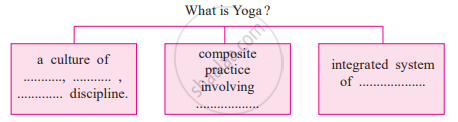
Write some more expressions like ‘hundreds of’. Expand each expression.
Example, ‘Hundreds of children in the school.’
Show the major events in the story of Pheidippides on a ‘time-line’.
Find out the difference between the fingerspelling method, sign language and Braille.
Read the following line from the poem and answer the question that follow.
My heart will keep the courage of the quest And hope the road's last turn will be the best.
|
My heart will keep the courage of the quest, And hope the road's last turn will be the best. |
- What kind of quest does the poet seek here?
- What is the poet’s hope?
Identify the character or speaker.
I was Duke of Milan, and you were a princess.
What do you infer about speaking with others from this poem?
| soft | vain | fear | joy | love | heard | toiled | mild | good | sand | life | harsh |
The ______, the______, which it may bring.
when to fight for a righteous cause
one did gain considerable applause.
When will one get an applause?
What challenges does Alice face and how does she overcome them?
Neerja leapt into action when she______.
Why did the author leave town?
Who is Muthu?
What did she sell to support her family?
Why did Muthu say that he could walk along its side?
Identify the speaker/character.
"Don't let us down now, Gulliver; we need your help."
How should one react to adversity?
The pit was comfortable for the wild boar to sleep in.
They all stood around the little jewel of blue means______.
What did the father give to all the daughters?
What happened to Dr. Karmugilan in the story?
Which place was the last stand of the Indian army?
Brain of a robot is the______.
Arrange the pictures by using numbers.

The hut was very ______.
Look at the picture and Choose the correct word.

Pick and write the adverbs to complete the sentence.
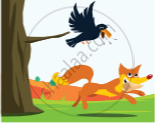
A jackal cheated the crow ______.
Name the character or speaker.
"Did someone scold you?"
Leafcutter ants grow fungus.
Where did the tanker man take the water from the village?
In which season is ice cream popular?
Name the pictures and match it with the rhyming words.
 |
dancer | |
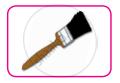 |
floor | |
 |
will | |
 |
rush |
Write the word with same meaning.

Torch
Write the correct word.
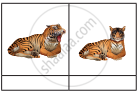
| rooster, king, hen, tiger, queen, tigress. |
Does the child in the poem like her nose? Why do you think so?
Who was Nokomis?
How was the stump of the tree useful?
