Advertisements
Advertisements
Question
How do you distinguish between information gathering and insight formation?
Advertisements
Solution
A model answer has been provided for students' reference.
It is strongly recommended that students prepare the answer on their own.
There is a mass difference between the concepts of information gathering and insight formation. Information gathering refers to collection of data and facts. It means knowledge of specific events or situations that has been gathered or received by communication. Insight formation, on the other hand, refers to the perception one has of things through his deep understanding of a subject. Insight refers to the capacity to discern the true nature of a situation. Thus, it might differ from person to person, depending on everyone's ideas and concepts.
RELATED QUESTIONS
It was her determination that helped Helen Keller get admission to Radcliffe College. Comment.
What were Watson's observations on the stick left behind by Dr. Mortimer? How far did Sherlock Holmes prove him wrong? (in about 125 words)
How did Helen display her passion for Radcliffe College?
Read the following passage and complete the activities given below :
A1 Find out :
Find from the passage the related words to the sea and write them.

ON FIERCE monsoon nights, about one and a quarter-mile off the Mumbai harbor, there have been occasions when 52-year-old Bikaji Ramchandra Dhuri is the only man on the sea. From the watchtower of the Prongs Reef Lighthouse, which is surrounded on all sides by the Arabian Sea, he has heard the sea rage like a possessed spirit – the darkness dispelled only by the beam of light flung across the waters from the tower he mans.
Dhuri is one of the last breeds of lighthouse keepers on the Indian coast, as a majority of the 182 lighthouses in the country are now unmanned. Built-in 1871, the Prongs Reef lighthouse was modeled on Scotland’s Skerryvore Rocks Lighthouse and is located at a strategic spot on the western coast, marking the entrance to the busy Mumbai Harbour. It was meant to stem the number of shipwrecks off the harbor, which the lone Colaba lighthouse could not illumine on its own. “Even now, during nights, for fishing vessels without any gadgets, it’s the soft light from this tower which directs us to Mumbai,” says Vinayak Koli, a boatsman who helps ferry people and also goes on fishing expeditions.
Throughout the year, Dhuri lives in the lighthouse for 15 days at a stretch, when he is relieved by another keeper. In the monsoon, it becomes his home for three months. “We call it the Kalapana as we are alone in the middle of the sea for days, with basic supplies – and the revolving light that keeps the sea awake,” he says.
A2 Fill in the following information using words from the passage :
(i) The Prongs Reef lighthouse was modeled on _______.
(ii) Dhuri lives in the lighthouse for _______ at a stretch.
(iii) _______ is one of the last breeds of lighthouse keepers on the Indian coast.
(iv) The majority of the _______ lighthouses in the country are now unmanned.
| Violent | Scattered | Place of shelter for ships | Shine light |
A4
A5 Personal Response
Imagine you have to spend a night in a lighthouse. Narrate your experience.
Briefly comment on:
The purpose of the author’s journey to Mount Kailash.
Explain the line:
She makes too much steam–you want to hang the monkey wrench on the safety valve!
Comment on the physical features of the hawk highlighted in the poem and their significance.
Stories can be told even in the form of poetry. Such poems are called Narrative poems. Narrative poems do not always follow rhythmic patterns of a fixed rhyme scheme. Such poems are written in a style called ‘Free Verse.’
Recall and name some narrative poems you have done/read earlier.
Using points from the lesson, give the details of the following in a short paragraph.
International Kite Festival at Ahmedabad.
Suppose you suffer from a long - term illness (one or two weeks), what should you do and what should you avoid? Fill up the table of Dos and Don’ts.
| Dos | Don’ts |
| (1) Go to a doctor for diagnosis | (1) Do not ____________ |
| (2) ____________ | (2) Do not avoid medication on time. |
| (3) Take a suitable diet | (3) Avoid ____________ |
| (4) ____________ | (4) Avoid physical stress and exertion. |
| (5) Rest in a properly ventilated room. | (5) Do not ____________ |
| (6) Have cheerful thoughts, courage, positive attitude | (6) Do not lose ______ and ______ |
Read the lesson and name the following.
The Father of modern neurosurgery ______
Read the description of the Kabaddi match and do the following:
Describe, in your own words, the important events in the first half.
Language Study: Degrees of comparison.
We use different forms of adjectives and adverbs to show comparison. They are known as degrees of comparison.
- Positive: Mangesh was as strong as Ravi.
She is as tall as her sister. - Comparative: Mangesh was stronger than other players.
She is taller than her sister. - Superlative: Mangesh was the strongest player in the team.
Their sister is the tallest amongst the three.
Who do you think benefits most from commercial advertisements?
Can you imagine life without wheels? Try and think of what life would be like if there were no wheels around.
Have you seen how wheels move on different surfaces like sand, gravel, grass, or a proper road? What are the differences you see?
Write a short speech for the State of Maharashtra.
Read the following words. Write the words that are combined to make these words.
- faraway
- nobleman
- whoever
- moneylender
- sometimes
Add ten more words to the list on your own. Each of the component words must be meaningful.
Guess the meaning of the following word:
exorbitantly
Write the smaller and related words that you see within this word.
Answer in your own words.
What did Neel realise from his encounter with his ancestors?
In the last stanza, there are three four-letter words that refer to a beautiful valley.
They are: • ______ • ______ • ______
List and say whether the following statement agrees with the passage or not.
You should look at the person you are talking to.
What are the complaints of the animals?
Guess the meaning of the following word in the poem.
lined
What did Anshuman’s father compare bad habits to?
Would you like to be a netizen?
How was Gonzalo helpful to Prospero when he left Milan?
Why was the narrator sorry to have paid attention to the footsteps?
Use this passage to play the game. You can collect information on other famous personalities and play too.
Charlie Chaplin was born on April 16, 1889, in London England. His birth name was Charles Spencer Chaplin, though he had many nicknames growing up such as Charlie, Charlot, and The Little Tramp. His father, Charles Chaplin, and his mother, Hannah Chaplin, were inducted into the music hall of fame, leading the way to his exposure even as a young boy. His first onstage moment was when he was 5 years old; he sang a song that was intended to be sung by his own mother; she had become ill at the time of the performance, so little Charlie Chaplin stood instead and performed for his mother.
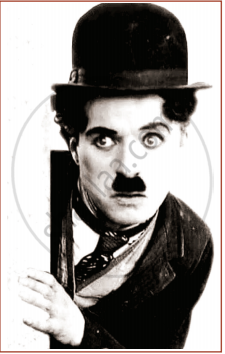
Charlie Chaplin came to the United States in 1910, at the age of 21. He was brought to New York, which was known to be a great place to start out for anyone trying to become a professional actor. Two years later, in 1913, Chaplin signed his very first contract at Keystone and it was no time before he headed to Hollywood. His first movie premiered in 1914, “Making a Living,” and went on to make over 35 movies total in that year alone. Charlie Chaplin grew to become one of the most popular and successful actors of all time. The moment that really kicked off his long career was in 1921 when he starred in, and produced, his first full-length film called “The Kid.” From then on, most people all over the world knew Charlie Chaplin and loved his movies. He had a great career and life, dying on December 25, 1977, in Vevey, Switzerland. He had apparently died of natural causes in his sleep from old age.
Why did Mrs. Jhunjhunwalla buy the painting?
Why did Shepherd-Barron reduce the PIN number from six digits to four?
Find a sentence/word from the text which express the following.
Words related to prize.
Read the comic strip and answer the following question.
Do you think that all the information online can be used without any permission?
What kind of learning brings joy to you?
Read the poem and fill in the blanks with the correct option.
It is better far to rule by ______, than ______.
- soft
- vain
- fear
- joy
- love
- heard
- toiled
- mild
- good
- sand
- life
- harsh
What makes us happy and free, according to the poet?
Find out the rhyme scheme employed in the fourth stanza.
He woke up very late in the morning.
Read the sentences and number them in correct order.
|
1. He wished to have Gopal with him. |
|
|
2. Salim felt that it should come from within. |
|
| 3. He thought he wouldn’t be able to finish it. | |
| 4. The old man worked tirelessly on the sculpture. | |
| 5. He realized that Gopal must learn to carve the finer details. | |
| 6. He had a strong wish to finish it in time. | |
| 7. Over days, he felt very weak. |
Work in pairs and answer the following.
Pick out the alliterated words.
Gulliver took the small creatures in his hand and crushed them.
Identify the speaker/character.
He felt something moving along his body almost up to his chin.
Why did the trees become a green blur?
Name the character or speaker.
"Why don't you do that yourself?"
How does Raju help his mother?
Choose the correct option from the given homophones.
What did you ______ at the store?
Every ______ they would go fishing.
Take out the correct rhyming pair from the poem and match with the given word.
| 1. | tall | |
| 2. | light | |
| 3. | might |
Do you like this kind of world?
Leafcutter ants can carry leaves that weigh ______ times of their body weight.
Why should we close the tap after using it?
Why do the leafcutter ants grow the fungus?
Jana and her family moved to the village _______ ago.
Fill in the blank

What did Rani want to become?
Pencil asked him to draw ______.
What was the event Megala participated?
What did he learn about the birds?
How does Tagore acknowledge Gandhi’s noble work?
Read the following sentence.
‘A very wise man once remarked that of the unspoken word, you are a master; of the spoken word, you are a slave.’
The sentence has two pairs of opposites - spoken and unspoken, and master and slave. The contrasting ideas make the sentence more effective. Putting together opposite or contrasting ideas in one sentence is a literary device. It is called antithesis.
Read the following examples of antithesis.
- Give every man thy ear, but few thy voice.
- Man proposes and God disposes.
- Speech is silver, but silence is gold.
- Patience is bitter, but it has a sweet fruit.
