Advertisements
Advertisements
प्रश्न
How do you distinguish between information gathering and insight formation?
Advertisements
उत्तर
A model answer has been provided for students' reference.
It is strongly recommended that students prepare the answer on their own.
There is a mass difference between the concepts of information gathering and insight formation. Information gathering refers to collection of data and facts. It means knowledge of specific events or situations that has been gathered or received by communication. Insight formation, on the other hand, refers to the perception one has of things through his deep understanding of a subject. Insight refers to the capacity to discern the true nature of a situation. Thus, it might differ from person to person, depending on everyone's ideas and concepts.
संबंधित प्रश्न
B1. Find reasons
(i) The effect of receding forest …………………………………. .
(ii) The number of animals is reduced because ………………………. .
(iii) Elephants entered the city because…………………… .
(iv) Elephants lived a wary life …………………….. .
On the left bank of the Ganga, where it emerges from the Himalayan foothills, there is a long stretch of heavy forest. There are villages on the fringe of the forest, inhabited by bamboo cutters and farmers, but there are few signs of commerce or pilgrimage. Hunters, however, have found the area an ideal hunting ground during the last seventy years, and as a result, the animals are not as numerous as they used to be. The trees, too, have been disappearing slowly; and, as the forest recedes, the animals lose their food and shelter and move further on into the foothills. Slowly, they are being denied the right to live
Only the elephants can cross the river. And two years ago, when a large area of the forest was cleared to make way for a refugee resettlement camp, a herd of elephants - finding their favourite food, the green shoots of the bamboo, in short supply - waded across the river. They crashed through the suburbs of Haridwar, knocked down a factory wall, pulled down several tin roofs, held up a train, and left a trail of devastation in their wake until they found a new home in a new forest which was still untouched. Here, they settled down to a new life but an unsettled, wary life. They did not know when men would appear again, with tractors,bulldozers and dynamite.
B2. Find out
Mention four things the elephants did when they found shortage of food:
(i)………………
(ii)………
(iii) …………
(iv) ………….
B3.Phrases
Make meaningful sentences by selecting any two of the following phrases:
(i) to make way for
(ii) in short
(iii) on the fringe of.
B4. Language study
Select the proper alternative to make the correct voice:
(i) Hunters have found an ideal hunting ground.
-An ideal hunting ground ........found by hunters. (had been, has been, was)
(ii) They are being denied the right to live.
- The people ........them the right to live. (are denying, were denying, denying)
B5.Personal response
What would be your contribution to protect the natural habitat of animals?
Griffin failed not only as a son and a scientist, but also as a human being. Comment. (The Invisible Man)
Guess the meaning of the following word:
Drokba
In which language are these word found?
Did the boys return the horse because they were conscience-stricken or because they were afraid?
This play, written in the 1950s, is a humorous and satirical depiction of the status of the mother in the family.
Do you think it caricatures these issues or do you think that the problems it raises are genuine? How does the play resolve the issues? Do you agree with the resolution?
Do you know of any incident when someone has been brought back to life from the brink of death through medical help. Discuss medical procedures such as organ transplant and organ regeneration that are used to save human life.
'The author's treatment of the subject matter makes the readers identify themselves with the experience.' Comment on the statement.
Why has he compared the three passions to great winds?
Discuss in small groups.
Poetry and science are incompatible.
Explain the phrase.
Time's fool
Notice these expressions in the poem and guess their meaning from the context:
| rancid breath | squelching tar |
| spectroscopic flight of fancy | |
| rearing on the thunderclap | brunette |
| peroxide blonde | clinical assent |
| raven black |
Comment on the subtlety with which the poet captures the general pattern of communication within a family.
Identify the words that help you understand the nature of the poet's father.
Distinguish between the following pairs of words
| Incredulous | - | Incredible |
| Suspicious | - | Susceptible |
| Sensitivity | - | Sentimentality |
| Successive | - | Successful |
Add the appropriate Prefix to make the following word opposite in meaning.
continue
Discuss in groups and share with one another.
When you go for a picnic, what and how do you enjoy?
Read the following conversation and complete the activities given below:
| Minnie: | Exams are over. I feel so relaxed! Let us plan something interesting. |
| Ritu: | How about a movie? |
| Paddy: | Great! Let’s go for “Aladdin”! |
| Minnie: | Oh, no! I have seen it. It has only a ‘one star’ rating. |
| Ritu: | How about that new release ummm... yes, “Harry Potter? |
| Della: | It is boring. I have read the review this morning. I don’t want to waste my time. |
| Paddy: | Wait, friends. I will check. Let’s decide later. |
(i) Choose the correct alternative from the following-
From one star given to the movie we conclude that-
- The movie is very short.
- The movie is not worth watching.
- The movie is serious.
- The movie is in black and white.
(ii) Discuss with your teacher how/why are ‘stars’ given to a movie.
(iii) The word ‘Review’ is different from summarizing and appeal writing. Choose the correct statements of the following.
- A film review is an expression of your personal views towards a particular film, documentary or movie.
- A film review gives you an opportunity to express opinions about the movie, including its characters, plot and background.
- A film review gives appealing sentences that make your reader curious or anxious about the film.
- A review means explanation of each and every event of the film.
Enlist a few reasons for watching a drama live on the stage.
Look at the following words carefully for one minute. Now close your book and try to write down as many of the words as you can remember.
| crust, tremendous, lava, crater, volcanic, tsunami, island, extinct, disaster, dormant, eruption, plume, inland, molten, active, coast |
Form groups and hold debates on the following topics. Make bulleted lists of points in favour of the topic (pros) and those against it (cons). (3-6 points each)
You should admit your mistakes.
Answer the following question in one sentence.
What should human beings do in order to make progress?
Form pairs. Discuss and prepare a list of things that can be and will be done in future. (5 things) Spot the modal verbs in your answer.
What does the poet pray for? Why?
Talk about your favourite season. (A one-minute activity.)
Find pairs of rhyming words from the poem.
What changes do we see in the life of human beings when the season changes? Write with reference to their clothes.
Complete the following diagram.
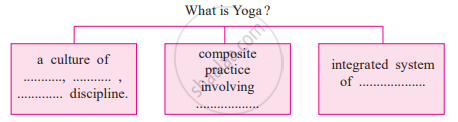
Fill in the table.
| Period | Way of Addressing a Mother | Boy’s Costume | Lady’s Costume | Daily Chores | Games |
| The 1950s | silk saree | ||||
| 1910 | Kurta pajama and cap | ||||
| The 1800s | |||||
| The 1500s | |||||
| 1000 | |||||
| 100 AD | feed poultry tend sheep keep away birds plaster the yard | ||||
| 3000 BC | Chaupar |
Answer in your own words.
How is the boy from the 1500s dressed?
Describe the following in one or two lines.
The nest.
Make a list of your favourite fruits and vegetables and note down the time of the year when they are available in plenty.
What common qualities did the three brothers have?
Guess the meaning of the following word in the poem.
lined
List the rhyming words in the (On the water) poem.
Have you ever been on an adventurous journey? If yes, share your experience.
Why did Dr. Ashok’s cousin call him?
‘ If only her son were there, it would have been a different kind of Eid’! What had happened to her son?
What do you think are the two most important lessons that the speaker mentions?
Activity
It’s fun to help out in the kitchen. You can even practice reading aloud when reading the recipe. And you can learn a little math by figuring out how to measure. Here are a few fun items to make that are “Alice” themed.
Read the “Story of Self Sacrifice and Bravery” once again and complete the flow chart.
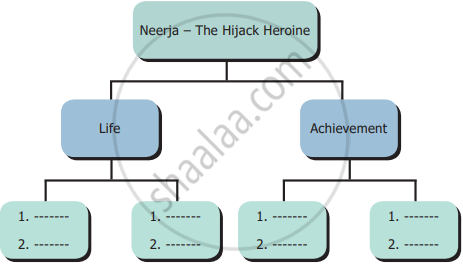
The war between the two kingdoms ended in peace.
Who was challenged for a race?
How did Santhosh record his diary?
How did Santhosh spend his time in the river?
What were Anandhan and Yazhini watching in the television?
Put the given time expressions in the correct columns.
| winter | morning | 2’ o clock | evening | 1947 |
| March | Sunday | 15th August | 4.30 PM | wedding day |
| in | at | on |
Robot asked Vicky to sell him to an ______ master.
Identify the character/speaker.
"Grow the fish at home, Anbu."
Bala and Janani acted like the______.
The official's family visited the rehabilitation centre for ______ years.
In early days, Amir left the tap opened.
Leafcutter ants grow fungus.
Match the following and write the new word.
| 1. | pre | continue |
| 2. | dis | familiar |
| 3. | un | open |
| 4. | re | view |
The goose is swimming with its ______.
Fill in the blank
A person who overcomes problems, will get ______ at the end.
Make groups of 10-15. In this game, each person writes three sentences about himself/herself, two of which are true and the third one is a lie. Read aloud your sentences, while others guess which two are true and which is a lie.
Examples: Hello, everyone! I am Sonali. I have a brother and a sister. I live in Amalner. We have a pet dog at home.
In the game ‘Two Truths, One Lie!’, it is necessary to use details which can be verified to see whether they are true or false. For example, you cannot use sentences like ‘I once had a blue sweater.’
