Advertisements
Advertisements
Question
Use this passage to play the game. You can collect information on other famous personalities and play too.
Charlie Chaplin was born on April 16, 1889, in London England. His birth name was Charles Spencer Chaplin, though he had many nicknames growing up such as Charlie, Charlot, and The Little Tramp. His father, Charles Chaplin, and his mother, Hannah Chaplin, were inducted into the music hall of fame, leading the way to his exposure even as a young boy. His first onstage moment was when he was 5 years old; he sang a song that was intended to be sung by his own mother; she had become ill at the time of the performance, so little Charlie Chaplin stood instead and performed for his mother.
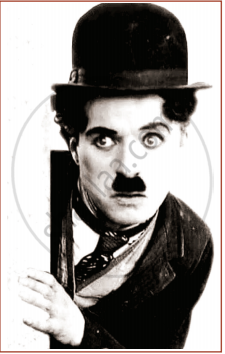
Charlie Chaplin came to the United States in 1910, at the age of 21. He was brought to New York, which was known to be a great place to start out for anyone trying to become a professional actor. Two years later, in 1913, Chaplin signed his very first contract at Keystone and it was no time before he headed to Hollywood. His first movie premiered in 1914, “Making a Living,” and went on to make over 35 movies total in that year alone. Charlie Chaplin grew to become one of the most popular and successful actors of all time. The moment that really kicked off his long career was in 1921 when he starred in, and produced, his first full-length film called “The Kid.” From then on, most people all over the world knew Charlie Chaplin and loved his movies. He had a great career and life, dying on December 25, 1977, in Vevey, Switzerland. He had apparently died of natural causes in his sleep from old age.
Advertisements
Solution
- Was charlie born in India?
- Do you know his birth name?
- Do you know his nick names?
- Did Charlie Chaplin come to Russia in 1910?
- Did Chaplin sign his first contract at keystone ¡n 1913?
- Was the film ‘The Kid’ produced by Charlie Chaplin?
- Did people love his movies?
- Did his first movie premiere in 1915?
- Had he a great career and life?
- Did he die at his young age?
APPEARS IN
RELATED QUESTIONS
Read the extract and state whether the following statement is true or false. Correct the false statement.
Newer hybrid crops have a great appetite for chemicals.
State whether the following statement is True or False:
Both Demetrius and Lysander fight for Hermia.
Visit a library:
Read the stories of King Arthur and his Knights of the Round Table.
Which season would you say is the hardest in your locality? What help would the poor and homeless people need in that season?
Find the meaning of the following word.
delicious
Write any one of these stories, not as told by Gulliver, but by some other person.
Write down the word that alliterate in the poetic line below
Festival of Flowers.
Name the character or speaker.
“How did I win the competition with a single stroke?”
Three waves hit the village.
Read the passage given below and answer the questions that follow
Humans have long been fascinated by fiction. We experience excitement in assigning supernatural power to imaginary characters in fictional stories – and so we have Spider man, Batman, He–man, Titans and many more. The ‘Cyborg’ was an offshoot of such wild imagination of humans to invest our species with superhuman powers. Today, the Cyborg is no more an imaginary organism. We are living in a world where a sizeable population of humans have merged their bodies with technological implants. The term ‘Cyborg’, short for ‘cybernetic organism’, was coined to describe a man, whose body is implanted with technological devices to supplement and substitute body functions.
Cyborgs include people with cardiac pacemakers, contact lenses, bionic ears and eyes, prosthetics and so on. In other words, a cyborg is partly human and partly machine. The technological innovations in the field of medicine and healthcare augment humans with machines, producing a beta version of the human body. The advent of brain machine interfaces is certain to blur the boundary between humans and machines. Scientists are working hard to find a technique for age reversal too. People do not want to die, so mankind is striving to get to the final frontier, which is development of machines and devices that would accord man immortality.
The needs of humans are not limited. As time passes, food habits change, thinking patterns change, and even appearances change. We are about to travel by driverless, fully automated vehicles. Computers and smart phones have become our masters. The more we depend and merge with technological advancements, the more the humanness in us slowly erodes. Intelligence is sought to be infused into machines and robotics are designed in such a way to give man a virtual human companion. The field of artificial intelligence is overtaking the human brain and many fear that it could even harm the human race. Despite certain limitations and potential threats, many believe that cyborgs will be the next step in the evolution of mankind. The amalgamation of man and machine is sure to add a new dimension to the life of mankind and this will prove to be the ‘biggest evolution in Biology’ since the emergence of life, four billion years ago.
Questions:
a) Account for the popularity of characters with supernatural powers.
b) Who is referred to as a ‘Cyborg’?
c) What is expected to happen with the advent of the brain machine interface?
d) The needs of humans are not limited. How is this statement elaborated in the passage?
e) How can a machine turn into a virtual companion for humans?
f) Explain the flipside of the rapid technological advancement.
g) Identify the word in para 1 which means ‘everlasting life’.
h) Which of the following words is synonymous with ‘amalgamation’?
- recreation
- integration
- exploration
- proposition
i) Which of the following options is the antonym of the word ‘advent’?
- drawback
- dispute
- departure
- danger
j) Find out the word which is the antonym of ‘natural’ in para 3.
