मराठी
तामिळनाडू बोर्ड ऑफ सेकेंडरी एज्युकेशनएस.एस.एल.सी. (इंग्रजी माध्यम) इयत्ता १०

Use this passage to play the game. You can collect information on other famous personalities and play too.

Advertisements
Advertisements

प्रश्न

Use this passage to play the game. You can collect information on other famous personalities and play too.

Charlie Chaplin was born on April 16, 1889, in London England. His birth name was Charles Spencer Chaplin, though he had many nicknames growing up such as Charlie, Charlot, and The Little Tramp. His father, Charles Chaplin, and his mother, Hannah Chaplin, were inducted into the music hall of fame, leading the way to his exposure even as a young boy. His first onstage moment was when he was 5 years old; he sang a song that was intended to be sung by his own mother; she had become ill at the time of the performance, so little Charlie Chaplin stood instead and performed for his mother.
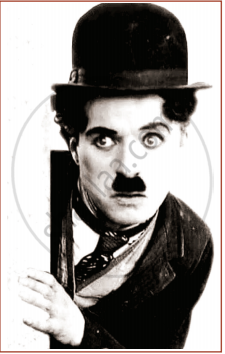
Charlie Chaplin came to the United States in 1910, at the age of 21. He was brought to New York, which was known to be a great place to start out for anyone trying to become a professional actor. Two years later, in 1913, Chaplin signed his very first contract at Keystone and it was no time before he headed to Hollywood. His first movie premiered in 1914, “Making a Living,” and went on to make over 35 movies total in that year alone. Charlie Chaplin grew to become one of the most popular and successful actors of all time. The moment that really kicked off his long career was in 1921 when he starred in, and produced, his first full-length film called “The Kid.” From then on, most people all over the world knew Charlie Chaplin and loved his movies. He had a great career and life, dying on December 25, 1977, in Vevey, Switzerland. He had apparently died of natural causes in his sleep from old age.

टीपा लिहा
Advertisements

उत्तर

  1. Was charlie born in India?
  2. Do you know his birth name?
  3. Do you know his nick names?
  4. Did Charlie Chaplin come to Russia in 1910?
  5. Did Chaplin sign his first contract at keystone ¡n 1913?
  6. Was the film ‘The Kid’ produced by Charlie Chaplin?
  7. Did people love his movies?
  8. Did his first movie premiere in 1915?
  9. Had he a great career and life?
  10. Did he die at his young age?
shaalaa.com
Reading Skills
  या प्रश्नात किंवा उत्तरात काही त्रुटी आहे का?
पाठ 2.1: The Night the Ghost Got in - Exercise [पृष्ठ ३६]

APPEARS IN

सामाचीर कलवी English Class 10 SSLC TN Board
पाठ 2.1 The Night the Ghost Got in
Exercise | Q 7 | पृष्ठ ३६

संबंधित प्रश्‍न

What, according to the poet, are human beings out of tune with?


Write the Rhyming word and Scheme of the 2nd stanza.

“Old man,” said a fellow pilgrim near,
“Why waste your time in building here?
Your journey ends with the close of the day You never again will pass this way.
You have crossed the chasm deep and wide Why build ye here at even tide?”


Does the traveller really have a magic stone? 


Read the lines of the following poem. Guess and fill in suitable words to make the lines rhyme -

Golden Glow

Soon after dawn, rises the _________________.
It wakes and enlivens every _________________.
It scares away the long, dark _________________.
The shining stars go out of _________________.
From tree to tree birds flit and, _________________.
Searching for food, with a sharp _________________.
The buds that open now show their, _________________
As flowers, they dance with beauty and _________________.
The hill slope wears a grassy green,_________________
The curved sparkling river, it's gold _________________.
The cock then crows to give a loud, _________________
Come on! wake up, folks! One and _________________.
I, then wake up, ‘Good Morning’ to,_________________
Let’s all look forward to a golden _________________.


Correct the following sentence and rewrite it.

Jesus had actually visited Papa Panov only once on Christmas Eve.


Name the following.

Ruler of Germany.


How do the wheels go?


Who helped Tenzin in learning English words?


Where did the tanker man take the water from the village?


Read the following passage and answer the questions that follow:

The Stationmaster’s Supreme Sacrifice by Sanchari Pal (Adapted)

  1. Thirty-three years ago, on the night of December 2, 1984, Bhopal was hit by a catastrophe that had no parallel in the world’s industrial history. An accident at the Union Carbide pesticide plant in Bhopal had released almost 30 tons of a highly toxic gas called methyl isocyanate, turning the city into a vast gas chamber. The result was a nightmare; more than 600,000 people were exposed to the deadly gas cloud that left thousands dead and many more breathless, blind and in agonizing pain. Few people know that during the Bhopal gas tragedy a heroic stationmaster risked his own life to save others.
  2. On the evening of December 3, 1984, Ghulam Dastagir was settling down in his office to complete some pending paperwork. This work kept him in his office till 1am in the night, when he emerged to check the arrival of the Gorakhpur Mumbai Express. As he stepped on to the platform, the deputy stationmaster felt his eyes burn and a queer itching sensation in his throat. He did not know that poisonous fumes leaking from Union Carbide’s pesticide factory were stealthily enveloping the railway station.
  3. Beginning to choke, Dastagir did not know then that twenty-three of his railway colleagues, including his boss, station superintendent Harish Dhurve, had already died. It was later reported that Dhurve had heard about the deadly gas and had immediately tried stopping the movement of trains passing through Bhopal before collapsing in his office chamber. His suddenly worsening health and years of experience told Dastagir that something was very wrong. Though he did not fully comprehend what was happening, he decided to act immediately when he did not get any response from the station master. He alerted the senior staff at nearby stations, like Vidisha and Itarsi, to suspend all train traffic to Bhopal.
  4. However, the jam-packed GorakhpurKanpur Express was already standing at the platform and its departure time was 20 minutes away. Listening to his gut instinct, Dastagir summoned his staff and told them to immediately clear the train for departure. When they asked if they should wait until the order to do so came from the head office, Dastagir replied that he would take complete responsibility for the train’s early departure. He wanted to ensure that the train left immediately, without any delay. His colleagues later recalled that Dastagir could barely stand and breathe as he spoke to them. Breaking all rules and without taking permission from anyone, he and his brave staff personally flagged off the train.
  5. But Dastagir’s work was not done. The railway station was filling up with people, desperate to flee the fumes. Some were gasping, others were vomiting, and most were weeping. Dastagir chose to remain on duty, running from one platform to another, attending, helping and consoling victims. He also sent an SOS to all the nearby railway offices, asking for immediate medical help. As a result, four ambulances with paramedics and railway doctors arrived at the station. It was winter and the gas was staying low to the ground, a thick haze poisoning everything in its path. Besieged by hordes of suffering people, the station soon resembled the emergency room of a large hospital. Dastagir stayed at the station, steadfastly doing his duty, knowing that his family was out there in the ill-fated city. That day all he had for his protection was a wet handkerchief on his mouth.
  6. Ghulam Dastagir’s devotion to duty saved the lives of hundreds of people. However, the catastrophe didn’t leave him unscathed. One of his sons died on the night of the tragedy and another developed a lifelong skin infection. Dastagir himself spent his last 19 years shuttling in and out of hospitals; he developed a painful growth in the throat due to prolonged exposure to toxic fumes. When he passed away in 2003, his death certificate mentioned that he was suffering from diseases caused as a direct result of exposure to MIC (Methyl Isocyanate) gas. A memorial has been built at platform No.1 to pay tribute to those who sacrificed their lives in the line of duty on the fateful night of December 3, 1984. However, Ghulam Dastagir, who died later, is not one of them. A forgotten hero whose sense of duty and commitment saved countless lives, Dastagir’s story deserves to be recognized and remembered by our fellow countrymen.
  1. Why was the accident at Union Carbide unparalleled in the world’s industrial history?
  2. How was Dastagir affected by the poisonous gas?
  3. What was the action taken by the station superintendent?
  4. How did Dastagir and his staff break rules?
  5. What was the cause of Dastagir’s death?
  6. Find words from the passage which mean the opposite of the following.
  1. safeguard (para 1)
  2. common or familiar (para 2)
  3. prompt (para 4)
  4. cause (para 6)

Share
Notifications

Englishहिंदीमराठी


      Forgot password?
Use app×