Advertisements
Advertisements
Question
Read the passage given below and answer the questions that follow
Humans have long been fascinated by fiction. We experience excitement in assigning supernatural power to imaginary characters in fictional stories – and so we have Spider man, Batman, He–man, Titans and many more. The ‘Cyborg’ was an offshoot of such wild imagination of humans to invest our species with superhuman powers. Today, the Cyborg is no more an imaginary organism. We are living in a world where a sizeable population of humans have merged their bodies with technological implants. The term ‘Cyborg’, short for ‘cybernetic organism’, was coined to describe a man, whose body is implanted with technological devices to supplement and substitute body functions.
Cyborgs include people with cardiac pacemakers, contact lenses, bionic ears and eyes, prosthetics and so on. In other words, a cyborg is partly human and partly machine. The technological innovations in the field of medicine and healthcare augment humans with machines, producing a beta version of the human body. The advent of brain machine interfaces is certain to blur the boundary between humans and machines. Scientists are working hard to find a technique for age reversal too. People do not want to die, so mankind is striving to get to the final frontier, which is development of machines and devices that would accord man immortality.
The needs of humans are not limited. As time passes, food habits change, thinking patterns change, and even appearances change. We are about to travel by driverless, fully automated vehicles. Computers and smart phones have become our masters. The more we depend and merge with technological advancements, the more the humanness in us slowly erodes. Intelligence is sought to be infused into machines and robotics are designed in such a way to give man a virtual human companion. The field of artificial intelligence is overtaking the human brain and many fear that it could even harm the human race. Despite certain limitations and potential threats, many believe that cyborgs will be the next step in the evolution of mankind. The amalgamation of man and machine is sure to add a new dimension to the life of mankind and this will prove to be the ‘biggest evolution in Biology’ since the emergence of life, four billion years ago.
Questions:
a) Account for the popularity of characters with supernatural powers.
b) Who is referred to as a ‘Cyborg’?
c) What is expected to happen with the advent of the brain machine interface?
d) The needs of humans are not limited. How is this statement elaborated in the passage?
e) How can a machine turn into a virtual companion for humans?
f) Explain the flipside of the rapid technological advancement.
g) Identify the word in para 1 which means ‘everlasting life’.
h) Which of the following words is synonymous with ‘amalgamation’?
- recreation
- integration
- exploration
- proposition
i) Which of the following options is the antonym of the word ‘advent’?
- drawback
- dispute
- departure
- danger
j) Find out the word which is the antonym of ‘natural’ in para 3.
Advertisements
Solution
a) Human beings want to achieve things far above their natural capacity. The superheroes like Spiderman, Batman, and He-man do great feats on screen. So, people like them.
b) Cyborg is a man whose body is implanted with technological devices to supplement and substitute body functions.
c) The advent of the brain machine interface is certain to blur the boundary between machines and humans.
d) As time passes, food habits change, thinking patterns change, even appearances change. We are about to travel by driverless, folly automated
vehicles.
e) Intelligence is sought to be infused into machines and robots are designed in such a way to give a man a virtual human companion.
f) The more we depend and merge with technological advancements, the humanness in us slowly erodes.
g) Immortality in para 2 means ‘everlasting life’.
h) integration
i) departure
j) Prosthetics
APPEARS IN
RELATED QUESTIONS
He asked. Boy, did he ask! First he asked me for a chance, then he asked nearly all the people he came across if they wanted to buy a telephone system from him. And his asking paid off. As he likes to put it, “Even a blind hog finds an acorn every once in a while.” That simply means that if you ask enough, eventually someone will say ‘yes’.
He cared. He cared about me and his customers. He discovered that when he cared more about taking care of his customers than he cared about taking care of himself, it wasn’t long before he didn’t have to worry about taking care of himself.
Most of all, Cowboy started every day as a winner! He hit the front door expecting something good to happen. He believed that things were going to go his way regardless of what happened. He had no expectation of failure, only an expectation of success. And I’ve found that when you expect success and take action on that expectation, you almost always get success.
Cowboy has made millions of dollars. He has also lost it all, only to get it all back again. In his life as in mine, it has been that once you know and practice the principles of success, they will work for you again and again.
He can also be an inspiration to you. He is proof that it’s not environment or education or technical skills and ability that make you success. He proves that it takes more: it takes the principles we so often overlook or take for granted. These are the principles of that Ya Gotta’s for success.
Question:
(1) What was the cowboy’s motto?
(2) What did the cowboy learn after he lost millions of dollars?
(3) Why did the cowboy firmly believe that asking would pay off?
(4) When you expect success and take action on that expectation you almost always succeed. [Name the part of speech of the underlined words]
(5)
(a) He cared about me and his customers. [Rewrite using ‘not only ……………….but also’’]
(b) Cowboy has made millions of dollars [Add a question tag]
(6) In what way is the cowboy a source of inspiration for you?
How did Helen Keller enjoy her visit to the World fair? (120‒150 words)
Read the following extract carefully and complete the activities given below :
A1 Complete the following :
(i) Books were found on the _____________ and ____________.
(ii) The tales are described as ______________ and __________.
|
Have you forgotten? Don't you know?
We'll say it very loud and slow:
THEY ... USED ... TO ... READ! They'd READ and READ,
AND READ and READ, and then proceed
To READ some more. Great Scott! Gadzooks!
One-half of their lives was reading books!
The nursery shelves held books galore!
Books cluttered up the nursery floor!
And in the bedroom, by the bed,
More books were waiting to be read!
Such wondrous, fine, fantastic tales
Of dragons, gypsies, queens, and whales
And treasure isles, and distant shores
Where smugglers rowed with muffled oars,
And pirates wearing purple pants,
And sailing ships and elephants,
And cannibals crouching 'round the pot,
Stirring away at something hot.
(It smells so good, what can it be?
Good gracious, it's Penelope.)
|
Tick the item that is closest in meaning to the following phrase.
to take issue with
Explain the line:
She makes too much steam–you want to hang the monkey wrench on the safety valve!
In English, the peacock is associated with pride. ‘As proud as a peacock’ is a commonly used simile. With what qualities is the peacock associated with the literature of your language?
'Trees are sacred my grandmother used to say'– what does the poet imply by this line?
How does the poet bring out the immortality of the bird?
What strong qualities possessed by them, could have helped them achieve success and fame, all over?
Mayor Peter Stockmann is a contrast to Dr. Thomas Stockmann. Justify.
Write the following in short:
What the young lawyer pleaded.
What do you like better - the original poem or the parody? Why?
Fill in the table.
| Period | Way of Addressing a Mother | Boy’s Costume | Lady’s Costume | Daily Chores | Games |
| The 1950s | silk saree | ||||
| 1910 | Kurta pajama and cap | ||||
| The 1800s | |||||
| The 1500s | |||||
| 1000 | |||||
| 100 AD | feed poultry tend sheep keep away birds plaster the yard | ||||
| 3000 BC | Chaupar |
Write in your own words.
How should that person sing?
Think of other funny names for imaginary creatures. Write any 3 of them.
Read the word. Write the words that combine to make it.
gentle-hearted
Look at the speaker in each picture. Say whether each one is a good speaker. Give reasons for your answer.
 |
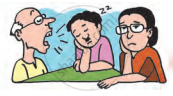 |
 |
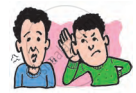 |
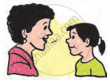 |
Rearrange the jumbled sentences and write them in the correct order.
- But Hamid bought a pair of tongs.
- Granny Ameena felt proud of her grandson.
- Hamid’s friends bought different toys of their choice.
- Hamid proudly compared his tongs with a brave tiger.
- Hamid had less money than his friends.
- Granny Ameena was worried as he had to go to the Eidgah alone.
Teach me to appreciate ______.
- nature
- destruction
- small creatures
Match the following.
| 1. | A man of ease | Emanuel |
| 2. | John’s trainer | Lalli and Lolly |
| 3. | Mathew’s secretary | John Mathew |
| 4. | John’s chef | Louise |
| 5. | Mathew’s friends | Basky |
Read the lines and answer the question given below.
Faster than fairies, faster than witches,
Bridges and houses, hedges and ditches;
- What is faster than fairies and witches?
- Why does the poet mention ‘bridges and houses, hedges and ditches’? Where are the
What does ‘charges along like troops in a battle’ mean?
The wild boar got up from its daybed because it was disturbed by another boar.
Who is the wisest of all? Why?
How was the rich man's house?
Choose what the elephant did.
What was the age of Robinson Crusoe when he left for sea?
Match the following.
| pale |  |
| tremble |  |
| fainted |  |
Kamali gave her savings to______.
What happens when the day is over?
