Advertisements
Advertisements
प्रश्न
Write an appreciation of the poem considering the following points:
- About the poem/poet/title.
- Theme
- Poetic devices, language, style
- Special features/ novelties/focusing elements
- Values, message
- Your opinion about the poem.
Advertisements
उत्तर
Appreciation of the poem 'The Sower'
About the poem/poet/title: 'The Sower' is a poem about the hard work and persistence of a sower, who works tirelessly and relentlessly while the poet observes his actions and terms him as an august personality, who works not for himself, but for others. Originally written by Victor Hugo in French, this poem has been translated to English by the Bengali poet, Torulata Dutt, who was the first Indian poetess to write verses in English and French. The title of the poem represents the central character of the poem, that is, the sower.
Theme: The central idea of the poem revolves around the act of sowing seeds by the sower, while the poet observes him and begins to revere him for his noble actions.
Poetic devices, language, style: The poetic devices used in the poem are Alliteration, Antithesis, Consonance, Hyperbole, Inversion, Personification, Repetition, and Synecdoche. An example of Personification from the poem is 'Twilight hastens on to rule' where 'Twilight' has been given the animate quality of 'hastening (rushing in)'. The language used by the poet is slightly complex because it has been written in a way that it maintains the rhyme scheme of 'abab'. It has a steady rhythm and a consistent metre, meaning that there is consistency in the number of syllables used in a line. The poet follows the narrative style of writing, where he gives a first-person account of observing the sower working hard in the field.
Special features/novelties/focusing elements: The special features used in the poem are imagery and symbolism. The poem is full of descriptive imagery, as each line either describes the scene or the action of the sower or the poet. The dominance of the silhouette of the sower over the deep furrows is symbolic of the dominance of man over nature. The 'precious grain' is so-called because each grain holds importance for the sower. He shall sow these grains carefully and hope for a good harvest.
The novelties in this poem are the exact translations of lines from French by Toru Dutt. She chose to provide a true account of the observations, as written by Victor Hugo, instead of trying to refine the lines that sound inelegant when translated. Her retention of the optimistic tone of the poem makes the poem refreshing and appealing. The focussing elements in the poem are the dedication and commitment of the sower, his perseverance, and the poet's acknowledgment of the sower's actions as being selfless and noble.
Values, message: The values that one can learn from this poem are determination, perseverance, and selflessness. The message given by the poet, through this poem, is that one should keep working with a positive attitude in life because one shall eventually reap the benefits of one's hard work.
Your opinion about the poem: The sower's commitment towards his work and the poet's admiration of the sower, give the poem a positive and encouraging tone, thus making it a fine read.
APPEARS IN
संबंधित प्रश्न
Here is a topic for you to
1. think about;
2. give your opinion on.
Find out what other people think about it. Ask your friends/seniors/parents to give you their opinion.
‘Career Building Is the Only Goal of Education.’
Or
‘Getting a Good Job Is More Important than Being a Good Human Being.’
You can use the following phrases
(i) while giving your opinion:
• I think that...
• In my opinion...
• It seems to me that…
• I am of the view that...
• As far as I know...
• If you ask me...
(ii) saying what other people think:
• According to some...
• Quite a few think...
• Some others favour...
• Thirty per cent of the people disagree...
• Fifty per cent of them strongly feel...
(iii) asking for others’ opinions:
• What do you think about...
• What do you think of...
• What is your opinion about...
• Do you agree...
• Does this make you believe...
What point is the author trying to make?
What are the poetic devices (figurative language) in the poem? How do they contribute to the meaning/how do they effect the poem?
What are these bangles for? Why has the poet repeated the word happy in the last line here?
But a BIRD that stalks down his narrow cage
Can seldom see through his bars of rage
His wings are clipped and his feet are tied
So he opens his throat to sing.
Read the above lines and answer the question that follow.
Why does the caged bird sing?
The free bird thinks of another breeze
And the trade winds soft through
The sighing trees
And the fat worms waiting on a dawn-bright
Lawn and he names the sky his own.
Read the above lines and answer the question that follow.
What is meant by “free bird thinks of another breeze”?
But a caged BIRD stands on the grave of dreams
His shadow shouts on a nightmare scream
His wings are clipped and his feet are tied
So he opens his throat to sing.
Read the above lines and answer the question that follow.
Explain with reference to the context.
The air broke into a mist with bells,
The old walls rocked with the crowd and cries.
Had I said, "Good folk, mere noise repels....
But give me your sun from yonder skies!"
They had answered "And afterward, what else?"
Read the above lines and answer the question that follow.
What did the patriot want form the “Good folks”?
What does the reader learn about the characters of the narrator and the old man, in Ernest Hemingway “Old Man and the Bridge?
I have appointment________the dentist.
Write a composition (350 – 400 words) on the following:
Describe in detail the view from your bedroom window. Does your room overlook a park? A busy street? What are the sights, sounds, and smells that you would typically see, hear, and experience at different times of the day? What do you most enjoy about the view? Early in the morning, in the evening, or late at night?
The following are the meaning listed in the dictionary against the phrase `take on’. In which meaning is it used in the third paragraph of the account:
|
Take on sth: |
to begin to have a particular quality or appearance; to assume sth |
|
take sb on: |
to employ sb; to engage sb |
|
Take sb/sth on: |
to decide to do sth; to allow sth/sb to enter e.g. a bus, plane or ship; to take sth/sb on board |
What does the phrase “strange to tell” mean?
Below is a topic for essay writing. Follow the steps listed above to write on this topic.
Himalayan Quake 2005
Notice these expressions in the text. Infer their meaning from the context.
-
Remove
-
slackers
-
muck
-
kept in
-
got carried away
-
cut
-
sadist
-
shrivelled up
‘A bird in hand is worth two in the bush’.
- Explain the above statement in the literal sense.
- Explain it in the context in which it is mentioned in the story.
- Is there a corresponding proverb in your own language?
Give reasons for the following.
Satyajit’s recollection of the forgerer when he was on the train.
How do these lines capture the essence of the story:
‘Glory was all overlaid with dark shame. Glory was dead.’
‘… let him be wrapped a while in the lingering twilight splendour of departed glory’.
Find out the information about the qualification and eligibility required in the profession related to wildlife such as:
Geologist
Take help from the sources available on the internet and make a list of proverbs and quotations about ‘road’.
What was the quarrel about between the brother and his sister? How did they become friends again?
Write a paragraph about beauty. Use your own ideas along with the ideas in the poem. (You may discuss your ideas with your partner.)
Match the following.
| Sr. No | A | B |
|
| 1. | Constitution | a. | It is the freedom to go where you want, do what you want, etc. |
| 2. | Liberty | b. | It is the state of being equal, especially in status, rights, or opportunities. |
| 3. | Equality | c. | It is a sense of common brotherhood. |
| 4. | Fraternity | d. | It is an aggregate of fundamental principles or established precedents that constitute the legal basis of a polity, organization, or other types of entity and commonly determine how that entity is to be governed. |
Write your views/opinions in brief on the following topic.
Liberty, equality, and fraternity lead to an ideal nation.
Read the following lines. Imagine it is the beginning of an instance you have experienced. Complete the incident using your imagination. Give it a positive ending.
I had often noticed that in my neighbour’s family, the son was greatly pampered, but the daughter was treated unfairly. I could not bear this. So one day I decided to ............................
Continue the write-up, with your own ideas, in about 12 - 15 lines.
Use the following points and write an appreciation of the poem:
- About the poem, poet, and title
- Theme
- Poetic style, language, poetic devices used in the poem
- Special features
- Message/values/morals in the poem
- Your opinion about the poem
Complete the tabular columns to specify Dos and Don’ts associated with the 'Expansion of Ideas'.
| Expansion of Ideas | |
| Dos | Don’ts |
| (i) Begin impressively | (i) Do not go off-track |
| (ii) | (ii) |
| (iii) | (iii) |
| (iv) | (iv) |
Prepare a poster on the need for the conservation of the Great Indian Bustard.
Write the character sketch of Dr. Stockmann.
Describe the climax scene in your own words. Write your comments on it.
Write the rhyme scheme of the poem (Invictus).
Write a letter from Abdul to the Emperor, requesting the Emperor to give Abdul a suitable job.
Which is your favourite ‘Nature’ poem from your mother tongue? Write the poem and try to translate it into English. Your translation can be in the form of a poem or a paraphrase.
Write 3 to 5 sentences about the following character.
Cyril
Write a character sketch of Papa Panov in your own words.
Write in your own words:-
What problems do customers face when they have to make a cash deposit at a bank?
Find any other story of three brothers or three sisters and rewrite it in your own words.
The fly gives into flattery and becomes the spider’s prey. If you are asked to give a happy ending to the poem, how will you save the fly? Write in your own words.
Nalan’s grandfather showed him an old treasure trunk. A road map was stuck on the trunk. It showed the spot where a key was hidden. Look at the road map and write five directions to reach the spot where the key is hidden. Discuss with your partner and compare your directions with those of your classmates.
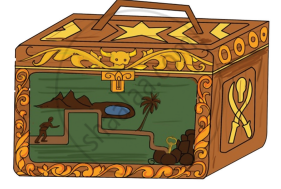
- ____________
- ____________
- ____________
- ____________
- ____________
Venba was walking along the beach. When she saw a beautiful green perfume bottle that had been washed up on the shore she bent down and picked it up. There was something inside the bottle and it was calling her. When she opened the bottle….?!!!
Imagine you are Venba and act the situations in the class. Then conclude this mysterious story in your own words. Write at least five or six sentences with the help of the words given in the box.
| Tiny | Sing | Talk | Bird | Free | Fly | Gift | Thank |
Local Historians
- Ask students to collect stories about their town from older people.
- Ask them to find out how the streets were named.
- Are there any interesting people or legends to which the street names refer?
- Are there any local places in town about which people tell stories?
- Any haunted houses?
- Let students find out when the town was founded and by whom.
- Visit a local historical society to see old photographs or artifacts.
Let students create an original historical fiction:
Describe the town from the point of view of a fictitious citizen who might have lived in the town long ago. Include local issues of the time in the story. Write the story of the town from the fictionalized point of view of a resident who actually lived.
“I cannot come.” Mala said that ______
Read scene I. Discuss with your partner what Mrs Reed might write about Jane in her letter to the owner of a school. Now complete her letter to Mr. Brocklehurst.
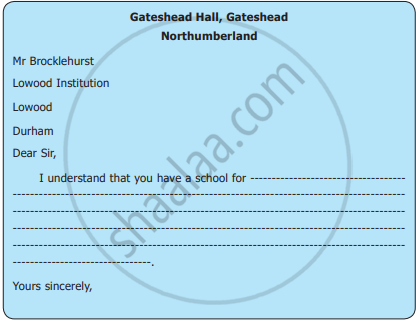
Complete the paragraph with suitable words from the box.
| around, across, with, along, to, after, next to, into, from. |
One day, as I was walking ______ the bank of the river, I saw my friend running ______ the field. He was calling my name and waving ______ me. I stopped and waited. ______ sometime he reached where I was standing. He said, “I went all ______ the town looking for you. I have some exciting news to share ______ you. Do you remember the old house ______ the neem tree? Guess who is moving ______ that house? Janak Das, the great magician. Now we can learn lots of magic tricks ______ him.”
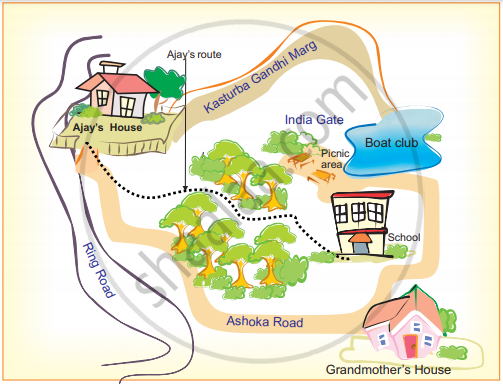
Use the above map to answer the questions.
- What does the dotted line on the map show?
- What road would Ajay take to get to the boat club?
- What building is next to the picnic area?
- What road passes by Ajay’s house?
- What other way could Ajay use to get from his house to his grandmother’s house?
Now write:
Use verbs like go, turn, cross
Use prepositions like: across, between, in front of, beside, near, behind, and write how you get home from school.
Who was the tall man?
How did Woman 5 move ahead in the waiting list of patients?
Now write a short story to explain these proverb.
Despair gives courage to a Coward
Why is there a double negative in the title: The Never – Never Nest? Elucidate with reasons from the play.
What does the title of the story convey?
Attempt a description of the following process, in about 100 word each, either using the imperative or the passive.
Sending a letter by courier service
Write a composition in approximately 350 – 400 words on the following subjects:
(You are reminded that you will be rewarded for orderly and coherent presentation of material, use of appropriate style and general accuracy of spelling, punctuation, and grammar.)
You have recently shifted to a new city. Describe the area where you live, your next-door neighbours, the difficulties you faced while shifting and why you like/dislike the place.
Write a dialogue between a student and teacher on 'Importance of Yoga'.
As a member of the Student Council of your school, you wish to set up a Food Club to promote healthy eating habits among students. Write a proposal in not more than 150 words, outlining the steps that you will take to make this club a success.
What might success mean to the following people? Think about it and write.
A sportsman
What makes you angry?
Do you like slow-moving serials?
Write an original short story that begins with the following words:
She was still on the phone giving out instructions when...
Based on the short story, The Story of an Hour, discuss what can be inferred about the significance of the open window in Mrs. Mallard’s room. Write your answer in a short paragraph of 100-150 words.
