Topics
Natural Resources – Air, Water and Land
The Living World
Diversity in Living Things and Their Classification
Disaster Management
Substances in the Surroundings –Their States and Properties
Substances in Daily Use
Nutrition and Diet
- Nutrients and Nutrition
- Component of Food
- Carbohydrates
- Diseases Due to Deficiency of Carbohydrates
- Fats (Lipids)
- Diseases Due to Deficiency of Fats
- Proteins
- Diseases Due to Deficiency of Proteins
- Vitamin and Minerals
- Diseases Due to Deficiency of Vitamin
- Diseases Due to Deficiency of Minerals
- Fibre
- Diseases Due to Deficiency of Fibre
- Water
- Diseases Due to Deficiency of Water
- A Balanced Diet
- Nourishment and Malnutrition
- Food Adulteration
Our Skeletal System and the Skin
Motion and Types of Motion
Force and Types of Force
Work and Energy
- Force, displacement and work
- Energy
- The relationship between work and energy
- Forms of Energy > Solar Energy
- Forms of Energy > Mechanical Energy
- Forms of Energy > Geo Thermal Energy
- Forms of Energy > Light Energy
- Forms of Energy > Sound Energy
- Forms of Energy > Chemical Energy
- Conversion of Energies
- Energy Resources
- Energy Resources > Conventional energy resources or non-renewable energy resources
- Energy Resources > Non-conventional energy resources or renewable energy resources
- Energy saving and green energy
Simple Machines
Sound
Light and the Formation of Shadows
Fun with Magnets
The Universe
Maharashtra State Board: Class 6
Neptune:
Neptune is the eighth planet in our solar system. It is the farthest planet from the Sun.
- A season on Neptune lasts for about 41 years because it takes Neptune a long time to orbit the Sun. One full orbit (a Neptune year) takes about 165 Earth years.
- Neptune is very cold because it is so far away from the Sun. Its average temperature is -214°C.
- It has extremely fast winds, some of the fastest in the solar system. These winds can blow at speeds of up to 2,100 kilometres per hour!
- Neptune looks blue because of the gases in its atmosphere, mainly methane.
- It has 14 known moons, with the largest one being Triton.
- Neptune is a gas giant, which means it is mostly made up of gases like hydrogen, helium, and methane, and it doesn’t have a solid surface to stand on.
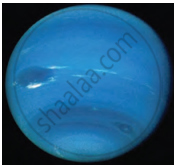
Neptune
