Simple Machines
Topics
Force
- Introduction to Effects of Force
- Translational and Rotational Motions
- Turning Forces On Rigid Bodies
- Moment (Turning Effect) of a Force or Torque
- Principle of Moments
- Couple
- Examples of Couple in Everyday Life
- Equilibrium of Bodies
- Centre of Gravity
- Conditions of Equilibrium
- Equilibrium and Stability
- States of Equilibrium
- Centre of Gravity and Stability
- Conditions for Stable Equilibrium
- Practical Examples of Stability and Centre of Gravity
- Uniform Circular Motion (UCM)
- Centripetal Force
- Centrifugal Forces
Force, Work, Power and Energy
Work, Energy and Power
- Concept of Work
- Measurement of Work
- Expression for Work (W = F S cosθ)
- Examples of No Work Being Done
- Work Done Against Gravity
- Concept of Energy
- Concept of Power
- Mechanical Energy > Kinetic Energy (K)
- Expression for Kinetic Energy
- Rotational, Translational and Vibrational Kinetic Energy
- Mechanical Energy > Potential Energy (U)
- Expression for Potential Energy
- Interconnection of Kinetic and Potential Energies
- Principle of Conservation of Energy
- Work Energy Theorem
- Conservation of Energy In Case of a Freely Falling Body
- Forms of Energy > Solar Energy
- Forms of Energy > Mechanical Energy
- Forms of Energy > Heat Energy
- Forms of Energy > Light Energy
- Forms of Energy > Sound Energy
- Forms of Energy > Magnetic Energy
- Forms of Energy > Electrical Energy
- Forms of Energy > Chemical Energy
- Forms of Energy > Nuclear Energy
- Forms of Energy > Hydro Energy
- Forms of Energy > Geo Thermal Energy
- Forms of Energy > Wind Energy
- Dissipation of Energy
- Examples of Inte-Conversion of Energy
- Conversion of Energies
- Application of the Principle of Conservation of Energy
Light
Sound
Machines
- Concept of Machines
- Simple Machines
- Functions of a Machine
- Technical Terms Related to a Machine
- Principle of a Machine
- Relation between Efficiency, Mechanical Advantage, and Velocity Ratio
- Levers
- Expression for the Mechanical Advantage of a Lever
- Lever of The First Order
- Lever of the Second Order
- Lever of the Third Order
- Examples of Each Class of Levers as Found in the Human Body
- Numerical Problems on Levers
- Pulley
- Single Fixed Pulley
- A Single Movable Pulley
- Combination of Pulleys
- Sheaf Pulley System or Block and Tackle System of Pulleys
- Dependence of MA, VR and n on the Weight of Pulleys
- Numerical Problems on Pulley
Electricity and Magnetism
Refraction of Light at Plane Surfaces
- Light: Reflection and Refraction
- Refraction of Light
- Causes of Refraction
- Velocity of Light and Refractive Index
- Laws of Refraction
- Factors Affecting Refractive Index of a Medium
- Verification of Laws of Refraction
- Refraction and Reflection in a Glass Slab
- Principle of Reversibility of Light
- Refractive Index of a Glass Slab
- Examples Showing Effects of Refraction
- Critical Angle
- Total Internal Reflection
- Factors Affecting The Critical Angle
- Essential Connditions for Total Internal Reflection
- Relation Between Refractive Index and Critical Angle
- Consequences of Total Internal Reflection
- Mutliple Images in a Thick Mirror
- Refraction of Light Through a Glass Prism
- Factors Affecting the Angle of Deviation
- Total Internal Reflection in a Prism
- Total Internal Reflection vs. Plane Mirror Reflection
- Lateral Displacement
- Real and Apparent Depth
- Simple Effects of Refraction
- Application of Total Internal Reflection
- Prism
- Apparent Bending of a Stick Under Water
- Consequences of Refraction of Light
Heat
Refraction Through a Lens
- Concept of Lenses
- Lens - Slab and Prism
- Some Definitions Related to Lens
- Image Formation by Lenses
- Power of a Lens
- Magnifying Glass Or Simple Microscope
- Application of Lenses
- First Focal Point and First Focal Length
- Second Focal point and Second Focal Length
- Rules for Geometric Construction of Images for Lenses
- Geometric Construction of Images in Convex Lens
- Geometric Construction of Images in Concave Lens
- Convex Lens vs Concave Lens
- Sign Convention for Lenses
- Lens Formula and Magnification
- Determination of the Focal Length of a Convex Lens by a Plane Mirror Method
- Refraction of Light Through an Equi-Convex Lens and an Equi-Concave Lens
Spectrum
- Composition of White Light
- Early Experiments of Newton
- Experiment to Show that Prism Does Not Colour White Light
- Newton's Experiments on Recombination of White Light
- Light as Electromagnetic Waves
- Deviation Produced by a Triangular Prism
- Dispersion of Light Through a Prism
- Electromagnetic Spectrum
- Invisible Spectrum
- Infrared Spectrum
- Ultraviolet Spectrum
- Properties and Uses of Different Radiations of the Electromagnetic Spectrum
- Distinction between Ultraviolet, Visible, and Infrared Radiations
- Scattering of Light-Rayleigh's Law
- Applications of Scattering of Light
Modern Physics
Sound
- Sound Waves
- Characteristics of Wave Motion Through a Medium
- Mechanical Waves
- Description of a Wave
- Propagation of Sound Waves
- Speed of Sound Travel in Other Materials
- Range of Heating in Humans
- Speed of Sound (Velocity of Sound)
- Reflection of Sound Waves
- Whispering Gallery
- Echo
- Condition for Formation of an Echo
- Determination of Speed of Sound by the Method of Echo
- Use of Echoes
- Reverberation
- Numerical Problems on Echoes
- Natural Vibrations
- Damped Vibrations
- Forced Vibrations
- Natue of Vibrations
- Resonance (a special case of forced vibrations)
- Resonance in Air Column
- Music and Noise
- Musical Instruments
- Characteristics of Sound
- Pitch and frequency
- Loudness and Intensity
- Quality and Wave Form
- Vibrations of Air in Pipes
- Vibrations of Springs
- Noise Pollution
Current Electricity
- Concept of Electric Energy
- Measurement of Electrical Energy
- Electric Energy Produces Heat Energy
- Electric Energy or Electric Work
- Electrical Power
- Commercial Unit of Electrical Energy
- Power Rating of Common Electrical Appliances
- Household Consumption of Electric Energy
- Heating Effect of Electric Current
- Numerical Problems on Electric Energy
- Electric Potential Due to a Point Charge
- Electric Potential and Potential Difference
- Electric Current
- Electrical Circuits
- Symbols for Electrical Components
- Common Types of Circuits
- Types of Circuits: Series Circuit
- Types of Circuits: Parallel Circuit
- Ohm's Law
- Electric Resistance
- Limitations of Ohm’s Law
- Factors Affecting Resistance
- Equivalent Resistance
- Resistors in Series
- Resistors in Parallel
- Electromotive Force of a Cell
- Terminal Voltage of a Cell
- Internal Resistance of a Cell
- Expression for the Internal Resistance of a Cell
- Conductors, Insulators, Semiconductors and Superconductors
- Electric Charges
- Experimental Verification of Ohm’s Law and Ohmic Resistors
- Ohmic and Non-ohmic Resistors
- Specific Resistance or Electrical Resistivity
- Choice of Material of a Wire
- Combination of Resistors
Household Circuits
- Concept of Electric Energy
- Electric Power and Energy
- Commercial Unit of Electrical Energy
- Rating of Electrical Appliances
- Transmission of Power from the Power Generating Station to the Consumer
- Power Distribution to a House
- House Wiring (Ring System)
- Electrical Installations and Safety Precautions
- Fuse
- Reason for connecting the fuse in the live wire
- Current Rating of a Fuse
- Switches
- Reason for Connecting the Switches in the Live Wire
- Circuits with Dual Control Switches (Staircase Wire)
- Earthing
- Three-pin Plug and Socket
- Colour Coding of Wires in a Cable
- High Tension Wires
- Precautions to Be Taken While Using Electricity
Electro-Magnetism
- Magnetic Effect of Current (or Electromagnetism)
- Oersted's Experiment
- Applications of Biot-Savart's Law > Magnetic Field Due to a Straight Current-carrying Conductor of Finite Size
- Rule to Find the Direction of Magnetic Field
- Applications of Biot-Savart's Law > Magnetic Field at the Axis of a Circular Current-carrying Loop
- Applications of Ampere’s Circuital Law > Magnetic Field of a Long Straight Solenoid
- Electromagnet
- Permanent Magnet
- Comparison of an Electro Magnet with a Permanent Magnet
- Advantages of an Electromagnet over a Permanent Magnet
- Uses of Electromagnet
- Electric Bell Circuit
- Force on a Current-Carrying Conductor Placed in a Uniform Magnetic Field
- Fleming’s Left Hand Rule
- Factors Determining Force Acting on a Conductor Carrying Current
- Commutator - A Device for Changing the Director of Current
- Simple D.C. Motor
- Introduction to Electromagnetic Induction
- Fleming’s Right Hand Rule
- Lenz's Law
- Alternating current (AC) and Direct Current (DC)
- Electric Generator
- Factors Determining Electromagnetic Induction
- Energy Transformation
- Faraday's Laws of Electromagnetic Induction
- Direction of Induced Current
- Mutual Induction
- Self – Induction
- Eddy Currents or Foucault Currents
- Transformers
- Principle of Transformers
- Power Transmission
- Step-Up Transformer
- Step-Down Transformer
- Alternating-Current Generator
- Advantage of A.C. Over D.C.
- Frequency of an a.c. in Household Supplies
- Comparison Between A.C. Generator and D.C. Motor
Calorimetry
- Heat
- The Temperature and a Thermometer
- Temperature Scale, Fixed Points
- Measurement of Heat Flow
- Heat vs Temperature
- Forms of Energy > Heat Energy
- Units of Heat Energy
- Thermal or Heat Capacity
- Factors Affecting the Quantity of Heat Absorbed to Increase the Temperature of a Body
- Specific Heat Capacity
- Heat Capacity vs Specific Heat Capacity
- Specific Heat Capacity of Some Common Substances
- Calorimetry
- Principle of Method of Mixtures or Principle of Calorimetry
- Experimental Determination of Specific Heat Capacity of a Solid
- Natural Phenomena and Consequences of High Specific Heat Capacity of Water
- Examples of High and Low Heat Capacity
- Change of State
- Determination of the Melting Point of a Solid
- Melting and Freezing
- Heating Curve for Water
- Change in Volume on Melting
- Effect of Pressure on the Melting Point
- Effect of Impurities on the Melting Point
- Vaporisation or Boiling
- Change in Volume on Boiling
- Effect of Pressure on the Boiling Point
- Effect of Impurities on the Boiling Point
- Latent Heat and Specific Latent Heat
- Specific Latent Heat of Fusion of Ice
- Explanation of Latent Heat of Melting based on Kinetic Model
- Natural Consequences of High Specific Latent Heat of Fusion of Ice
- General Application of High Specific Latent Heat of Fusion of Ice
Radioactivity
- Nuclear Reactions
- Structure of the Atom and Nucleus
- Atomic Models
- Periodic Table and Its Relation to Atomic Number
- Isotopes
- Isobars
- Isotones
- Radioactivity
- Rutherford's Experimental Study of the Nature of Becquerel Rays
- Properties of Alpha Particles
- Properties of Beta Particles
- Properties of Gamma Radiations
- Distinction between the Properties of α, β, and γ Radiations
- Changes Within the Nucleus in Alpha, Beta and Gamma Emission
- Uses of Radioactive Isotopes
- Sources of Harmful Radiations
- Explanation of Natural Radioactivity
- Radioactivity and Changes in Nucleus
- Radioactive Decay or Disintegration
- Laws of Radioactive Emission
- Forms of Energy > Nuclear Energy
- Nuclear Fission
- Nuclear Fusion
- Radioactive Isotopes
- Difference between Nuclear Fusion and Nuclear Fission
- Nuclear Change vs Chemical Change
- Background Radiations
- Nuclear Waste and Its Disposal
- Harmful Effects of Radiation
- Safety Precautions While Using Nuclear Energy
Advertisements
Maharashtra State Board: Class 6
Simple machines:
Simple machines are tools with only one or two parts and a very simple structure. They help make work easier by using less effort. Simple machines can be handled easily, and there are fewer chances of them breaking down or getting damaged.
Types of Simple Machines:
- Lever: A bar that pivots on a point, helping lift or move heavy objects with little effort. For example, a seesaw.
- Pulley: A wheel with a rope that helps lift objects by pulling the rope. For example, a flagpole.
- Inclined Plane: A sloped surface that makes it easier to push objects up. For example, a ramp.
- Screw: A tool with a spiral shape that helps hold objects together. For example, screws used in furniture.
- Wedge: A pointed tool that splits or cuts things apart. For example: an axe.
- Wheel and axle: Helps move objects by rolling. For example, a cart or a bicycle.

Related QuestionsVIEW ALL [96]
Identify and mention the types of simple machines.
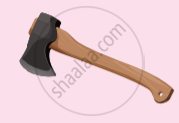 |
 |
 |
| ______ | ______ | _______ |
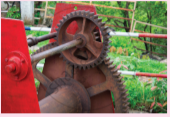 |
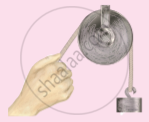 |
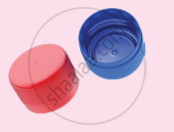 |
| ______ | ______ | ______ |
