Topics
Biology - An Introduction
- Growth of Biology
- Branches of Biology
- Applied Biology
- Study of Biology Helps Us in Many Ways
- Study of Biology Helps Us in Many Ways
Basic Biology
Cell : the Unit of Life
- Cell: Structural and Functional Unit of Life
- The Invention of the Microscope and the Discovery of Cell
- Cell Theory
- Organisms Show Variety in Cell Number, Shape and Size
- Prokaryotic and Eukaryotic Cell
- Cell Organelles
- Structure of the Cell > Plasma Membrane / Cell Membrane
- Structure of the Cell > Cell Wall: “Supporter and Protector”
- Structure of the Cell > Cytoplasm: “Area of Movement”
- Endoplasmic Reticulum (ER)
- Ribosomes - "The sites of protein synthesis"
- Mitochondria - “Power House of the Cell”
- Golgi Apparatus - "The delivery system of the cell"
- Lysosome - “Suicidal Bag”
- Centrosome and Centrioles
- Plastids
- Non-living Substances Or Cell Inclusion
- Structure of the Cell > Nucleus: “Brain” of the Cell
- Plant Cell Vs Animal Cell
- Protoplasm
- Every Activity of a Living Organism is the Outcome of Cellular Activity
Tissues : Plant and Animal Tissues
- Tissues - “The Teams of Workers”
- Plant Tissues
- Meristems or Meristematic Tissues
- Permanent Tissue
- Protective Tissue
- Simple Permanent Tissues (Supporting Tissue)
- Complex Permanent Tissues
- Complex Permanent Tissue: Xylem Structure and Function (Conducting Tissue)
- Complex Permanent Tissue: Phloem Structure and Function (Conducting Tissue)
- Animal Tissues
- Epithelial Tissue
- Connective Tissue
- Muscular Tissue
- Nervous Tissue
Flowering Plants
The Flower
Pollination and Fertilization
- Self-pollination
- Cross-pollination
- Artificial Pollination
- Fertilization in Plants
Plant Physiology
Seeds - Structure and Germination
- Structure of a Dicotyledonous Seed
- Structure of Monocotyledonous Seed
- Some Experiments on Germination
- Germination in Some Common Seeds
- The Seedling
Respiration in Plants
- Glycolysis
- Electron Transport System (Ets) and Oxidative Phosphorylation
- Tricarboxylic Acid Cycle (Citric Acid Cycle or Kreb’s Cycle)
- Phases of Respiration: Pyruvate Oxidation (Link Reaction)
- Fermentation
- Production of ATP
- Respiration Vs. Burning (Combustion)
- Respiration in Plant
- Experiments on Respiration in Plants
- Respiration and Photosynthesis
- Respiration in Animals
Diversity in Living Organisms
Five Kingdom Classification
- Introduction of Biological Classification
- Concept of Species
- Two Kingdom Classification
- Three Kingdom Classification
- Four Kingdom Classification
- Five Kingdom Classification
- Kingdom Monera
- Kingdom Protista
- Kingdom Fungi
- Kingdom Plantae
- Kingdom Animalia
- Differences Between Plantae (Plants) and Animalia (Animals)
- Sub-division Algae
- Cryptogams > Division II- Bryophytes
- Cryptogams > Division III- Pteridophytes
- Phanerogams > Division I-Gymnosperms
- Phanerogams > Division II- Angiosperms
- Phylum: Porifera
- Phylum: Cnidaria/Coelenterata
- Phylum: Platyhelminthes
- Invertebrate: Phylum Nematoda
- Phylum: Annelida
- Phylum: Arthropoda
- Phylum: Mollusca
- Phylum: Echinodermata
- Subphylum: Vertebrata/Craniata
- Invertebrata and Vertebrata
- Nomenclature
- Taxonomy and Systematics
Economic Importance of Bacteria and Fungi
Human Anatomy and Physiology
Nutrition
- Nutrients and Nutrition
- Food and Its Types
- Component of Food
- Carbohydrates
- Fats (Lipids)
- Proteins
- Component of Food: Minerals
- Vitamin and Minerals
- Water
- A Balanced Diet
- Deficiency Diseases
- Diseases Due to Deficiency of Carbohydrates
- Diseases Due to Deficiency of Fats
- Diseases Due to Deficiency of Proteins
- Diseases Due to Deficiency of Vitamin
- Diseases Due to Deficiency of Minerals
Digestive System
- Need for Digestive System
- Human Digestive System
- The Teeth and Its Structure
- The Salivary Glands
- Swallowing and Peristalsis
- The Food Pipe/Oesophagus
- The Stomach
- The Small Intestine
- Absorption of Food
- The Large Intestine
- Assimilation of Food
- Human Digestive System
- Experiments on Digestion
- Test for Carbohydrates/Starch
- Test for Protein
- Test for Fats
Skeleton - Movement and Locomotion
Skin - "The Jack of All Trades"
- The Skin
- Structure of the Skin
- The Skin Proper
- Derivation of the Skin
- Skin and Heat Regulation of Body
The Respiratory System
- Production of ATP
- Parts of Respiration
- Capacities of the Lungs
- Inspired Air Vs. Expired Air
- Hypoxia and Asphyxiation
- Experiments on Breathing and Respiration
Health and Hygiene
Hygiene - Personal and Social
- Hygiene
- Types of Hygiene: Personal Hygiene
- Types of Hygiene: Public Hygiene (Community)
- Vector Borne Diseases
- Control of Disease Carriers (Vectors)
- Contamination of Water and Water Borne Diseases
- Waterborne Diseases Caused by Bacteria
- Waterborne Diseases Caused by Virus
- Protozoan Diseases
Health - Causes of Diseases
Aids to Health
- Types of Hygiene: Personal Hygiene
- Types of Hygiene: Public Hygiene (Community)
- Immunity
- Defence System in Our Body: Local Defence System
- Antiseptics and Disinfectants
- Antibiotics
- Sulphonamide Group of Medicines
Health Organisation
- Common Health Problems in India
- Categories of Health Organisation
- International Bodies: Red Cross
- International Bodies: WHO (World Health Organisation)
Waste Generation and Management
- Waste and Its Categories
- Methods of Safe Disposal of Waste
Sources of Waste
Safe Disposal of Wastes
Maharashtra State Board: Class 6
Structure of the Skin
| Skin Layer | Location | Function | Details |
| Epidermis | The topmost layer is visible to the eye. | It protects the body from the external environment, produces new skin cells that rise to the surface and flake off, and makes skin waterproof. | It contains cells that produce melanin, which gives the skin its colour. |
| Dermis | Right below the epidermis. | Thicker than the epidermis, it contains blood vessels, nerves, hair roots, and oil glands, responsible for sweat production, sensation (pain, touch), and nutrient supply to the epidermis. | It provides flexibility and strength to the skin and regulates temperature through sweat glands and blood vessels. |
| Subcutis (Hypodermis) | The bottom layer of the skin. | It contains fat and connective tissue that cushion and insulate the body, protecting it from cold and injuries. | It stores energy and helps anchor the skin to underlying bones and muscles. |
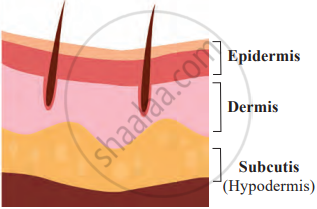
Structure of the skin
Melanin:
A pigment called melanin is present in the cells of the epidermis and synthesised in certain glands in the skin. The percentage of melanin decides the fairness or darkness of the skin, which also depends on the climate. Melanin protects our skin and the inner parts from ultraviolet sunrays.
