Advertisements
Chapters
1: Factors of Production
Unit II - Theory of Demand and Supply
2: Elementary Theory of Demand
3: Elasticity of Demand
4: Theory of Supply
Unit III - Market
▶ 5: Meaning and Types of Markets
Unit IV - Banking in India
6: Meaning and Functions of Money
7: Commercial Banks
8: Central Bank
9: Introduction to Public Finance
10: Public Revenue
11: Public Expenditure
12: Public Debt
Unit V - Inflation
13: Inflation
Unit VI - Consumer Awareness
14: Consumer Awareness
![Goyal Brothers Prakashan solutions for इकॉनॉमिक्स [अंग्रेजी] कक्षा १० आईसीएसई chapter 5 - Meaning and Types of Markets - Shaalaa.com](/images/economics-english-class-10-icse_6:79542639410243508fde8e322c338fd1.jpg "Goyal Brothers Prakashan solutions for इकॉनॉमिक्स [अंग्रेजी] कक्षा १० आईसीएसई chapter 5 - Meaning and Types of Markets")
Advertisements
Solutions for Chapter 5: Meaning and Types of Markets
Below listed, you can find solutions for Chapter 5 of CISCE Goyal Brothers Prakashan for इकॉनॉमिक्स [अंग्रेजी] कक्षा १० आईसीएसई.
Goyal Brothers Prakashan solutions for इकॉनॉमिक्स [अंग्रेजी] कक्षा १० आईसीएसई 5 Meaning and Types of Markets Exercise [Pages 133 - 139]
MULTIPLE CHOICE QUESTIONS
Following is the feature of perfect competition:
Product differentiation
Homogeneous product
Barriers to entry
Less elastic
Following is not the feature of perfect competition:
Very large number of buyers and sellers
Homogeneous product
Free entry or exit of firms
Selling costs
'Homogeneous products' is a characteristic of ______.
Perfect competition only
Pure oligopoly only
Both Perfect competition only and Pure oligopoly only
None of the above
Differentiated products is a characteristic of ______.
Monopolistic competition only
Imperfect oligopoly only
Both monopolistic competition and imperfect oligopoly only
Monopoly
'A few big sellers' is a characteristic of ______.
Perfect competition
Monopolistic Competition
Oligopoly
All the above
Marginal revenue of a firm is constant throughout under:
Perfect Competition
Monopolistic Competition
Oligopoly
All the above
A seller cannot influence the market price under:
Perfect competition
Monopoly
Monopolistic competition
All the above
In monopolistic competition, there are ______.
Few firms selling differentiated products.
Large number of firms selling differentiated products.
Large number of firms selling homogeneous products.
Few firms selling a homogeneous products.
Identify the feature of monopoly market from the following:
A single seller
A single buyer
Homogeneous goods
Product differentiation
Indian Railways is an example of ______.
Monopolistic competition
Perfect competition
Monopoly
Oligopoly
Identify the market form for telecom industry in India.
Perfect competition
Monopolistic competition
Monopoly
Oligopoly
______ is relevant to perfect competition.
Perfectly inelastic demand
Perfectly elastic demand
Downward sloping demand curve
Highly elastic demand curve
Which of the following is an example of oligopoly in India?
Car industry
Textile industry
Shampoos
Restaurant industry
There is inverse relation between price and demand for the product of a firm under ______.
Monopoly only
Monopolistic competition only
Both under monopoly and monopolistic competition
Perfect competition only
A market where homogeneous products are sold with no control over price by an individual firm or a buyer is ______.
Oligopoly
Monopolistic competition
Perfect competition
Monopoly
The following diagram represents the demand curve of a firm under ______.

Perfect Competition
Monopolistic Competition
Monopoly
Oligopoly
In which market form, marginal revenue is equal to price?
Monopoly
Oligopoly
Perfect Competition
Monopolistic Competition
The following diagram represents the demand curve of a firm under ______.
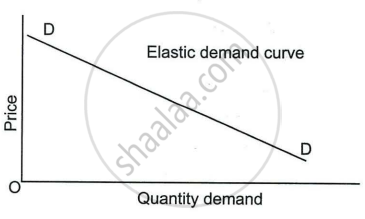
Perfect competition
Monopoly
Oligopoly
Monopolistic competition
There are a few large firms under ______.
Perfect competition
Monopoly
Oligopoly
Monopolistic competition
A ______ firm can sell the same product at different prices to different buyers.
Competitive
Oligopolistic
Monopoly
None of these
Under a monopoly market, a firm/seller has ______.
Partial control over price
Full control over price
No control over price
None of these
Homogeneous products are sold under ______.
Oligopoly market
Monopoly market
Perfect competition
Monopolistic competition
There are a large number of buyers and sellers under a ______ market.
Monopoly market
Perfect market
Oligopoly market
All of the above
Oligopoly is a market situation in which there are only a ______ sellers in the industry.
Few
Large
Futuristic
Maximum
______ is essential for a market to be called as perfect competition.
Large number of buyers and sellers
Restricted entry and exit
No substitutes
Differentiated goods
A differentiated product has ______.
Many perfect substitutes
No close substitutes
Close but not perfect substitute
No substitute of any kind
______ goods refer to those products which are identical in quality, shape, size, color, etc.
Heterogeneous
Homogeneous
Differentiated
Slightly differentiated
In which market form is the firm a price taker?
Money market
Monopoly
Perfect competition
Capital market
Monopolistic competition
None of these
Which of the following describes a monopoly firm?
Single seller
No barrier to entry
Many substitutes
Many sellers
Which of the following market types has a large number of firms that sell similar but slightly different products?
Perfect competition
Oligopoly
Monopolistic competition
Monopoly
Firms under ______ are free to enter or leave the industry any time.
Perfect competition
Pure oligopoly
Oligopoly
Monopoly
Which market structure has only one seller?
Oligopoly
Monopolistic competition
Monopoly
Perfect competition
The firm under perfect competition is a ______.
Price maker
Price taker
Price stabilizer
Price controller
In perfect competition the sellers are selling ______ products.
Identical
Different
Unique
Inexpensive
______ market has one seller and many buyers.
Perfect
Perfectly
Monopoly
Monopsony
With reference to Perfect competition form of market, choose the odd one out.
Restricted entry
Perfect knowledge
Homogeneous products
Perfect mobility
Maruti, Tata and Hyundai are examples of which form of market?
Perfect competition
Oligopoly
Monopoly
Duopoly
The State Electricity Board sells electricity at cheaper rates for domestic use than for commercial use. Given statement shows an act of ______.
Product differentiation
Price discrimination
Consumer exploitation
Price determination
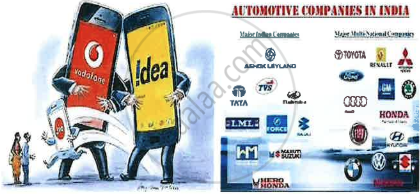
Identify the type of market structure represented by the visuals.
Monopoly
Perfect market
Government market
Oligopoly market
In perfect competition the sellers are selling ______ products.
Identical
Different
Unique
Inexpensive
On the basis of given characteristics in the following image Identify the market form?
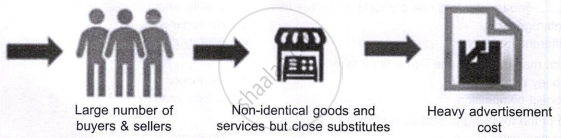
Perfect competition
Monoplistic competition
Monopoly
Oligopoly
Which market structure has the least number of sellers?
Oligopoly
Monopolistic competition
Monopsony
Perfect competition
Which of the following market structures has the maximum number of sellers?
Oligopoly
Monopolistic competition
Monopsony
Monopoly
Study the relationship in the first pair and complete second pair:
| I. | Monopolistic competition | Differentiated goods |
| II. | Monopoly | ______ |
No close substitutes
Perfect substitutes
No Cartel formation
Small number of sellers
ASSERTION-REASONING & STATEMENT BASED QUESTIONS Read the following statements Assertion (A) and Reason (R). Choose one of the correct alternatives given below:
Assertion (A): A monopoly firm is price taker.
Reason (R): In the monopoly market, there is only a single seller.
Both Assertion (A) and Reason (R) are true and Reason (R) is the correct explanation of Assertion (A).
Both Assertion (A) and Reason (R) are true and Reason (R) is not the correct explanation of Assertion (A).
Assertion (A) is true but Reason (R) is false.
Assertion (A) is false but Reason (R) is true.
Assertion (A): A competitive firm demand curve is downward sloping.
Reason (R): A individual firm under perfect competition has no control over price.
Both Assertion (A) and Reason (R) are true and Reason (R) is the correct explanation of Assertion (A).
Both Assertion (A) and Reason (R) are true and Reason (R) is not the correct explanation of Assertion (A).
Assertion (A) is true but Reason (R) is false.
Assertion (A) is false but Reason (R) is true.
Assertion (A): Under monopolistic competition the consumers have the preference of choosing one product over another.
Reason (R): The sellers can charge a marginally higher price since they may enjoy some market price.
Both Assertion (A) and Reason (R) are true and Reason (R) is the correct explanation of Assertion (A).
Both Assertion (A) and Reason (R) are true and Reason (R) is not the correct explanation of Assertion (A).
Assertion (A) is true but Reason (R) is false.
Assertion (A) is false but Reason (R) is true.
Assertion (A): Toothpaste is an example of monopolistic competition.
Reason (R): The different brands of toothpaste are similar but slightly differentiated in terms of taste and flavours.
Both Assertion (A) and Reason (R) are true and Reason (R) is the correct explanation of Assertion (A).
Both Assertion (A) and Reason (R) are true and Reason (R) is not the correct explanation of Assertion (A).
Assertion (A) is true but Reason (R) is false.
Assertion (A) is false but Reason (R) is true.
Read the following statements carefully and choose one of the correct alternatives given below:
Statement (1): Perfect competition is a hypothetical market situation.
Statement (2): Under perfect competition, the government decides the prices of the products and services.
Statement 1 is true and Statement 2 is false.
Statement 2 is true and Statement 1 is false.
Both the statements are true.
Both the statements are false.
Read the following statements-Assertion (A) and Reason (R). Choose one of the correct alternatives given below:
Assertion (A): The cellular industry is an example of monopolistic competition.
Reason (R): In the cellular industry, there are 3-5 dominant firms (Airtel, Vodafone, Jio etc.)
Both Assertion (A) and Reason (R) are true and Reason (R) is the correct explanation of Assertion (A).
Both Assertion (A) and Reason (R) are true and Reason (R) is not the correct explanation of Assertion (A).
Assertion (A) is true but Reason (R) is false.
Assertion (A) is false but Reason (R) is true.
Read the following statements carefully and choose one of the correct alternatives given below:
Statement (1): In monopoly, there is only one seller and many buyers.
Statement (2): Under perfect competition, firms are free to exit and enter the market at any point of time.
Statement 1 is true and Statement 2 is false.
Statement 2 is true and Statement 1 is false.
Both the statements are true.
Both the statements are false.
Statement (1): Google is an example of monopoly market.
Statement (2): Cell phone is an example of monopoly market.
Statement 1 is true and Statement 2 is false.
Statement 2 is true and Statement 1 is false.
Both the statements are true.
Both the statements are false.
Short Answer Type Questions
Define the term market.
What is meant by Perfect competition?
What is meant by pure competition?
Mention two features of monopoly.
Producers in a monopoly are price makers. Briefly explain.
There are no substitute goods in a monopoly market. Give a reason to support your answer.
Mention one feature of a monopoly market.
Explain any four features of perfect competition.
Define monopolistic competition.
Explain the following term/concept in detail.
Oligopoly
Give an example of oligopoly.
Define the term oligopoly market.
Give two examples of a monopolistically competitive market.
Give two reasons why monopolistic competition is the most realistic form of a market.
Explain any four features of perfect competition.
Mention two features of monopoly.
Discuss any two features of a monopolistically competitive market.
Explain the following concept.
Product Differentiation
To which market is product differentiation relevant?
What are selling costs?
Why is there no need for selling cost under perfect competition?
In which form of market is the seller a price taker? Justify your answer.
Identify the market form of the following:
The Government of India is the sole buyer of fighter aircrafts.
Identify the market form of the following:
Goods sold are homogeneous.
Identify the market form of the following:
Motor car market in India.
Identify the market form of the following:
Market for toilet soaps in India.
Identify the market form for the following:
Railways in India.
Identify the market form for the following:
Textile industry in India.
Identify the market form for the following:
Perfectly elastic demand.
Identify the market form for the following:
Telecom industry in India.
State the market form of the following commodity.
Railways
State the market form of the following commodity.
Automobiles
State the market form of the following commodity.
Shampoos
State the market form of the following commodity.
Fighter Aircrafts
Identify the market form for the item given below:
A single seller
Identify the market form for the item given below:
Homogeneous goods
Identify the market form for the item given below:
Product differentiation
Identify the market form for the item given below:
A single buyer
Why do producers incur high selling costs in an imperfect market?
State the similarities between monopolistic competition and monopoly.
In which form of market do producers and consumers have perfect knowledge about the market conditions?
State two dissimilarities between Monopolistic competition and Perfect competition.
What is the implication of ‘restricted entry of new firms’ in a monopoly market?
Long Answer Type Questions
What is meant by 'market' in economics?
Discuss the characteristics of a market.
How can we define the term 'market' in economics?
Define perfect competition.
Explain any four features of perfect competition.
“Under which type of a market are producers price takers?” Explain its three characteristics.
What is meant by Perfect competition?
Explain any four features of perfect competition.
Define monopoly.
Mention two features of monopoly.
Define perfect competition.
Discuss three differences between a perfectly competitive market and a monopoly.
What is meant by a monopoly market?
Discuss any four differences between monopoly and monopolistic competition.
What is monopolistic competition?
Discuss any two features of a monopolistically competitive market.
Define monopoly.
Discuss any four differences between monopoly and monopolistic competition.
Explain any four factors that lead to the emergence of monopoly.
Explain the following feature of perfect competition:
Large number of buyers and sellers
Explain the following feature of perfect competition:
Homogeneous products
Product differentiation is practised in monopolistic competition? Give reasons.
Monopolistic competition is the perfect blending of monopoly and perfect competition. Explain.
Explain two similarities between a Perfect market and an Imperfect market.
State two dissimilarities between Monopolistic competition and Perfect competition.
With the help of an example explain the meaning of price discrimination.
To which market is price discrimination relevant?
Explain any two similarities between a perfect market and a monopolistically competitive market.
Define monopolistic competition.
Give two examples of a monopolistically competitive market.
Discuss any two features of a monopolistically competitive market.
Explain any two similarities between a perfect market and a monopolistically competitive market.
State two dissimilarities between Monopolistic competition and Perfect competition.
Mention any three features of an oligopoly market.
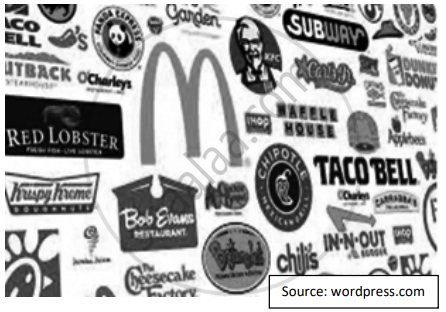
Identify and define the market structure depicted in the above image.
Give three differences between Perfect Competition Market and Oligopoly market.
Define perfect competition.
Explain any four features of perfect competition.
Goyal Brothers Prakashan solutions for इकॉनॉमिक्स [अंग्रेजी] कक्षा १० आईसीएसई 5 Meaning and Types of Markets QUESTION BANK [Pages 140 - 144]
Define the term market.
Define perfect competition.
What is meant by pure competition?
Define monopoly.
Give an example of monopoly.
What is monopolistic competition?
Give two examples of a monopolistically competitive market.
Name the characteristic which makes monopolistic competition different from perfect competition.
What do you mean by homogeneous products?
To which market form are homogeneous products relevant?
Define product differentiation.
To which market is product differentiation relevant?
What is meant by the term ‘price taker’?
Under which market form firm is price taker?
What is a price making firm?
Why an individual firm under perfect competition cannot influence the market price?
Which market form has the least number of producers?
What induces new firms to enter an industry?
What is meant by barriers to entry?
What is the effect on price when a perfectly competitive firm tries to sell more?
What is the effect on price when a monopoly firm tries to sell more?
Define oligopoly.
Give an example of oligopoly.
What is the difference between perfect and imperfect oligopoly?
Explain any four features of perfect competition.
Explain any two similarities between a perfect market and a monopolistically competitive market.
State the similarities between monopolistic competition and monopoly.
Producers in a monopoly are price makers. Briefly explain.
Explain the following concept:
Price discrimination
To which market is price discrimination relevant?
In which market form are goods sold at a uniform price?
Why is there no need for selling cost under perfect competition?
Name the market which has characteristics both of monopoly and perfect competition.
Give two reasons why monopolistic competition is the most realistic form of a market.
What are selling costs?
Why are selling costs incurred?
Explain any four features of perfect competition.
Mention two features of monopoly.
Discuss any two features of a monopolistically competitive market.
State the advantage of monopolistic competition over monopoly.
Why is the demand curve under monopoly less elastic as compared to the demand curve under monopolistic competition?
What does perfectly elastic demand curve faced by a competitive firm indicate?
Explain any four features of perfect competition.
Mention two features of monopoly.
Discuss any two features of a monopolistically competitive market.
Explain any two similarities between a perfect market and a monopolistically competitive market.
State two dissimilarities between Monopolistic competition and Perfect competition.
Discuss three differences between a perfectly competitive market and a monopoly.
Discuss any four differences between monopoly and monopolistic competition.
State two dissimilarities between Monopolistic competition and Perfect competition.
Define oligopoly.
In what respects does oligopoly differ from monopoly?
Identify the market form from the following.
Firm is a price maker.
Identify the market form for the item given below:
Product differentiation
Identify the market form from the following.
Price discrimination
Identify the market form from the following.
Perfect knowledge
Identify the market form from the following:
A few large sellers
Elaborate the price discrimination feature of monopoly.
Mention any three features of an oligopoly market.
Differentiate between monopoly and monopsony.
Ram an employee and Shyam an elderly citizen was travelling by train from Delhi to Chennai separately. However, the cost of their tickets is different. Give reasons for the railways charging different prices to different customers.
What is the implication of ‘restricted entry of new firms’ in a monopoly market?
What is the difference between perfect competition and oligopoly?
Solutions for 5: Meaning and Types of Markets
Goyal Brothers Prakashan solutions for इकॉनॉमिक्स [अंग्रेजी] कक्षा १० आईसीएसई chapter 5 - Meaning and Types of Markets
Shaalaa.com has the CISCE Mathematics इकॉनॉमिक्स [अंग्रेजी] कक्षा १० आईसीएसई CISCE solutions in a manner that help students grasp basic concepts better and faster. The detailed, step-by-step solutions will help you understand the concepts better and clarify any confusion. Goyal Brothers Prakashan solutions for Mathematics इकॉनॉमिक्स [अंग्रेजी] कक्षा १० आईसीएसई CISCE 5 (Meaning and Types of Markets) include all questions with answers and detailed explanations. This will clear students' doubts about questions and improve their application skills while preparing for board exams.
Further, we at Shaalaa.com provide such solutions so students can prepare for written exams. Goyal Brothers Prakashan textbook solutions can be a core help for self-study and provide excellent self-help guidance for students.
Concepts covered in इकॉनॉमिक्स [अंग्रेजी] कक्षा १० आईसीएसई chapter 5 Meaning and Types of Markets are Concept of Market, Factors Determining Market Forms, Perfect Competition, Monopoly, Monopolistic Competition, Oligopoly, Distinction Between Perfect Competition, Monopoly and Monopolistic Competition, Similarities Between Monopolistic Competition and Perfect Competition, Similarities Between Monopolistic Competition and Monopoly, Monopsony.
Using Goyal Brothers Prakashan इकॉनॉमिक्स [अंग्रेजी] कक्षा १० आईसीएसई solutions Meaning and Types of Markets exercise by students is an easy way to prepare for the exams, as they involve solutions arranged chapter-wise and also page-wise. The questions involved in Goyal Brothers Prakashan Solutions are essential questions that can be asked in the final exam. Maximum CISCE इकॉनॉमिक्स [अंग्रेजी] कक्षा १० आईसीएसई students prefer Goyal Brothers Prakashan Textbook Solutions to score more in exams.
Get the free view of Chapter 5, Meaning and Types of Markets इकॉनॉमिक्स [अंग्रेजी] कक्षा १० आईसीएसई additional questions for Mathematics इकॉनॉमिक्स [अंग्रेजी] कक्षा १० आईसीएसई CISCE, and you can use Shaalaa.com to keep it handy for your exam preparation.
