Advertisements
Advertisements
प्रश्न
With the help of an example explain the meaning of price discrimination.
Advertisements
उत्तर
The act of selling the same product at different prices to different buyers is known as price discrimination. A monopolist can charge different prices from his different buyers easily. If a monopolist adopts a policy of price discrimination, the situation is called a discriminating monopoly.
Example:
- Indian Railways charge lower fares from senior citizens of the country as compared to other citizens.
- Electricity boards sell electricity at cheaper rates for agricultural use than for domestic use.
संबंधित प्रश्न
In which type of market price discrimination is practiced? Explain with an example.
Explain three features of Perfect competitive market.
How is Perfect competitive market is different from a monopoly market?
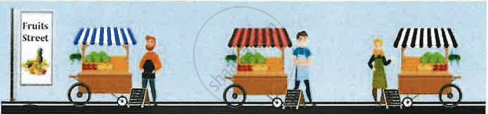
“While shopping for fruits in the local market you see many seller selling fruits”. In this context answer the following:
- What is the type of market referred to?
- State and draw the type of demand curve faced by the market above.
- Differentiate between the market indicated above and monopoly on the basis of:
- No. of sellers
- Market price
- Entry and exit of firms in the market
Imperfect knowledge is a characteristic feature of:
Read the following statements carefully and choose the correct alternative:
Assertion (A): Price discrimination is possible under monopoly.
Reason (R): A monopolist can charge different prices in different markets because different sets of consumers - rich and poor - have different price elasticity of demand for the monopolist's product.
Read the following statements carefully and choose the correct alternative:
Assertion (A): Under Perfect Competition, each firm faces a perfectly elastic demand curve.
Reason (R): Firm is a price maker under perfect competition.
Give two characteristics of perfect competition.
State two important characteristics of monopoly.
What are selling costs?
Identify the market form for the item given below:
A single seller
Which type of market structure is the following? Give reason.
Trucks
Which type of market structure is the following? Give reason.
Jeans
What do you mean by homogeneous products?
Elaborate the price discrimination feature of monopoly.
Identify the market form from the following:
A few large sellers
Why are selling costs incurred?
Which feature best distinguishes monopolistic competition from perfect competition?
