Advertisements
Advertisements
प्रश्न
What is the meaning of the line “Both wry with the laboured ease of loss”.
Advertisements
उत्तर
The context of the above lines is the mother’s recollection of her childhood days and the poet’s recollection of her mother’s laughing face.
The mother has fond memories of her past but there is a sense of loss in recalling those moments as they make her realise that the good old times of her childhood will never come back. For the poet, the ‘loss’ refers to the loss of her mother. She has fond memories of her dead mother but she misses her laughter and her presence that will never return to the poet. Thus, both remember their pasts with a laugh that conceals sadness as none can re-live those lost moments.
APPEARS IN
संबंधित प्रश्न
Read the passage given below and answer the questions that follow:
1. Air pollution is an issue which concerns us all alike. One can willingly choose or reject a food, a drink or a life comfort, but unfortunately there is little choice for the air we breathe. All, what is there in the air is inhaled by one and all living in those surroundings.
2. Air pollutant is defined as a substance which is present while normally it is not there or present in an amount exceeding the normal concentrations. It could either be gaseous or a particulate matter. The important and harmful polluting gases are carbon monoxide, carbon dioxide, ozone and oxides of sulphur and nitrogen. The common particulate pollutants are the dusts of various inorganic or organic origins. Although we often talk of the outdoor air pollutions caused by industrial and vehicular exhausts, the indoor pollution may prove to be as or a more important cause of health problems.
3. Recognition of air pollution is relatively recent. It is not uncommon to experience a feeling of 'suffocation' in a closed environment. It is often ascribed to the lack of oxygen. Fortunately, however, the composition of air is remarkably constant all over the world. There is about 79 per cent nitrogen and 21 per cent oxygen in the air − the other gases forming a very small fraction. It is true that carbon dioxide exhaled out of lungs may accumulate in a closed and over-crowded place. But such an increase is usually small and temporary unless the room is really air-tight. Exposure to poisonous gases such as carbon monoxide may occur in a closed room, heated by burning coal inside. This may also prove to be fatal.
4. What is more common in a poorly ventilated home is a vague constellation of symptoms described as the sick-building syndrome. It is characterized by a general feeling of malaise, head-ache, dizziness and irritation of mucous membranes. It may also be accompanied by nausea, itching, aches, pains and depression. Sick building syndrome is getting commoner in big cities with the small houses, which are generally over-furnished. Some of the important pollutants whose indoor concentrations exceed those of the outdoors include gases such as carbon monoxide, carbon dioxide, oxides of nitrogen and organic substances like spores, formaldehydes, hydrocarbon aerosols and allergens. The sources are attributed to a variety of construction materials, insulations, furnishings, adhesives, cosmetics, house dusts, fungi and other indoor products.
5. By-products of fuel combustion are important in houses with indoor kitchens. It is not only the brining of dried dung and fuelwood which is responsible, but also kerosene and liquid petroleum gas. Oxides of both nitrogen and sulphur are released from their combustion.
6. Smoking of tobacco in the closed environment is an important source of indoor pollution. It may not be high quantitatively, but significantly hazardous for health. It is because of the fact that there are over 3000 chemical constituents in tobacco smoke, which have been identified. These are harmful for human health.
7. Micro-organisms and allergens are of special significance in the causation and spread of diseases. Most of the infective illnesses may involve more persons of a family living in common indoor environment. These include viral and bacterial diseases like tuberculosis.
8. Besides infections, allergic and hypersensitivity disorders are spreading fast. Although asthma is the most common form of respiratory allergic disorders, pneumonias are not uncommon, but more persistent and serious. These are attributed to exposures to allergens from various fungi, molds, hay and other organic materials. Indoor air ventilation systems, coolers, air-conditioners, dampness, decay, pet animals, production or handling of the causative items are responsible for these hypersensitivity − diseases.
9. Obviously, the spectrum of pollution is very wide and our options are limited. Indoor pollution may be handled relatively easily by an individual. Moreover, the good work must start from one’s own house
(Extracted from the Tribune)
(a) (i) What is an air pollutant? (1)
(ii) In what forms are the air pollutants present? (2)
(iii) Why do we feel suffocated in a closed environment? (1)
(iv) What is sick building syndrome? How is it increasing? (2)
(v) How is indoor smoking very hazardous? (1)
(vi) How can one overcome the dangers of indoor air pollution? (2)
(b) Find the words from the above passage which mean the same as the following: (3)
(i) giddiness (para 4)
(ii) constant (para 8)
(iii) humidity (para 8)
How did Helen display her passion for Radcliffe College?
To what end have humans used their superior intelligence ?
Answer the following question in 200-250 words:
"The best and most beautiful things in the world can't be seen or even touched. They must be felt with the heart." Justify the famous quote of Helen Keller.
This short story revolves around a single important event. Discuss how the narrative is woven around this central fact.
What do you understand of the natures of Ramanand and Azam Khan from the episode described?
Why has he compared the three passions to great winds?
Discuss in small groups.
Poetry and science are incompatible.
Answer in your own words.
Read and write down 5 points which prove that Tomba, (Lanthoi’s father) firmly believes in gender equality.
Go through the poem and state whether the following statement is true or false.
The newly planned city looks modern and amazingly beautiful.
Who gives medicine/treatment to sick animals and birds?
Form suitable groups and discuss the following.
You have heard/read stories of Akbar and Birbal, Tenali Raman, Mulla Nasruddin. Recollect and write down the names of those stories.
Pick out those aspects of a story that you find a common in all their stories.
- Humour
- Supernatural event
- Wisdom
- Suspense
- Magic
- Beauty of Nature
- Wit
- Play upon words
- Sadend
- Violence
List the four elements of drama.
Discuss in groups and think about it.
Mention three occasions on which you have made someone else angry. What made that person angry? Can you avoid such things in the future?
Write a short note on the following:
The living world on Rakata
Answer the following question in one sentence.
Who misses all the fun?
Portia had many brothers and sisters.
How early did the preparations for the Science Fair begin?
Read the following sentence aloud. Write who said it and to whom.
“Why, the dress you go to the theatre in !”
Answer in your own words.
What did Neel realise from his encounter with his ancestors?
Write in your own words.
In which professions is a person forced to stay away from his home/ homeland for a long time? Try to guess why the poet is forced to stay away from his home?
Who said the following, to whom, and when?
“O Holy Master, bless us with thy song !”
Make a list of the rhyming words in the poem.
Add one more rhyming word of your own to each pair.
How do we come to know that Kasim was a generous man?
Would you like to be a netizen?
Read the following line from the poem and answer the question that follow.
In the dim past, nor holding back in fear From what the future veils; but with a whole And happy heart, that pays its toll To Youth and Age, and travels on with cheer.
- What does the poet mean by the phrase ‘in the dim past’?
- Is the poet afraid of future?
- How can one travel on with cheer?
Look at the following situations the writer was in. He could have avoided the situation and saved himself. Glance through the write up again and comment on what the writer should have done in the following situations.
- Gilson asked the writer to bring a tie.
- On the day of arrival, the writer had no time to think about the tie.
- The writer remembered about the tie when the bus was leaving for the airport.
- The writer walked down in search of the shop.
- The writer rushed out with the tie in a paper bag.
Which theory of Ramanujan helps the ATMs to dispense cash?
Write the name of the toys against each picture.

What are the disadvantages of speaking harshly?
Read these lines and answer the questions given below.
Our lays are of cities whose lustre is shed,
Here ‘Lays’ means______
Read the following lines and answer the questions.
It’s a slow, unwavering, ingrained trait
With the patience to work and the strength to wait.
- What is an ‘ingrained trait’?
- Why does a courageous man need patience?
Work in pairs and answer the following.
Write the rhyme scheme of the poem.
Why did the author help his Grandfather plant trees?
What is as sharp as a blade?
Amma bought the vegetables from the______.
Who is Raj?
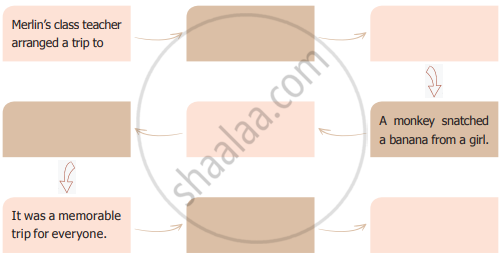
Merlin was thrilled when the school arranged the trip because ______.
Recall Merlin’s memories and complete the story map.
How did Gulliver overcome the adversity?
The land was wet and green.
Who sews the cloth?
Why do we discover a mystery?
Where did the bird catcher sit?
What is the main idea of the story?
Who was Akilan’s inspiration?
Pick and write the adverbs to complete the sentence.
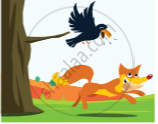
A jackal cheated the crow ______.
Meena studied in ______ standard.
Why relationships are more important than wealth?
Divya loved solving _______.
Whose word are these? Name the character.
“We do not have money to buy anything.”
Who lived in the old house?
Bala's home doesn't have ______.
How did Bala help Amma and sisters?
Why did Bala go to Chennai with his father?


Bihar people saved trees by______ painting.
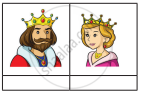
Write the correct word.
| rooster, king, hen, tiger, queen, tigress. |
What would you have done if your grandmother would have slipped?

What did the boy wonder about?
Being a bachelor, the stranger had no patience with children.
