Advertisements
Advertisements
प्रश्न
Talk to your partner about the following.
The author’s grandmother was a religious person. What are the different ways in which we come to know this?
Advertisements
उत्तर
The author’s grandmother was a religious lady with a kind heart. She moved about in the house “telling the beads of her rosary”. Her lips constantly moved in “inaudible prayer”. She said her morning prayers in monotonous sing-song hoping that the author would learn it by heart. Every day, she went along with the author to his school and sat in the temple that was attached to it, reading the holy books for hours. She believed in the teachings about God and scriptures and did not like that her grandson was not taught about them in the city school. Gradually, she turned to recite prayers throughout the day. Before dying, she stopped talking to her family members and turned to prayers, and counting the beads.
APPEARS IN
संबंधित प्रश्न
Maggu’s achievements are particularly noteworthy because – as is well known – academic institutions in India are less than sold on the idea of inclusive education. In fact, when Maggu lost her sight in class IV, her school (which she declines to name) expelled her while suggesting she attend a “blind school”. Though shocked, Maggu rejected the advice. “Attending a special school would have tarred me with a handicap forever, which was not how I saw my future. Therefore I did the rounds of other public schools with my father, a small – time merchant, explaining that my case was different Since I had vision till the age of ten,” she recalls.
Impressed by her persistence and ambition, Delhi’s Bluebells School not only admitted her but pulled out all the stops to support her in academics sporting events and also notched up a respectable 73 percent average in the class XII exam with the help of Braille, interactive textbooks and extra coaching.
The respectable average in her CBSE exam paved the way for admission into LSR where again she proved her mettle by winning medals in a slew of inter – collage events (100 200 and 400 metre sprints) high jump, long jump, javelin and discuss throw: resulting in her being declared ‘Athlete of the year’ 2003’ at a sports meet for 100 physically challenged athletes. And the cherry on the cake was the selection to the IBSA Games last year. “It was a tough regimen,” recalls Maggu. “I had to attend sports camps manage my studies and officiates as sports president. But I managed.”
Questions:
(1) What qualities of Maggu are highlighted in this passage?
(2) Why did Maggu refuse to attend a ‘blind school’?
(3) Quote the lines that show that Jyoti Maggu was good in academics as well as in sports.
(4) Use any two phrases in sentences of your own :
(a) To win laurels
(b) To pave the way
(c) To prove one’s mettle
(d) A tough regimen
(5)
(a) I did the rounds of other public schools with my father [Change the voice]
(b) though shocked Maggu rejected the advice [Rewrite as a simple sentence]
(6) Should the physically challenged be sent to special schools? Express your views.
Answer the following question in 120-150 words :
Mrs. Hall is greedy but efficient in her business.
Attempt a character sketch of Mrs. Hall.
Explain the contradiction in the similies, ‘Like a child from the womb, like a ghost from the tomb’.
What distinguishes the tribal imagination from the secular imagination?
How does the poem emphasise the physical prowess of the Hawk?
Discuss the following in pairs or in small groups.
Kumudini Lakhia's life is an inspiring illustration of the emancipation of women.
Write down in your own words the way Laurie confirmed the names of the March sisters.
Make groups and discuss the following:
What fatal dangers/problems did mankind face centuries ago, but are no longer a threat today?
Go through the text again and find the reasons that forced Peter to shoot down a person.
- The keepers spotted him.
- _________________________
- _________________________
Read the following words :
Brigadier, Commander, capture, evicting, enemy, defense
All these words are related to war affairs and war.
Find more such words from the passage.
Using a dictionary/internet note down the main difference between a developing nation and a developed nation.
‘Never mind faded forests, Austin’. The word ‘faded’ means to become dim or faint. The word describes the forests that have become faint or dim in appearance. Now go through the poem again and complete the table.
| Describing word | Object | Explanation |
| 1. faded | forests | The forests have become faint or dim in appearance. |
| 2. silent | ||
| 3. unfading | ||
| 4. bright |
Think and answer in your own words.
Why does the poet call our life ‘poor’?
Read the lesson and name the following.
The First successful Cardiac Surgeon ______
Write 3 to 4 lines about the following in your own words.
First Neurosurgeon
List five of your favourite Hindi or Marathi poems or songs. Try to translate any one of them into English.
Read the description of the Kabaddi match and do the following:
Write, in your own words, what happened in the second half.
Read the passage and answer the following question:
Who designed the PVC medal?
Go through the following web that highlights the essential qualities of a compere. Discuss with your partner the essential qualities and also the precautions that a compere should take while compering a program.

Precautions to be taken :
- __________________________
- __________________________
- __________________________
- __________________________
What changes in the stage setting would you suggest.
Explain the use of the following property in the development of the play.
Hat
Discuss the following question after you have seen a presentation of the ‘ad’.
What would happen if you ate proper meals like rice and dal or dal-roti?
Read the story and write about the following in short.
Bushi Kiyo
Form groups and hold debates on the following topics. Make bulleted lists of points in favour of the topic (pros) and those against it (cons). (3-6 points each)
You should never lose a match.
An activity:
Speak fast, think faster! Form groups of 4-6. Discuss each of the following topics. Then each person in the group should choose a topic and speak about it for one minute. Try to say as many sentences as you can in that time.
Imagine you are watching a scene. For example, someone learning to ride a bicycle; or a cricket match. Give a running commentary on what you see.
‘Monu is sitting on the bicycle. It has side wheels. Monu tries to push the pedal down - No - he stops. His uncle holds the seat in one hand and the handle in the other hand. He says, ‘Come on, Monu’... etc.
Make a time table of your daily routine
- On a school day
- On a holiday, and
- During examinations.
Start at the time you normally get up and list your activities
hourly: 7 am to 8 am, and so on.
List the phrases that indicate sorrow or pain.
Think and answer:
Are the boys and girls happy that it is raining?
Write about how you take care of your books.
Read the lines of the following poem. Guess and fill in suitable words to make the lines rhyme -
Golden Glow
Soon after dawn, rises the _________________.
It wakes and enlivens every _________________.
It scares away the long, dark _________________.
The shining stars go out of _________________.
From tree to tree birds flit and, _________________.
Searching for food, with a sharp _________________.
The buds that open now show their, _________________
As flowers, they dance with beauty and _________________.
The hill slope wears a grassy green,_________________
The curved sparkling river, it's gold _________________.
The cock then crows to give a loud, _________________
Come on! wake up, folks! One and _________________.
I, then wake up, ‘Good Morning’ to,_________________
Let’s all look forward to a golden _________________.
What did the husband want to do with the extra milk?
Sit quietly for some time. Close your eyes and listen carefully to all the sounds that you hear. Can you guess what sounds they are, who or what is making that sound? Note down what you heard.
Read the following.
- Skipper: captain of a ship or boat.
- Dipper: This word has two meanings. Dipper means a container for taking out water. Also, there are two constellations called Little Dipper (Little Bear) and Big Dipper (Big Bear) in the sky.
- Milky Way: The band of light consisting of stars that spreads across the sky at night.
Do you think that the young seagull’s parents were harsh to him? Why?
Read the following passage and answer the questions that follow.
BUNGEE-JUMPING
Bungee jumping is an activity that involves jumping from a tall structure while connected to a long elastic cord. The tall structure is usually a fixed object, such as a building, bridge or crane; but it is also possible to jump from a movable object, such as a hot-air-balloon or helicopter, that has the ability to hover above the ground. The thrill comes from the freefalling and the rebound. When the person jumps, the cord stretches, and the jumper flies upwards again as the cord recoils and continues to oscillate up and down until all the kinetic energy is dissipated.
Jumping Heights, located in Mohan Chatti village, in Rishikesh has been rated as one of the most preferred bungee jumping destinations in India at a height of 83 meters. It is the only place in India where bungee jumping can be done from a fixed platform. This is also India’s only fixed platform Bungee- performed from a professional cantilever, to separate it from entertainment parks, and create instead, an extreme adventure zone. The Bungee has been designed by David Allardice of New Zealand.
The Cantilever platform is built over a rocky cliff over-looking the river Hall, a tributary of River Ganges. Bungee-ing amidst the vastness of nature lends the experience an absolutely breathtaking quality. Jumping heights is well known for its safety measures and experienced staff. It costs around Rs 2500 per jump, a bit expensive, but totally worth the experience. The Bungee jumping experience has been set amidst the astoundingly stunning landscape of Rishikesh. To Bungee jump, one must be at least 12 years and should weigh between 40-110 kg.
Questions
- What is Bungee Jumping?
- Can Bungee be performed from a movable object? How?
- When do you think Bungee becomes thrilling?
- What is the experience when one falls off the platform?
- Where is the Bungee jumping point located in India?
- What is the minimum age to Bungee jump?
What did the narrator think the unusual sound was?
Use this passage to play the game. You can collect information on other famous personalities and play too.
Charlie Chaplin was born on April 16, 1889, in London England. His birth name was Charles Spencer Chaplin, though he had many nicknames growing up such as Charlie, Charlot, and The Little Tramp. His father, Charles Chaplin, and his mother, Hannah Chaplin, were inducted into the music hall of fame, leading the way to his exposure even as a young boy. His first onstage moment was when he was 5 years old; he sang a song that was intended to be sung by his own mother; she had become ill at the time of the performance, so little Charlie Chaplin stood instead and performed for his mother.
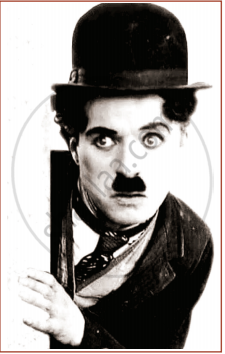
Charlie Chaplin came to the United States in 1910, at the age of 21. He was brought to New York, which was known to be a great place to start out for anyone trying to become a professional actor. Two years later, in 1913, Chaplin signed his very first contract at Keystone and it was no time before he headed to Hollywood. His first movie premiered in 1914, “Making a Living,” and went on to make over 35 movies total in that year alone. Charlie Chaplin grew to become one of the most popular and successful actors of all time. The moment that really kicked off his long career was in 1921 when he starred in, and produced, his first full-length film called “The Kid.” From then on, most people all over the world knew Charlie Chaplin and loved his movies. He had a great career and life, dying on December 25, 1977, in Vevey, Switzerland. He had apparently died of natural causes in his sleep from old age.
Mention at least two expressions which shows that Mrs. Krishnan was not willing to have Zigzag at home?
Why did Alice follow the rabbit?
Read the poem aloud in pairs
Read the comic strip again. Make groups of four and frame some questions on what you have read. Each group should ask a question in turns. You cannot repeat the same question. The team which asks more questions is the winner.
e.g:
- Which are the foreign vegetables mentioned?
- What was sad for Columbus?
Which planet has rings around it?
Match the following.
| cuckoo | blows |
| breeze | sings |
| river | swims |
| fish | flows |
How did Santhosh record his diary?
The pigeon flew away for dry twigs.
The bird-catcher decided to sit under the ________.
Why did the bird catcher need fire?
Look at the picture and tick choose the correct word.

Why did he grow crops?
The old man is _____.
The official's family visited the rehabilitation centre for ______ years.
Find and write the clues.
Clue for blind eye ______
Name the character or speaker.
"Why does Nandhini look so sad?"
A Shepherd had a _______.
Rani thought of herself as a _______ engineer.
Match the rhyming words.
| 1. | say | fall |
| 2. | go | day |
| 3. | all | grow |
Write the word with same meaning.

dustbin- ______.
Are these sentence TRUE or FALSE
The poet tells the child to be afraid when it is dark.
Based on the poet’s idea of true success, think of four people in your surroundings - your family, neighbours, friends, teachers, classmates, etc. who have achieved true success. Write, in short, what makes them successful.
