Topics
Introduction to Indian Society
- Study of Indian Society: Sociological Connections with History and Anthropology
- Study of Indian Society
- Religious Beliefs and Practices in Ancient India
- Religion in Ancient Indian Civilizations
- Jainism and Buddhism in Ancient India
- Religious Beliefs and Practices in Medieval India
- Status of Women in Indian Society
- Nature of Education in Ancient and Medieval India
- Social Life in Ancient and Medieval India
- Urbanisation in Ancient India
- Concept of Sociological Imagination
- Colonial Period in India
- Effects of Colonialisation in India
- Factors Affecting Post-Independence India
- Overview of Introduction to Indian Society
Segments of Indian Society
- Introduction to Segments of Indian Society
- The Tribal Community in India
- Tribal Development in India
- Exploitation and Problems of the Indian Tribal Community
- The Rural Community in India
- Rural Development in India (Sociological Perspective)
- The Urban Community in India
- Urban Development in India
- Overview of Segments of Indian Society
Diversity and Unity in Indian Society
- Introduction of Diversity and Unity in Indian Society
- Diversity in Indian Society
- Unity in Diversity
- Challenges to National Unity
- Factors that Are Responsible for Economic Inequality in Society
- Overview of Diversity and Unity in Indian Society
Processes of Social Change in India
- Industrialisation
- Urbanisation in India
- Modernisation
- Digitalisation
- Factors Responsible for Social Change
- Overview of Processes of Social Change in India
Social Movements in India
- Meaning and Nature of Social Movement
- Types of Social Movements
- Causes of Social Movements
- Social Movements and Social Change
- Womens’ Movement in India
- Workers’ Movements
- Farmer's Movements
- Environmental Movement in India
- Overview of Social Movements in India
Social Problems in India
- Social Problem
- Ageing
- The Problems of Ageing
- Measures to Tackle the Problems of Ageing
- Concept of Unemployment
- Causes of Unemployment
- General Measures to Reduce Unemployment
- Farmers’ Suicide
- Causes of Farmers’ Suicide
- Consequences of Farmers’ Suicides
- Measures to Tackle the Problem of Farmer Suicides
- Domestic Violence
- Causes of Domestic Violence
- Consequences of Domestic Violence
- Measures to Deal with Domestic Violence
- Addiction (Substance, Internet, Mobile)
- Types of Addiction
- Causes of Addiction
- Consequences of Addiction
- Measures to Tackle Addiction Problems
- Overview of Social Problems in India
Passages
- Passages
- Overview of Education in Ancient India
- Education in the Harappan Period
- Education in the Early Vedic Period
- Education in the Later Vedic Period
- Education in Jainism
- Education in Buddhism
- Education in the Sangham Period
- Overview of Education in Medieval India
- Education in Islam in Medieval India
- Types of Islamic Schools in Medieval India
- Key Takeaways
Overview of Education in Ancient India
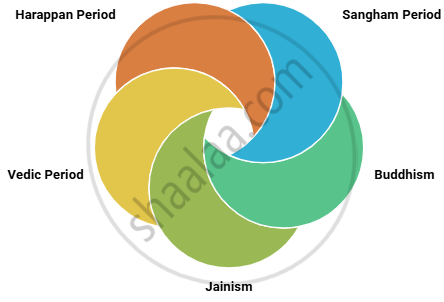
Education in the Harappan Period
| Aspect | Details |
|---|---|
| Literacy | High, shown by inscriptions on seals and objects |
| Education Method | Practical, home-based skill transmission |
| Curriculum | Trade, crafts, agriculture, urban planning |
| Centers | No formal schools; community/family-based learning |
| Inclusivity | Likely open to all; no explicit caste/gender barriers |
Education in the Early Vedic Period
| Aspect/Theme | Description/Details |
|---|---|
| Language & Delivery |
|
| Inclusivity & Entry |
|
| Aims of Education |
|
| Subjects Learnt by Each Varna |
|
| Centres of Learning |
|
| Other Features |
|
Education in the Later Vedic Period
| Aspect/Theme | Description/Details |
|---|---|
| Women's Access | During the Later Vedic period, women were denied the upanayana ceremony, which restricted their access to formal education and learning centers. |
| Sacrifice & Literature | Emphasis was placed on sacrifice rituals, which resulted in the growth of a large body of literature focused on sacrificial practices. |
| Historical Context |
|
| Asceticism Emerges |
|
| Spread of New Teachings |
|
| Rejection of Vedic Authority |
|
| Practice of Ahimsa | Great importance was given to ahimsa, the principle of non-injury to living beings, marking a move toward non-violent ethical standards. |
| Wandering Teachers | The period is known for the rise of influential wandering teachers—Vardhamana Mahavir (Jainism) and Gautama Buddha (Buddhism)—whose teachings greatly impacted education, ethics, and spiritual traditions. |
Education in Jainism
-
Stressed self-discipline, non-violence (ahimsa), and spiritual liberation.
-
Education was spread through wandering teachers and sects, emphasizing debates, moral conduct, and equality.
-
Mahavira, after achieving enlightenment, became a teacher and started the Jain order; both men and women could become monks or nuns and pursue learning.
Education in Buddhism
| Aspect/Theme | Description/Details |
|---|---|
| Buddha & Chaityas |
|
| Centers of Learning |
|
| Admission & Equality |
|
| Teacher-Student Bond | As in the Brahmanical tradition, students lived with and served their teachers (Upajjhaya or Acharya) in close residential setups. |
| Monks & Nuns |
|
| Curriculum & Humanism |
|
| Famous Universities |
|
| Legacy & Focus |
|
Education in the Sangham Period
| Aspect/Theme | Description/Details |
|---|---|
| Nature & Approach |
|
| Institutions |
|
| Curriculum |
|
| Teachers |
|
| Learning Methods |
|
| Women & Access |
|
| Community Learning |
Feasts, festivals, and public events were considered significant learning setups for the masses to interact and gain practical knowledge. |
| Role of Literature |
|
| Legacy |
The Sangam academies
|
Overview of Education in Medieval India
-
Education became difficult during the Medieval Period because of unstable politics.
-
Muslim rulers in Delhi and Agra did not do much to help educate women.
-
Education mostly happened in villages and towns, run by private individuals and local groups.
-
People were taught in Sanskrit, Arabic, and Persian.
-
Only a small group—elite, religious scholars (ulema), Brahmins, and some upper-caste people—could get a good education.
-
Girls' education was treated as a family matter and usually decided by fathers or guardians.
-
Women from wealthy Muslim families could learn at home from private teachers, but this was rare and costly (teachers got expensive gifts).
-
Since few people were from the upper classes, girls' and women's education for most was very limited or bleak during this time.
Education in Islam in Medieval India
| Aspect | Description |
|---|---|
| Focus of Education |
|
| Student Experience |
|
| Inclusivity |
|
Types of Islamic Schools in Medieval India
| Institution | Description |
|---|---|
| Maktab |
|
| Madrasa |
|
| Khanqah |
|
Key Takeaways
-
Ancient India: Gurukuls and Vedic schools taught through oral tradition, focusing on religious texts, values, and skills. Access depended on caste and rituals; girls could only study in select periods.
-
Sangham Period: Learning was practical and secular, spread by families, poets, and community gatherings. Both men and women participated; Tamil literature was central.
-
Jainism & Buddhism: Both religions promoted ethical education through monasteries and wandering teachers. Buddhist monasteries (viharas) were open to all, including women, and gave importance to debate, service, and communal living.
-
Medieval India (Islamic): The maktab-madrasa-khanqah system focused on Quranic studies, practical subjects, and social values. Most students were Muslim boys, with rare access for Hindu students and upper-class girls.
-
General Medieval Trends: Education was restricted to elites and religious groups. Women’s education suffered, and overall access for common people declined due to political changes.
-
Institutions: Gurukul, Vihara, Maktab, Madrasa, and Khanqah—all had specific curricula and student profiles.
