Topics
Introduction to Indian Society
- Study of Indian Society: Sociological Connections with History and Anthropology
- Study of Indian Society
- Religious Beliefs and Practices in Ancient India
- Religion in Ancient Indian Civilizations
- Jainism and Buddhism in Ancient India
- Religious Beliefs and Practices in Medieval India
- Status of Women in Indian Society
- Nature of Education in Ancient and Medieval India
- Social Life in Ancient and Medieval India
- Urbanisation in Ancient India
- Concept of Sociological Imagination
- Colonial Period in India
- Effects of Colonialisation in India
- Factors Affecting Post-Independence India
- Overview of Introduction to Indian Society
Segments of Indian Society
- Introduction to Segments of Indian Society
- The Tribal Community in India
- Tribal Development in India
- Exploitation and Problems of the Indian Tribal Community
- The Rural Community in India
- Rural Development in India (Sociological Perspective)
- The Urban Community in India
- Urban Development in India
- Overview of Segments of Indian Society
Diversity and Unity in Indian Society
- Introduction of Diversity and Unity in Indian Society
- Diversity in Indian Society
- Unity in Diversity
- Challenges to National Unity
- Factors that Are Responsible for Economic Inequality in Society
- Overview of Diversity and Unity in Indian Society
Processes of Social Change in India
- Industrialisation
- Urbanisation in India
- Modernisation
- Digitalisation
- Factors Responsible for Social Change
- Overview of Processes of Social Change in India
Social Movements in India
- Meaning and Nature of Social Movement
- Types of Social Movements
- Causes of Social Movements
- Social Movements and Social Change
- Womens’ Movement in India
- Workers’ Movements
- Farmer's Movements
- Environmental Movement in India
- Overview of Social Movements in India
Social Problems in India
- Social Problem
- Ageing
- The Problems of Ageing
- Measures to Tackle the Problems of Ageing
- Concept of Unemployment
- Causes of Unemployment
- General Measures to Reduce Unemployment
- Farmers’ Suicide
- Causes of Farmers’ Suicide
- Consequences of Farmers’ Suicides
- Measures to Tackle the Problem of Farmer Suicides
- Domestic Violence
- Causes of Domestic Violence
- Consequences of Domestic Violence
- Measures to Deal with Domestic Violence
- Addiction (Substance, Internet, Mobile)
- Types of Addiction
- Causes of Addiction
- Consequences of Addiction
- Measures to Tackle Addiction Problems
- Overview of Social Problems in India
Passages
- Passages
- Definition: Segments of Indian Society
- Overview: Segments of Indian Society
- Definition: Tribal Community
- Definition: Rural Community
- Definition: Urban Community
- Connection between Segments of Indian Society
- Examples: Connection between Segments of Indian Society
- Key Takeaways
Definition : Segments of Indian Society
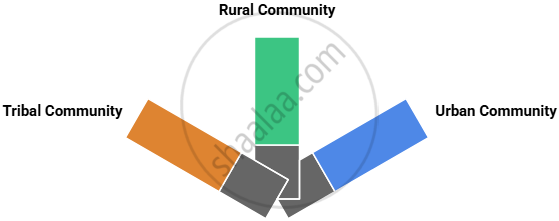
The segments of Indian society are the three main parts—tribal, rural, and urban communities—that differ in lifestyle, occupation, and location but are all connected through social and economic relationships.
Overview : Segments of Indian Society
Definition : Tribal Community
A tribal community is a group of people living close to nature in forests or hilly areas, having their own language, culture, and traditions, and often depending on natural resources for survival.
Definition : Rural Community
A rural community refers to people living in villages, mostly engaged in agriculture and related work, where life is simple and based on close social ties and traditions.
Definition : Urban Community
An urban community includes people who live in towns and cities and work mainly in industries, trade, and services, leading a modern and fast-paced lifestyle.
Connection between Segments of Indian Society
- The tribal, rural, and urban segments of Indian society are closely connected through interdependence in economy, culture, and migration.
-
Economic Link: Tribal communities supply forest goods and raw materials, rural areas provide agricultural products, and urban centers offer markets, industries, and technology.
-
Social Link: People from rural and tribal areas often migrate to cities for work and education, carrying cultural practices that enrich urban life.
-
Developmental Link: Urban industries depend on rural and tribal labour and resources, while government projects from cities aim to uplift villages and tribal regions.
-
In short, these three segments form a continuous cycle of mutual support — each depending on the others for goods, services, and cultural exchange.
Examples : Connection between Segments of Indian Society
| Connection Type | Example | Community Involved |
|---|---|---|
| Raw material supply | Tribal people collect honey and sell it in village or city markets | Tribal → Rural/Urban |
| Migration for work | Rural labourers migrate to cities for construction, sending money home | Rural → Urban |
| Food supply | Villages send vegetables and grains to urban supermarkets and local towns | Rural → Urban |
| Craft trade | Urban shops sell tribal handicrafts made by tribal artisans | Tribal → Urban |
| Use of technology | Farmers in villages use tractors and irrigation pumps from urban manufacturers | Urban → Rural |
| Education and jobs | Tribal youth migrate to towns for higher education and professional jobs | Tribal → Urban |
| Healthcare extension | City hospitals run mobile clinics in tribal/rural areas | Urban → Tribal/Rural |
| Festival celebration | Rural and tribal folk music featured in urban cultural festivals | Rural/Tribal → Urban |
| Urbanization expansion | Villages near growing cities become semi-urban, changing lifestyle and work | Rural ↔ Urban |
Key Takeaways
-
Indian society has three main segments: tribal, rural, and urban communities, each with unique lifestyles, occupations, and cultures.
-
Tribal communities live close to nature in forests or hills, have their own traditions, and are often geographically and culturally isolated.
-
Rural communities live in villages and base their lives around agriculture, strong social ties, and customs.
-
Urban communities reside in cities, work mainly in non-agricultural sectors, and lead more modern, diverse lifestyles.
-
These three segments are interconnected: tribal areas provide raw materials, rural villages supply food, and urban centers offer markets, technology, and education.
- Government programs and social exchanges help bridge differences and support inclusive growth across all segments
