Science (English Medium)
Academic Year: 2025-2026
Date & Time: 27th March 2026, 10:30 am
Duration: 3h
Advertisements
Note:
- Please check that this question paper contains 23 printed pages.
- Q.P. Code given on the right hand side of the question paper should be written on the title page of the answer-book by the candidate.
- Please check that this question paper contains 33 questions.
- Please write down the serial number of the question in the answer-book at the given place before attempting it.
- 15 minute time has been allotted to read this question paper. The question paper will be distributed at 10.15 a.m. From 10.15 a.m. to 10.30 a.m., the candidates will read the question paper only and will not write any answer on the answer-book during this period.
General Instructions:
Read the following instructions carefully and follow them:
- This question paper contains 33 questions. All questions are compulsory.
- Question paper is divided into FIVE sections - Section A, B, C, D and E.
- Section A - questions number 1 to 16 are multiple choice type questions. Each question carries 1 mark.
- Section B - questions number 17 to 21 are very short answer type questions. Each question carries 2 marks.
- Section C - questions number 22 to 28 are short answer type questions. Each question carries 3 marks.
- Section D - questions number 29 and 30 are case-based questions. Each question carries 4 marks. Each question has subparts with internal choice in one of the subparts.
- Section E - questions number 31 to 33 are long answer type questions. Each question carries 5 marks.
- There is no overall choice. However, internal choices have been provided in some questions. A candidate has to write answer for only one of the alternatives in such questions.
- Kindly note that there is a separate question paper for Visually Impaired candidates.
- Wherever necessary, neat and properly labelled diagrams should be drawn.
Perisperm present in seed of black pepper is remnant of ______.
Ovary
Nucellus
Anther
Megaspore
Chapter:
Interferons are most effective in making non-infected cells resistant against the spread of which of the following diseases?
Malaria
Ascariasis
Pneumonia
Cancer
Chapter:
Which of the following sacred groves is found in Meghalaya?
Jaintia hills
Bastar
Chanda
Sarguja
Chapter:
In an ecosystem, different species occupy different levels and vertical distribution of species is found. This is called ______.
Stratification
Layering
Fragmentation
Population
Chapter:
Which of the following statements about plasmids is incorrect?
Plasmids have the ability to replicate within the bacterial cell.
Their replication is controlled by chromosomal DNA.
They are autonomously replicating circular extra-chromosomal DNA.
They often carry antibiotic resistant genes.
Chapter:
Which connective tissue connects ovary to pelvic wall and uterus?
Tendons
Ligaments
Cartilage
Bone
Chapter:
Select the option that shows correct statements:
- Corpus luteum secretes progesterone.
- Only FSH attains a peak level in middle of cycle.
- LH surge induces rupture of graafian follicle.
- Luteal phase of menstrual cycle is also called proliferative phase.
Only (ii) is correct.
(i) and (iii) are correct.
Only (iv) is correct.
(ii) and (iv) are correct.
Chapter:
Which one of the following evidences does not support Darwin’s theory of natural selection?
Branching Descent
Small & directional variations
Appearance of new traits by mutations
Survival of the fittest
Chapter:
Expression of a particular gene helps to identify transformants. What is this gene known as?
Plasmid
Structural gene
Selectable marker
Intron
Chapter:
A DNA molecule is 140 base pairs long. It has 20% thymine. How many guanine bases are present in the molecule?
64
84
32
56
Chapter:
Select the mismatched pair:
Mega diversity countries in the world - 12
Genetically different strains of rice in India - Less than 1000
Robert Mays estimation on global species diversity - 7 million species worldwide
Zoological parks - Ex-situ conservation
Chapter:
Pomato was produced by fusing protoplasts of ______.
Tomato and Potato
Pomegranate and Tomato
Pomegranate and Potato
Pomegranate, Potato and Tomato
Chapter:
Assertion (A): Fossils provide direct evidence for evolution.
Reason (R): Fossils help to trace evolutionary relationships among organisms over time.
Both Assertion (A) and Reason (R) are true and Reason (R) is the correct explanation for Assertion (A).
Both Assertion (A) and Reason (R) are true, but Reason (R) is not the correct explanation for Assertion (A).
Assertion (A) is true, but Reason (R) is false.
Assertion (A) is false, but Reason (R) is true.
Chapter:
Assertion (A): In terrestrial ecosystem much larger fraction of energy flows through grazing food chain.
Reason (R): Grazing food chain may be connected to Detritus food chain at some levels.
Both Assertion (A) and Reason (R) are true and Reason (R) is the correct explanation for Assertion (A).
Both Assertion (A) and Reason (R) are true, but Reason (R) is not the correct explanation for Assertion (A).
Assertion (A) is true, but Reason (R) is false.
Assertion (A) is false, but Reason (R) is true.
Chapter:
Assertion (A): The milk produced by transgenic cow Rosie’ was nutritionally more balanced product for human babies than natural cow milk.
Reason (R): It was human protein enriched milk containing human alpha lactaglobulin.
Both Assertion (A) and Reason (R) are true and Reason (R) is the correct explanation for Assertion (A).
Both Assertion (A) and Reason (R) are true, but Reason (R) is not the correct explanation for Assertion (A).
Assertion (A) is true, but Reason (R) is false.
Assertion (A) is false, but Reason (R) is true.
Chapter:
Assertion (A): Flocs are masses of bacteria associated with fungal filaments in secondary treatment of sewage.
Reason (R): Flocs help in digestion of solid waste by anaerobic respiration.
Both Assertion (A) and Reason (R) are true and Reason (R) is the correct explanation for Assertion (A).
Both Assertion (A) and Reason (R) are true, but Reason (R) is not the correct explanation for Assertion (A).
Assertion (A) is true, but Reason (R) is false.
Assertion (A) is false, but Reason (R) is true.
Chapter:
A health officer visiting two different regions reported the following symptoms in patients:
Region A: Sustained high fever with-stomach pain, constipation and loss of appetite.
Region B: Inflammation in the lower limbs and genital organs.
Name the diseases likely affecting the patients in regions A and B. Write the scientific name of the causative organisms in both the cases.
Chapter:
How does a farmer use dormancy of seed to his advantage?
Chapter:
Differentiate between pea seed and castor seed.
Chapter:
Identify the stage of follicle where primary oocyte undergoes first meiotic division.
Also mention the products of this division.
Chapter:
Advertisements
What is the major advantage of producing plants by micropropagation?
Chapter:
Mendel published his work on inheritance in 1865, but it remained unnoticed for over three decades.
State the reasons why his work was not recognised during his life time.
Chapter:
Long answer question.
What is adaptive radiation? Explain with suitable example.
Chapter: [6] Evolution
What is the primary productivity of an ecosystem and how is it expressed?
Chapter: [12] Ecosystem
Explain what does the equation given below show:
NPP = GPP – R
Chapter: [12] Ecosystem
Biodiversity conservation is crucial for maintaining ecological balance and ensuring the survival of future generations.
Describe four advanced ex-situ methods used for conservation of biodiversity.
Chapter:
Observe the given picture carefully. A mixture of DNA with fragments ranging from 100 base pairs to 1800 base pairs were separated by electrophoresis on agarose gel with the following arrangement:
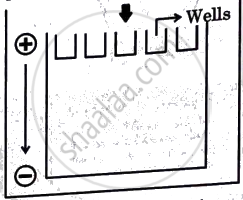
- What result will be obtained in staining with ethidium bromide? Explain with reasons. [1]
- The above setup was modified as shown below and a band with 100 base pairs was obtained at X.
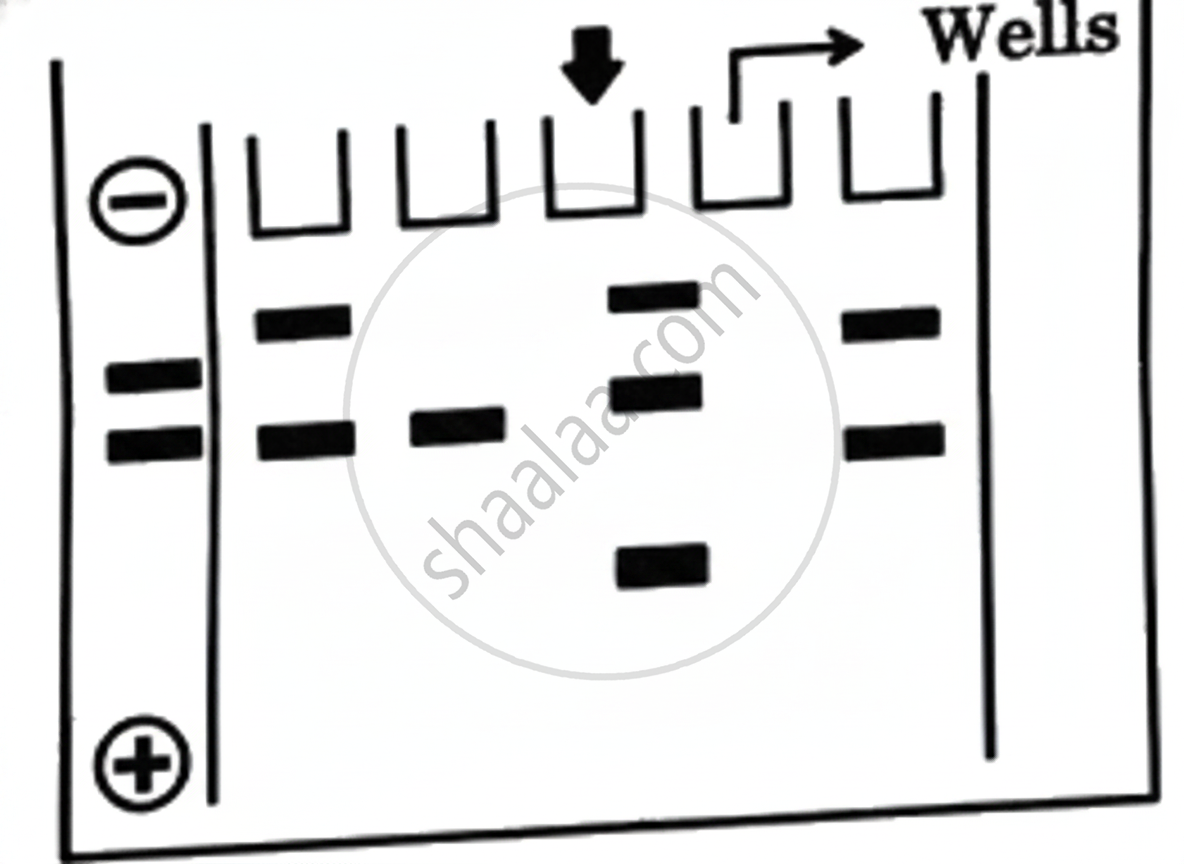
What changes were made to the previous design to get a band at ‘X’. Why did the band appear at ‘X’? [2]
Chapter:
Write the scientific name of the source plant and the part from which opiods are extracted. What is it commonly and chemically called?
Chapter: [7] Human Health and Diseases
Mention the effect of morphine and heroin on the human body.
Chapter:
Do all pollen grains remain viable for the same length of time? Support your answer with two suitable examples.
Chapter:
Mention the importance of pedigree analysis in human genetics.
Chapter:
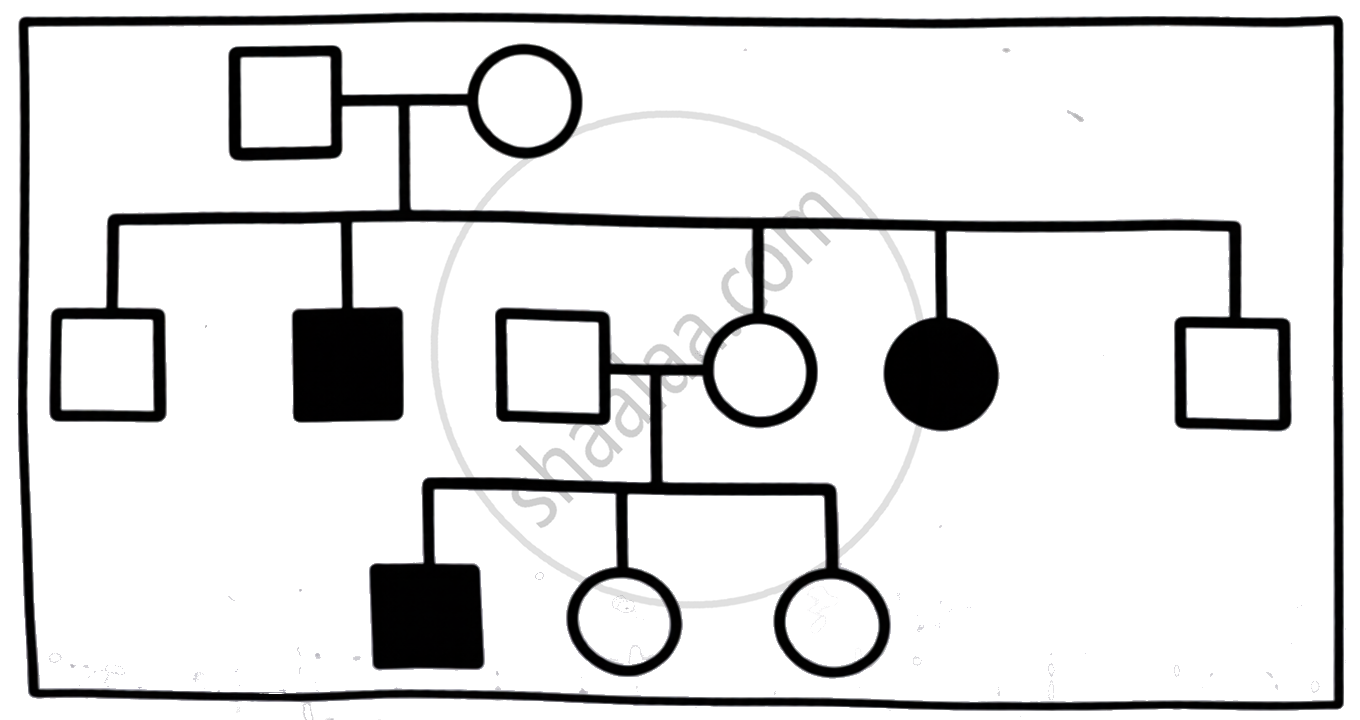
Analyse the following pedigree and write the
- Pattern of inheritance. [0.5]
- Give one example of disease showing such an inheritance pattern. [0.5]
Chapter:
Advertisements
How is Hardy-Weinberg’s expression “(p2 + 2pq + q2) = 1” derived?
Chapter: [6] Evolution
List any two factors that can disturb the genetic equilibrium.
Chapter: [6] Evolution
Suggest and describe a technique through which a healthy sugarcane plant can be obtained from virus infected sugarcane plant.
Chapter:
Draw a neat diagram of megasporangium of an angiosperm and label any six parts.
Chapter:
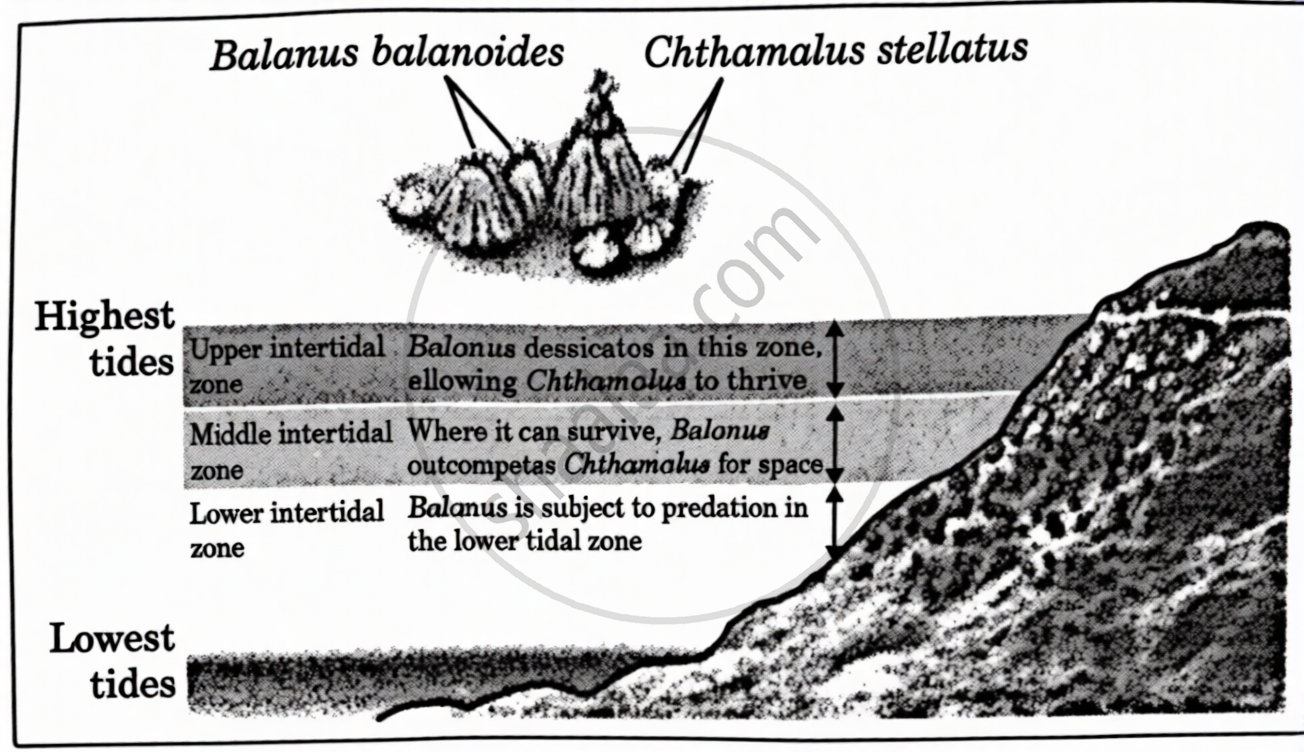
The diagram below shows the distribution of two barnacle species, Chthamalus and Balanus on a rocky sea shore.
When Balanus is experimentally removed, Chthamalus expands its range in lower intertidal zone.
(a) Identify and define the ecological phenomenon demonstrated by this observation. [1]
OR
(a) State the principle that explains the elimination of one species. [1]
(b) Two different species can compete for the same resource. Give another example of it. [1]
(c) How do species avoid competition in nature? Explain with an example. [2]
Chapter:
A student performed some crosses in plants and represented the result in the form of bar graphs as shown below. Each graph displays the phenotypic proportion of the progeny. Study the graphs and answer the questions:
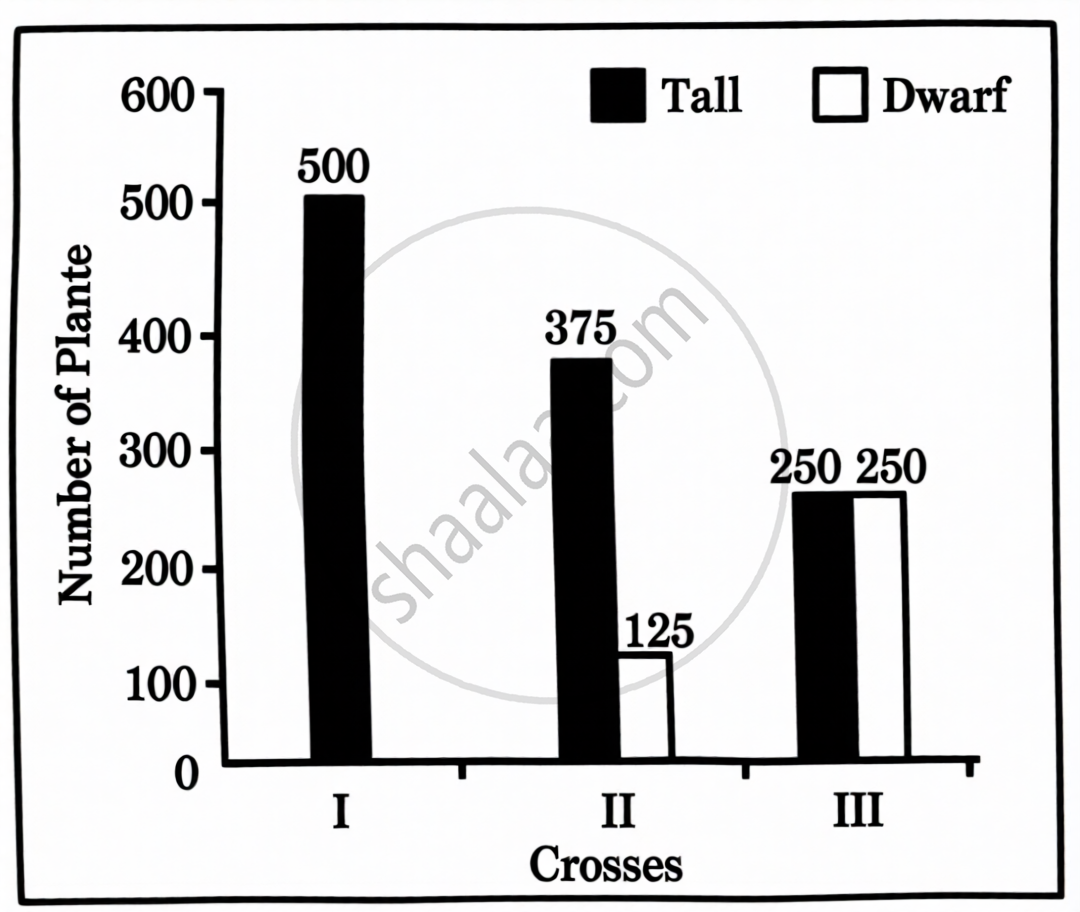
(a) What can you infer about the genotype of parents in crosses I and II? [1]
OR
(a) Which genetic cross is represented by these crosses? [1]
(b) Looking at bar graph of cross III, identify the type of cross performed and its importance in genetics. [2]
(c) What conclusion can you draw from the results of bar graphs of crosses I and II? Name the genetic principle illustrated. [1]
Chapter:
- Name the protozoan species that is responsible for causing the most serious and even fatal malerial disease. [0.5]
- Name the host in which the parasite completes its sexual stages and explain the changes taking place. [2]
- How does the parasite damage the human body after entering the blood stream? [1.5]
- Suggest two effective preventive measures to control the spread of this disease in endemic regions. [1]
Chapter:
Name the different types of microorganisms used as bio-fertilizers in organic farming and explain how each contributes to soil fertility.
Chapter:
Write two advantages of using bio-fertilizers over chemical fertilizers.
Chapter:
Describe how the lac operon operates, both in the presence and absence of an inducer in E.coli.
Chapter:
Differentiate between Mendelian and Chromosomal disorders.
Chapter:
Which disorder is known as “Inborn Error of Metabolism”? Mention its cause and any one symptom. Name the harmful compounds formed.
Chapter:
Trace the events from fertilization till implantation of blastocyst in human female. Also mention the site where fertilization takes place.
Chapter:
Case studies of some couples are given below. They were not able to have kids even though the parents were not taking any precautions. They also do not wish to adopt a child or take the help of donors. Study these cases and suggest an appropriate Assisted Reproductive Technology that could help them.
- Case I: Female - Normal Reports
Male - Normal sperms but no connection between epididymis and vas deferens. [1] - Case II: Female - Normal eggs but Fallopian tube blocked.
Male - Normal sperms. Male reports are normal. [1] - Case III: Female - Normal Reports.
Male - Low sperm count with less motility. [1]
Chapter:
Copper releasing intrauterine devices are very effective and popular contraceptive devices. Name any two copper releasing IUDs. Write two reasons that make them effective contraceptives.
Chapter:
Other Solutions
Submit Question Paper
Help us maintain new question papers on Shaalaa.com, so we can continue to help studentsonly jpg, png and pdf files
CBSE previous year question papers Class 12 Biology with solutions 2025 - 2026
Previous year Question paper for CBSE Class 12 -2026 is solved by experts. Solved question papers gives you the chance to check yourself after your mock test.
By referring the question paper Solutions for Biology, you can scale your preparation level and work on your weak areas. It will also help the candidates in developing the time-management skills. Practice makes perfect, and there is no better way to practice than to attempt previous year question paper solutions of CBSE Class 12.
How CBSE Class 12 Question Paper solutions Help Students ?
• Question paper solutions for Biology will helps students to prepare for exam.
• Question paper with answer will boost students confidence in exam time and also give you an idea About the important questions and topics to be prepared for the board exam.
• For finding solution of question papers no need to refer so multiple sources like textbook or guides.
