Science (English Medium)
Academic Year: 2025-2026
Date & Time: 27th March 2026, 10:30 am
Duration: 3h
Advertisements
Note:
- Please check that this question paper contains 23 printed pages.
- Q.P. Code given on the right hand side of the question paper should be written on the title page of the answer-book by the candidate.
- Please check that this question paper contains 33 questions.
- Please write down the serial number of the question in the answer-book at the given place before attempting it.
- 15 minute time has been allotted to read this question paper. The question paper will be distributed at 10.15 a.m. From 10.15 a.m. to 10.30 a.m., the candidates will read the question paper only and will not write any answer on the answer-book during this period.
General Instructions:
Read the following instructions carefully and follow them:
- This question paper contains 33 questions. All questions are compulsory.
- Question paper is divided into FIVE sections - Section A, B, C, D and E.
- Section A - questions number 1 to 16 are multiple choice type questions. Each question carries 1 mark.
- Section B - questions number 17 to 21 are very short answer type questions. Each question carries 2 marks.
- Section C - questions number 22 to 28 are short answer type questions. Each question carries 3 marks.
- Section D - questions number 29 and 30 are case-based questions. Each question carries 4 marks. Each question has subparts with internal choice in one of the subparts.
- Section E - questions number 31 to 33 are long answer type questions. Each question carries 5 marks.
- There is no overall choice. However, internal choices have been provided in some questions. A candidate has to write answer for only one of the alternatives in such questions.
- Kindly note that there is a separate question paper for Visually Impaired candidates.
- Wherever necessary, neat and properly labelled diagrams should be drawn.
Match Column - I with Column - II and choose the correct option:
| Column - I | Column - II | ||
| a. | Biolistic gun | i. | Bacterial cell |
| b. | Chitinase | ii. | Tumour inducing |
| c. | Ti | iii. | Animal cell |
| d. | Ca++ | iv. | Fungal cell |
| v. | Plant cell |
a - i, b - ii, c - iii, d - iv
a - ii, b - v, c - i, d - iii
a - v, b - iv, c - ii, d - i
a - v, b - i, c - iv, d - ii
Chapter:
Microbes commonly used in kitchen are ______.
Lactobacillus and Yeast
Penicillium and Yeast
Microspora and E. coli
Rhizopus and Lactobacillus
Chapter:
The features of some structures of human male reproductive system are given below. Choose the correct option that matches the features with the structures.
- It opens into the Vasa efferentia through rete testis.
- It carries semen as well as urine.
- It maintains temperature (2 – 2.5°C) lower than body temperature for sperm formation.
- It leads to vas deferens that ascends to the abdomen.
(i) - Seminal vesicle, (ii) - Urethra, (iii) - Scrotum, (iv) - Seminiferous tubule
(i) - Prostrate, (ii) - Scrotum, (iii) - Testes, (iv) - Vas Deferens
(i) - Seminiferous tubule, (ii) - Urethra, (iii) - Scrotum, (iv) - Epididymis
(i) - Seminiferous tubule, (ii) - Vas Deferens, (iii) - Urethra, (iv) - Sertoli cells
Chapter:
Exploration of molecular, genetic and species level diversity for gaining products of economic importance is called ______.
Exploitation
Bio-prospecting
Bio-patenting
Bio-piracy
Chapter:
Which connective tissue connects ovary to pelvic wall and uterus?
Tendons
Ligaments
Cartilage
Bone
Chapter:
Which of the following is not a component of detritus food chain?
Dead Leaves
Bacteria
Fungi
Zooplankton
Chapter:
Identify the plant in which emasculation is not required for artificial hybridization.
Rice
Wheat
Pea
Papaya
Chapter:
Pomato was produced by fusing protoplasts of ______.
Tomato and Potato
Pomegranate and Tomato
Pomegranate and Potato
Pomegranate, Potato and Tomato
Chapter:
Which of the following sacred groves is found in Meghalaya?
Jaintia hills
Bastar
Chanda
Sarguja
Chapter:
Messelson and Stahl’s experiment carried out centrifugation in CsCl2 density gradient to separate ______.
DNA from RNA
DNA from protein
RNA from protein
Normal DNA from heavy DNA
Chapter:
Which one of the following is not a component required for Polymerase Chain Reaction (PCR)?
Template DNA
Primers
DNA Ligase
DNA Polymerase
Chapter:
In the following figure, two ways of pairing of two homologous pairs of chromosomes are shown. Which of the following phenomena is expressed?
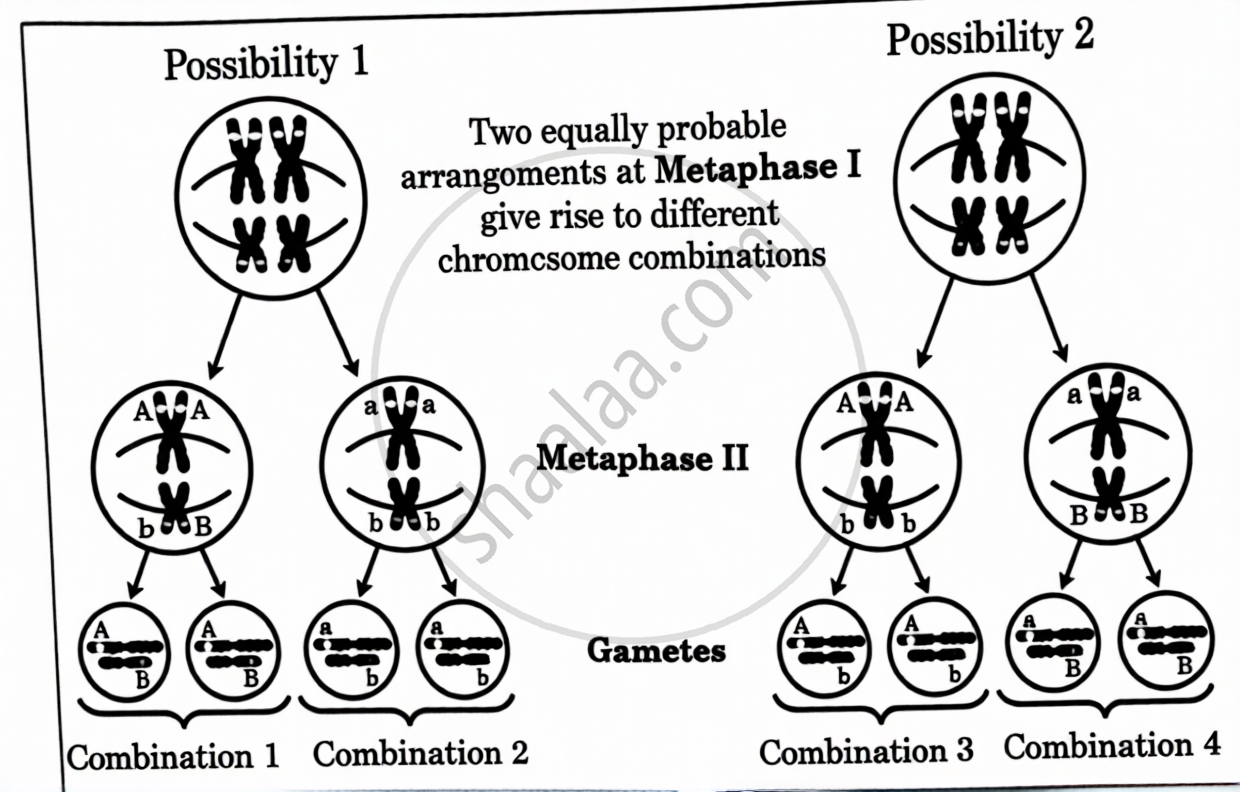
Linkage of genes
Independent assortment of genes
Multiple alleles
Incomplete dominance
Chapter:
Assertion (A): When we see stars, we are apparently peeping into the past.
Reason (R): What we see today is an object whose emitted light started its journey millions of years back reaching our eyes now.
Both Assertion (A) and Reason (R) are true and Reason (R) is the correct explanation for Assertion (A).
Both Assertion (A) and Reason (R) are true, but Reason (R) is not the correct explanation for Assertion (A).
Assertion (A) is true, but Reason (R) is false.
Assertion (A) is false, but Reason (R) is true.
Chapter:
Assertion (A): Flocs are masses of bacteria associated with fungal filaments in secondary treatment of sewage.
Reason (R): Flocs help in digestion of solid waste by anaerobic respiration.
Both Assertion (A) and Reason (R) are true and Reason (R) is the correct explanation for Assertion (A).
Both Assertion (A) and Reason (R) are true, but Reason (R) is not the correct explanation for Assertion (A).
Assertion (A) is true, but Reason (R) is false.
Assertion (A) is false, but Reason (R) is true.
Chapter:
Assertion (A): In terrestrial ecosystem much larger fraction of energy flows through grazing food chain.
Reason (R): Grazing food chain may be connected to Detritus food chain at some levels.
Both Assertion (A) and Reason (R) are true and Reason (R) is the correct explanation for Assertion (A).
Both Assertion (A) and Reason (R) are true, but Reason (R) is not the correct explanation for Assertion (A).
Assertion (A) is true, but Reason (R) is false.
Assertion (A) is false, but Reason (R) is true.
Chapter:
Assertion (A): The milk produced by transgenic cow Rosie’ was nutritionally more balanced product for human babies than natural cow milk.
Reason (R): It was human protein enriched milk containing human alpha lactaglobulin.
Both Assertion (A) and Reason (R) are true and Reason (R) is the correct explanation for Assertion (A).
Both Assertion (A) and Reason (R) are true, but Reason (R) is not the correct explanation for Assertion (A).
Assertion (A) is true, but Reason (R) is false.
Assertion (A) is false, but Reason (R) is true.
Chapter:
What is the role of LAB (Lactic Acid Bacteria) in preparation of curd?
Chapter:
Name the muscular layers of the female uterus. Mention one function.
Chapter:
Name the glandular layers of the female uterus. Mention one function.
Chapter:
Why are STI (Sexually Transmitted Infections) not detected in time?
Chapter:
Write two complications caused in later stages.
Chapter:
Advertisements
Write the importance of following in biotechnology:
Ori (Origin of Replication)
Chapter:
Write the importance of following in biotechnology:
Enzyme Polymerase used in Polymerase Chain Reaction
Chapter:
Given below is a pyramid found in an ecosystem, where each bar represents the standing crop available in the trophic level.
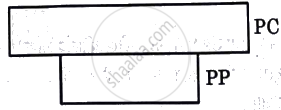
Identify the kind of pyramid and with the help of an example explain the conditions where this kind of pyramid is possible in nature.
Chapter:
Given below is a pyramid found in an ecosystem, where each bar represents the standing crop available in the trophic level.
Write any two limitations of ecological pyramids.
Chapter:
In an ecosystem there was loss of biodiversity due to some project in that area.
How will biodiversity be affected?
Chapter:
In an ecosystem there was loss of biodiversity due to some project in that area.
List two major causes of loss of biodiversity.
Chapter:
Analyse the following case of sex determination in different organisms:
Males have (XO) sex chromosomes and females have two copies of same sex chromosome (XX).
Identify the type of heterogamety in this case and provide one example.
Chapter:
Analyse the following case of sex determination in different organisms:
Females have two different sex chromosomes (ZW) and males have two copies of same sex chromosome (ZZ).
Identify the type of heterogamety in this case and provide one example.
Chapter:
Differentiate between a DNA and a RNA nucleotide.
Chapter: [5] Molecular Basis of Inheritance
Name the two types of bonds present within a single nucleotide.
Chapter:
A farmer grew two varieties of corn crop in field A and B. He grew normal corn crops in field A and GM corn crops in field B.
He observed that corn borers attacked only in field A. To control it, spores of Bt were sprayed on field A.
- Name the gene in the spores responsible for control of pest. [0.5]
- What effect will the spores of Bt have on insect pest? [1.5]
- How has corn plants of field B developed resistance against this pest? Explain. [1]
Chapter:
Observe the given picture carefully. A mixture of DNA with fragments ranging from 100 base pairs to 1800 base pairs were separated by electrophoresis on agarose gel with the following arrangement:
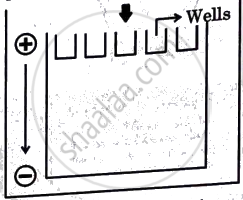
- What result will be obtained in staining with ethidium bromide? Explain with reasons. [1]
- The above setup was modified as shown below and a band with 100 base pairs was obtained at X.
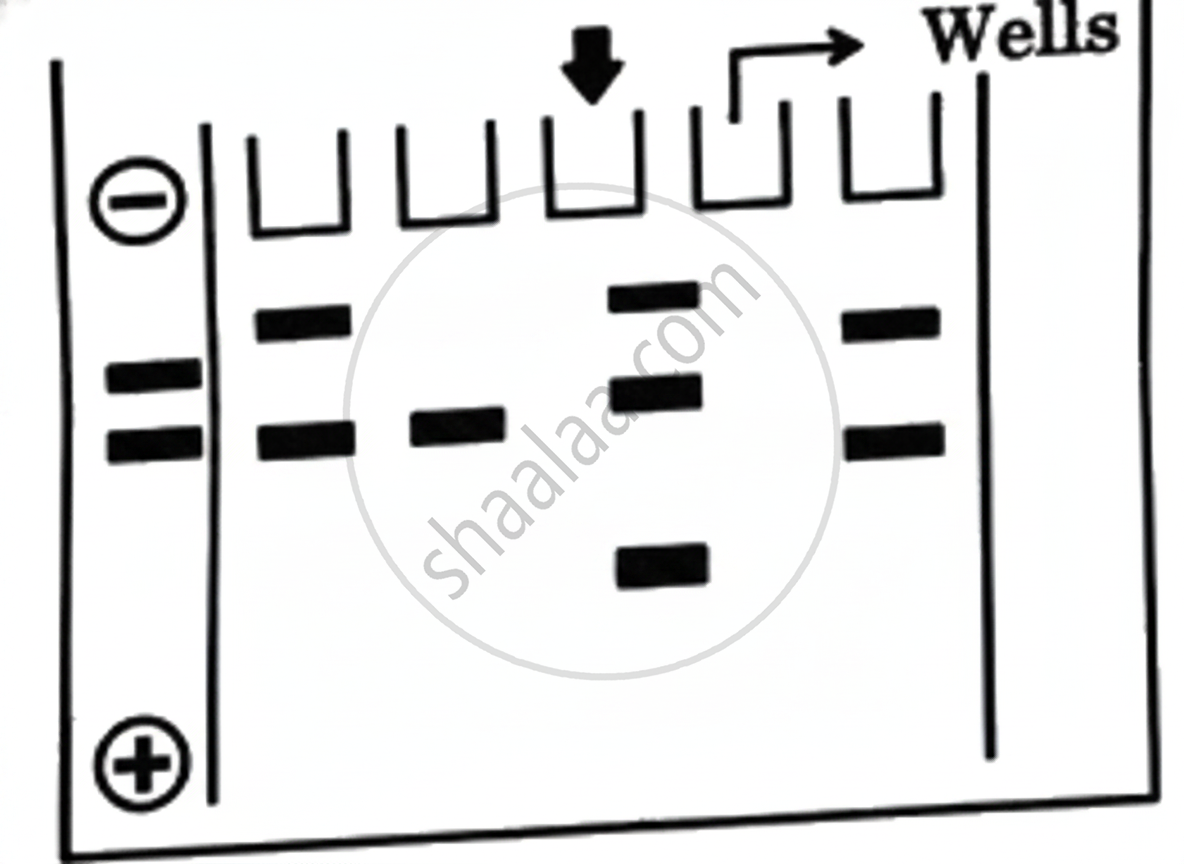
What changes were made to the previous design to get a band at ‘X’. Why did the band appear at ‘X’? [2]
Chapter:
Write the scientific name of the source plant and the part from which opiods are extracted. What is it commonly and chemically called?
Chapter: [7] Human Health and Diseases
Mention the effect of morphine and heroin on the human body.
Chapter:
- Give a schematic representation of oogenesis in human females.
- Mention the number of chromosomes at each stage. Correlate the life phases of the individual with the stages of the process.
Chapter:
Do all pollen grains remain viable for the same length of time? Support your answer with two suitable examples.
Chapter:
Advertisements
Mention the importance of pedigree analysis in human genetics.
Chapter:
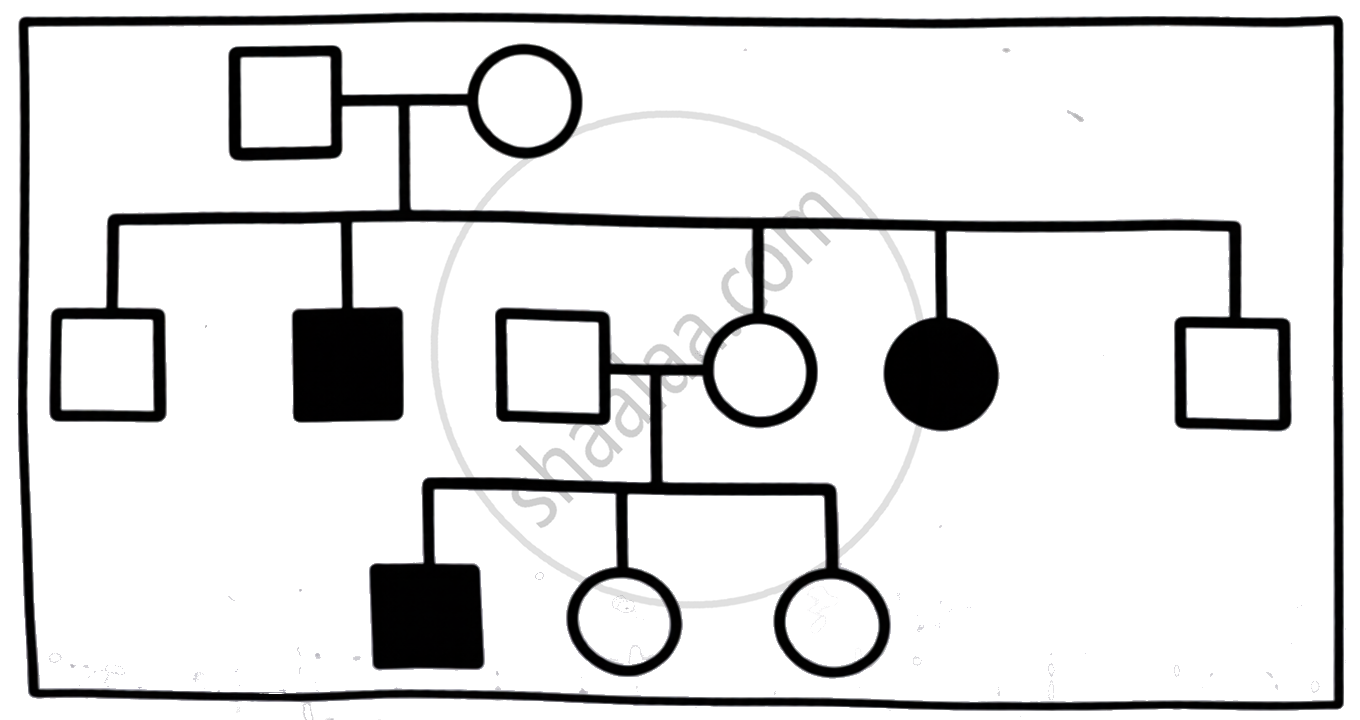
Analyse the following pedigree and write the
- Pattern of inheritance. [0.5]
- Give one example of disease showing such an inheritance pattern. [0.5]
Chapter:
How is Hardy-Weinberg’s expression “(p2 + 2pq + q2) = 1” derived?
Chapter: [6] Evolution
List any two factors that can disturb the genetic equilibrium.
Chapter: [6] Evolution
A student performed some crosses in plants and represented the result in the form of bar graphs as shown below. Each graph displays the phenotypic proportion of the progeny. Study the graphs and answer the questions:
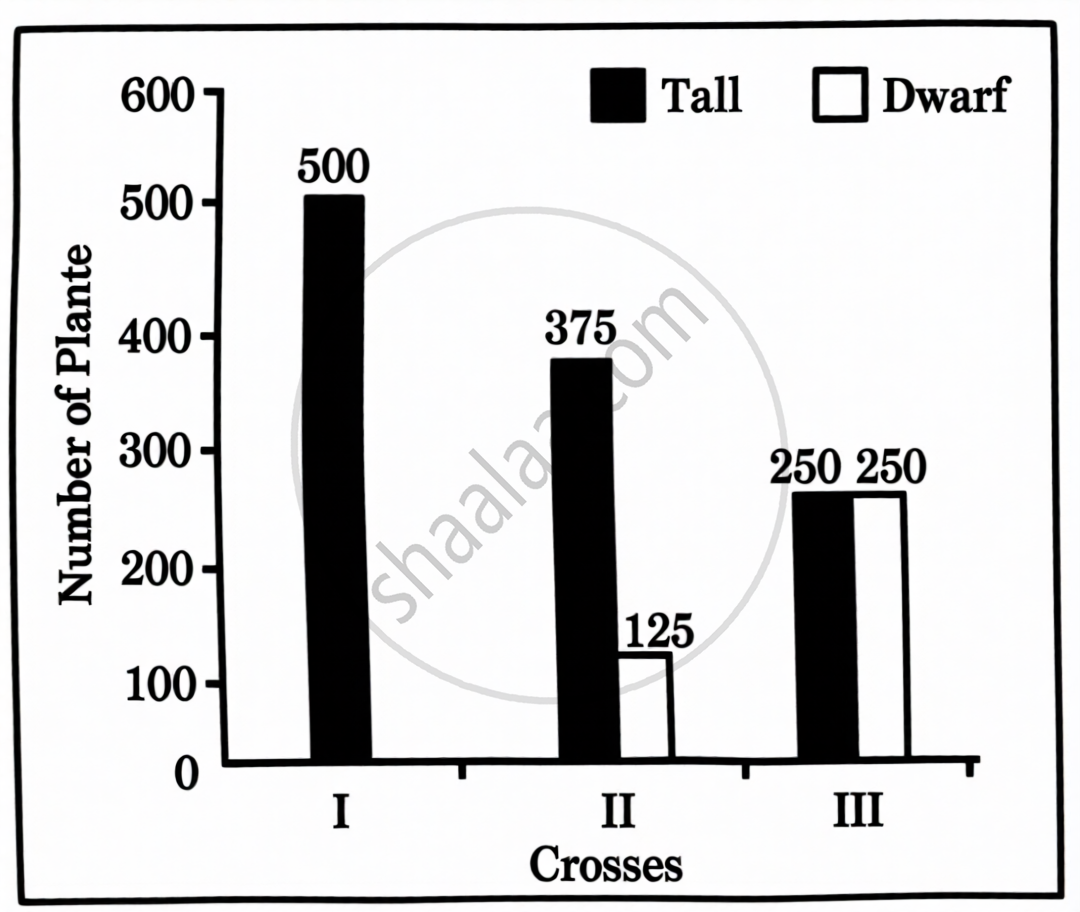
(a) What can you infer about the genotype of parents in crosses I and II? [1]
OR
(a) Which genetic cross is represented by these crosses? [1]
(b) Looking at bar graph of cross III, identify the type of cross performed and its importance in genetics. [2]
(c) What conclusion can you draw from the results of bar graphs of crosses I and II? Name the genetic principle illustrated. [1]
Chapter:
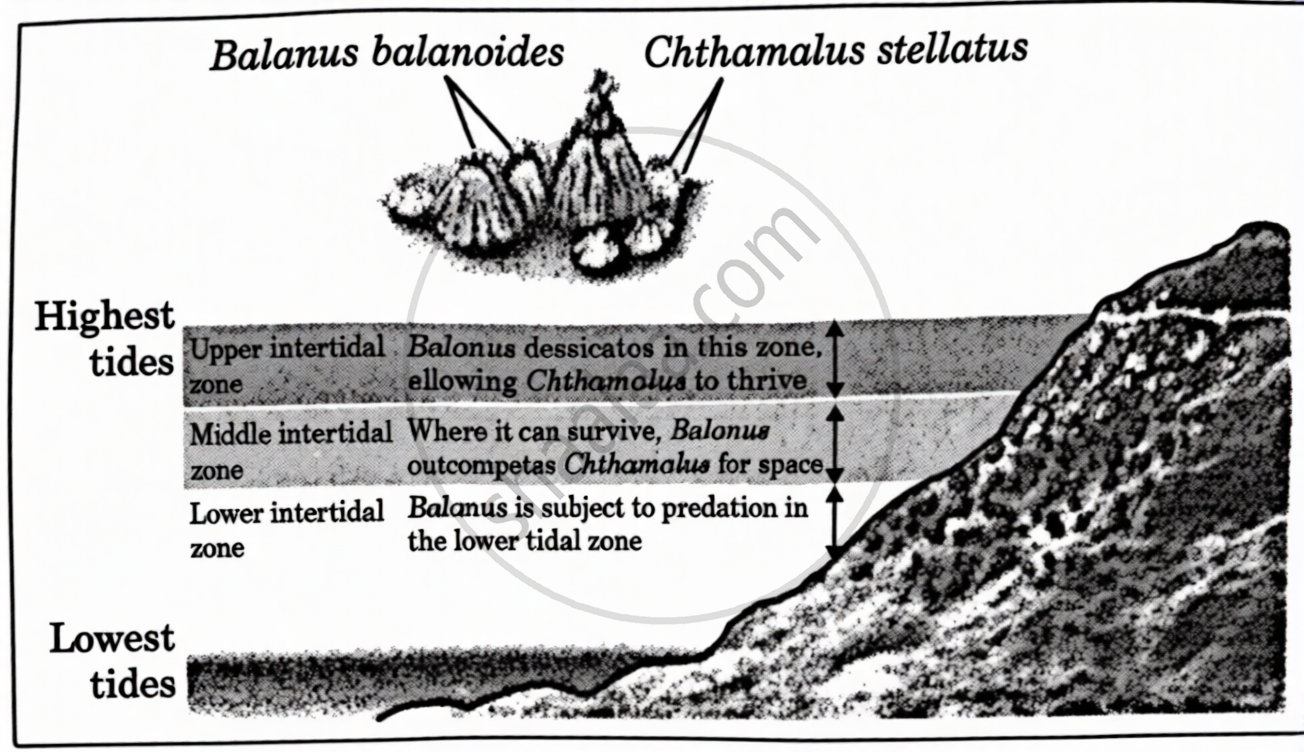
The diagram below shows the distribution of two barnacle species, Chthamalus and Balanus on a rocky sea shore.
When Balanus is experimentally removed, Chthamalus expands its range in lower intertidal zone.
(a) Identify and define the ecological phenomenon demonstrated by this observation. [1]
OR
(a) State the principle that explains the elimination of one species. [1]
(b) Two different species can compete for the same resource. Give another example of it. [1]
(c) How do species avoid competition in nature? Explain with an example. [2]
Chapter:
In angiosperms, the female gametophyte develops from a single cell of megasporangium.
Name that cell of megasporangium and describe the sequential changes it undergoes to form a mature female gametophyte.
Chapter:
Describe the development of female gametophyte of angiosperms with the help of diagram.
Chapter:
Given below is situation related to birth control. Analyse the situation carefully and suggest appropriate contraceptive method that could be used. Also explain its mode of action.
Situation: To prevent entry of sperm into cervix.
Chapter:
Given below is situation related to birth control. Analyse the situation carefully and suggest appropriate contraceptive method that could be used. Also explain its mode of action.
Situation: Devices that are inserted by doctors or expert nurses in the vagina.
Chapter:
Given below is situation related to birth control. Analyse the situation carefully and suggest appropriate contraceptive method that could be used. Also explain its mode of action.
Situation: Effective emergency contraceptive.
Chapter:
Given below is situation related to birth control. Analyse the situation carefully and suggest appropriate contraceptive method that could be used. Also explain its mode of action.
Situation: Permanent method for male partner.
Chapter:
Given below is situation related to birth control. Analyse the situation carefully and suggest appropriate contraceptive method that could be used. Also explain its mode of action.
Situation: Surgical method in female to prevent pregnancy.
Chapter:
- Name the protozoan species that is responsible for causing the most serious and even fatal malerial disease. [0.5]
- Name the host in which the parasite completes its sexual stages and explain the changes taking place. [2]
- How does the parasite damage the human body after entering the blood stream? [1.5]
- Suggest two effective preventive measures to control the spread of this disease in endemic regions. [1]
Chapter:
Name the different types of microorganisms used as bio-fertilizers in organic farming and explain how each contributes to soil fertility.
Chapter:
Write two advantages of using bio-fertilizers over chemical fertilizers.
Chapter:
Watson and Crick’s discovery of double helical structure was based on which two findings. Also mention the name of the scientists associated with these findings.
Chapter:
Write down the salient features of double helix structure of DNA.
Chapter:
Given below is a stretch of DNA showing the coding strand of structural gene of transcription unit.
5'- ATG ACC GTA TTT TCT GTA GTG CCC GTA CTT CAG GCA TTA 3'
- Write the corresponding template strand and m-RNA strand that will be transcribed along with its polarity. [2]
- If GUA of transcribed mRNA is an intron, then depict the sequence involved in formation of mRNA/mature/processed hnRNA strand:
- In a bacterium [1]
- In humans [1]
- How many amino acids the resulting polypeptide will have after the process of translation in humans? [1]
Chapter:
Other Solutions
Submit Question Paper
Help us maintain new question papers on Shaalaa.com, so we can continue to help studentsonly jpg, png and pdf files
CBSE previous year question papers Class 12 Biology with solutions 2025 - 2026
Previous year Question paper for CBSE Class 12 -2026 is solved by experts. Solved question papers gives you the chance to check yourself after your mock test.
By referring the question paper Solutions for Biology, you can scale your preparation level and work on your weak areas. It will also help the candidates in developing the time-management skills. Practice makes perfect, and there is no better way to practice than to attempt previous year question paper solutions of CBSE Class 12.
How CBSE Class 12 Question Paper solutions Help Students ?
• Question paper solutions for Biology will helps students to prepare for exam.
• Question paper with answer will boost students confidence in exam time and also give you an idea About the important questions and topics to be prepared for the board exam.
• For finding solution of question papers no need to refer so multiple sources like textbook or guides.
