Advertisements
Advertisements
Question
When 3-methylbutan-2-ol is treated with HBr, the following reaction takes place:
\[\begin{array}{cc}
\phantom{...................................}\ce{Br}\\
\phantom{..................................}|\\
\ce{CH3 - CH - CH - CH3 ->[HBr] CH3 - C - CH2 - CH3}\\
|\phantom{.........}|\phantom{...................................}|\phantom{...........}\\
\ce{CH3}\phantom{...}\ce{OH}\phantom{...............................}\ce{CH3}\phantom{.......}\\
\end{array}\]
Give a mechanism for this reaction.
(Hint: The secondary carbocation formed in step II rearranges to a more
stable tertiary carbocation by a hydride ion shift from 3rd carbon atom.)
Advertisements
Solution
The described reaction is an example of carbocation rearrangement that occurs via hydride shift. The mechanism for it is:
Step 1: Formation of carbocation: Protonation of alcohol.
\[\ce{HBr -> H+ + B\overset{-}{r}}\]


Step 2: 1,2-hydride shift: Formation of a more stable, 3° carbocation.
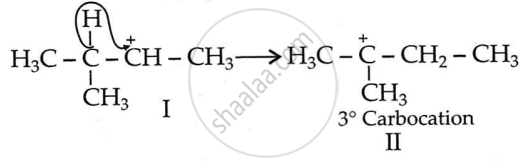
Initially, a 2° carbocation (I) was produced. However, the more stable 3° counterpart causes a hydride shift, forming the more stable carbocation (II).
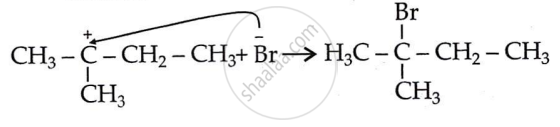
Step 3: Attack of nucleophile: Generation of product.
APPEARS IN
RELATED QUESTIONS
Write the mechanism of the following reaction :

Ortho and para nitrophenols are more acidic than phenol. Draw the resonance structures of the corresponding phenoxide ions.
Show how will you synthesize pentan-1-ol using a suitable alkyl halide.
Name the reagent used in the following reaction:
Oxidation of a primary alcohol to carboxylic acid.
Name the reagent used in the following reaction:
Benzyl alcohol to benzoic acid.
Write the mechanism (using curved arrow notation) of the following reaction :

The compound which reacts fastest with Lucas reagent at room temperature is:
In the reduction \[\ce{R - CHO + H2 -> RCH2OH}\] the catalyst used is:
Cyclohexene is best prepared from cyclohexanol by which of the following:
Mark the correct increasing order of reactivity of the following compounds with HBr/HCl.
| (a) | 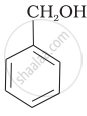 |
| (b) |  |
| (c) | 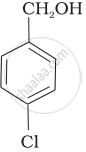 |
Name the factors responsible for the solubility of alcohols in water.
Explain why nucleophilic substitution reactions are not very common in phenols.
Which of the following alcohols will not undergo oxidation?
Write the mechanism of acid dehydration of ethanol to yield ethene.
Write the mechanism of acid-catalysed dehydration of ethanol to yield ethene.
Write the mechanism of acid dehydration of ethanol to yield ethene.
Write the mechanism of acid dehydration of ethanol to yield ethene.
